
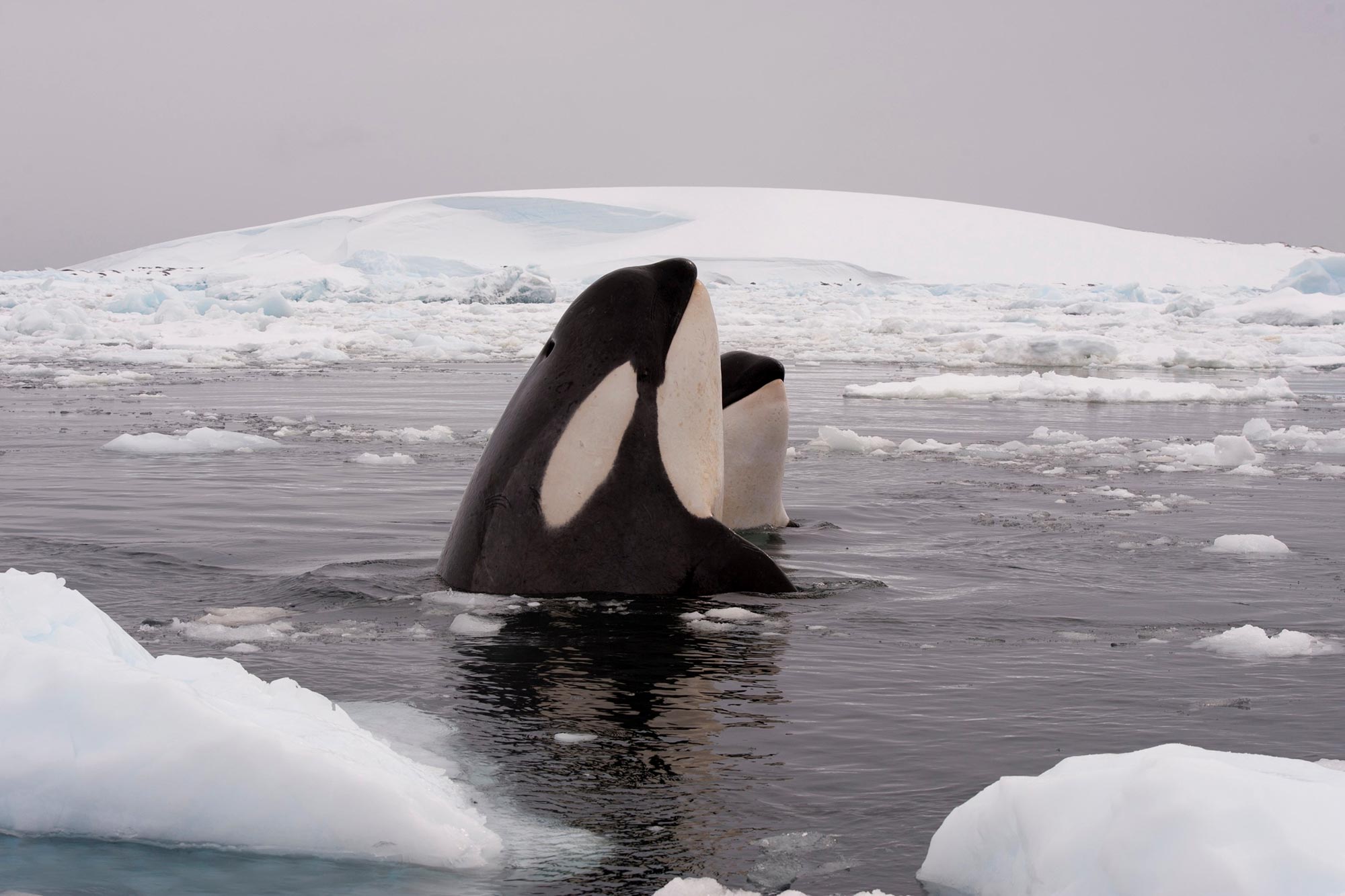
New research indicates that females in certain whale species have evolved to have significantly longer lifespans in order to care for their families.
The study focussed on five whale species that – along with humans – are the only mammals known to go through menopause. The findings show that females of these whale species that experience menopause live around 40 years longer than other female whales of a similar size.
By living longer without extending their “reproductive lifespan” (the years in which they breed), these females have more years to help their children and grandchildren, without increasing the “overlap” period when they compete with their daughters by breeding and raising calves at the same time. This new research shows that – despite being separated by 90 million years of evolution – whales and humans show remarkably similar life histories, which have evolved independently.
The study was carried out by the universities of Exeter and York, and the Center for Whale Research.
Study Origins and Evolutionary Insights
“The process of evolution favors traits and behaviors by which an animal passes its genes to future generations,” said lead author Dr Sam Ellis, from the University of Exeter. “The most obvious way for a female to do this is to breed for the entire lifespan – and this is what happens in almost all animal species. There are more than 5,000 mammal species, and only six are known to go through menopause. So the question is: how and why did menopause evolve? Our study provides some of the answers to this fascinating puzzle.”
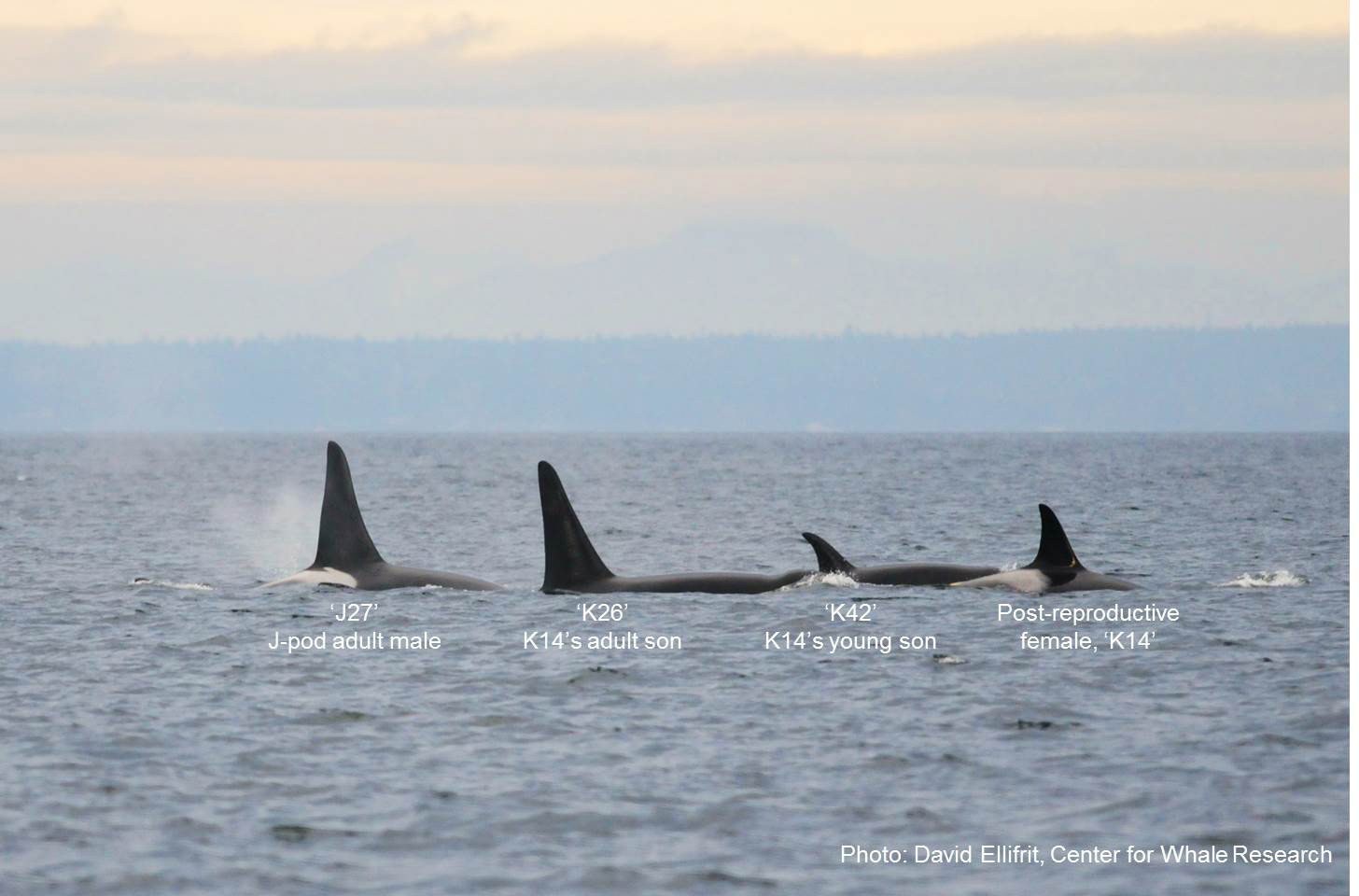
Menopause is known to exist in five species of toothed whales: short-finned pilot whales, false killer whales, killer whales, narwhals, and beluga whales. As well as outliving females of other similar-sized species, females in these five species outlive the males of their own species. For example, female killer whales can live into their 80s, while males are typically dead by 40.
Evolutionary Conditions for Menopause
“The evolution of menopause and a long post-reproductive life could only happen in very specific circumstances,” said Professor Darren Croft, of the University of Exeter and Executive Director at the Center for Whale Research “Firstly, a species must have a social structure in which females spend their lives in close contact with their offspring and grand-offspring. Secondly, the females must have an opportunity to help in ways that improve the survival chances of their family. For example, female toothed whales are known to share food and use their knowledge to guide the group to find food when it is in short supply.”

Professor Dan Franks, from the University of York, said: “Previous research on menopause evolution has tended to focus on single species, typically humans or killer whales. This study is the first to cross several species, enabled by the recent discovery of menopause in multiple species of toothed whales. Our study provides evidence that menopause evolved by expanding female lifespan beyond their reproductive years, rather than from reduced reproductive lifespan. This is a question that has long been asked in anthropology, but can only be directly answered with a comparative study.”
Commenting on parallels with the evolution of menopause in humans, Professor Croft added: “It’s fascinating that we share this life history with a taxonomic group we’re so different from.
“Despite these differences, our results show that humans and toothed whales show convergent life history – just like in humans, menopause in toothed whales evolved by selection to increase the total lifespan without also extending their reproductive lifespan.”
Reference: “The evolution of menopause in toothed whales” by Samuel Ellis, Daniel W. Franks, Mia Lybkær Kronborg Nielsen, Michael N. Weiss and Darren P. Croft, 13 March 2024, Nature.
DOI: 10.1038/s41586-024-07159-9
The study was funded by the Leverhulme Trust and the Natural Environment Research Council (NERC).
Never miss a breakthrough: Join the SciTechDaily newsletter.
Follow us on Google and Google News.
1 Comment
Orcas are dolphins though. Not whales.