
Close Menu
    Facebook X (Twitter) Instagram
    SciTechDaily
    • Biology
    • Chemistry
    • Earth
    • Health
    • Physics
    • Science
    • Space
    • Technology
    Facebook X (Twitter) Pinterest YouTube RSS
    SciTechDaily
    Home»Health»Scientists Crack 30-Year Mystery Behind “Holy Grail” Cancer Drug
    Health

    Scientists Crack 30-Year Mystery Behind “Holy Grail” Cancer Drug

    By University of Copenhagen - Faculty of ScienceJune 4, 2025No Comments4 Mins Read
    Facebook Twitter Pinterest Telegram LinkedIn WhatsApp Email Reddit
    Share
    Facebook Twitter LinkedIn Pinterest Telegram Email Reddit
    Biological Lymphocytes and Cancer Cell
    Scientists have finally decoded the full biosynthetic pathway of Taxol, a crucial chemotherapy drug, solving a decades-long mystery. Credit: Shutterstock

    A Danish research team has cracked the full biosynthesis of Taxol enabling cheaper and eco-friendly production in yeast.

    Taxol is one of the most trusted chemotherapy drugs for treating breast, ovarian, cervical, and lung cancers. Yet making this life-saving medicine has been anything but simple. The current production method is costly, complicated, and places a heavy burden on the environment because it relies on an intricate chemical semi-synthesis.

    For more than 30 years, scientists around the world have been chasing a big question: How does Taxol, a natural compound from the Pacific yew tree, form in nature? Cracking this mystery could open the door to producing Taxol through biotechnology, offering a faster, greener, and more affordable solution.

    Now, researchers at the University of Copenhagen have discovered the two missing enzymes that complete the final steps of Taxol’s biosynthetic pathway. These enzymes are the key to making Taxol biologically active and ready to fight cancer.
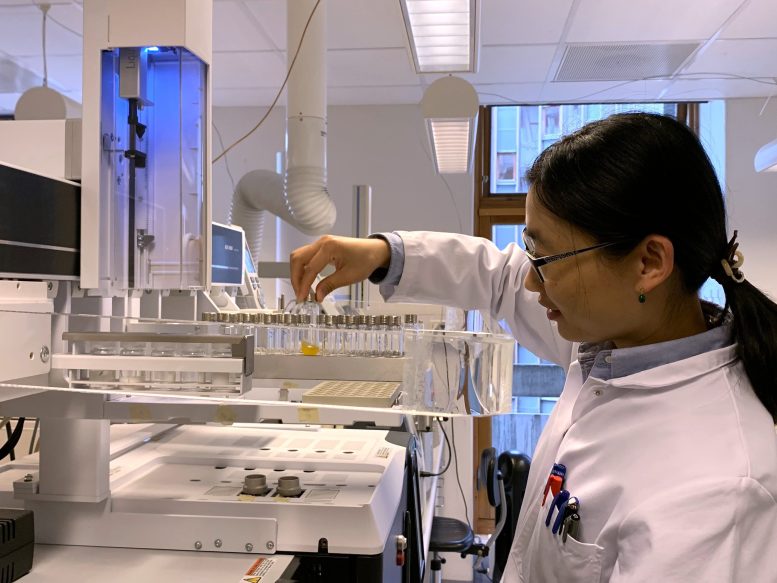
    Feiyan Liang Preparing Samples
    Feiyan Liang preparing samples for metabolomics analysis. Credit: Yao-Tao Duan, University of Copenhagen

    “Taxol has been the Holy Grail in this research field for decades because it’s an exceptionally complex molecule. But with the discovery of the final two enzymes, we now fully understand how it’s formed. This has allowed us to develop a biotechnological method to produce Taxol in yeast cells,” says Sotirios Kampranis, Professor at the Department of Plant and Environmental Sciences and senior author of the study published in Nature Synthesis.

    The method works by cloning the genes responsible for producing Taxol from the yew tree and inserting them into yeast cells. Once engineered, these yeast cells act as host organisms or micro-factories, containing the complete set of instructions needed to produce Taxol.

    Affecting women in developing countries

    The research team at the University of Copenhagen has applied for a patent on the method and is currently working to launch a spin-out company that will produce biosynthetic Taxol.

    “Using this method, we can produce Taxol cheaper than current conventional methods. Looking ahead, once we refine the process further, we expect to be able to reduce the cost by half,” says Assistant Professor and first author Feiyan Liang.
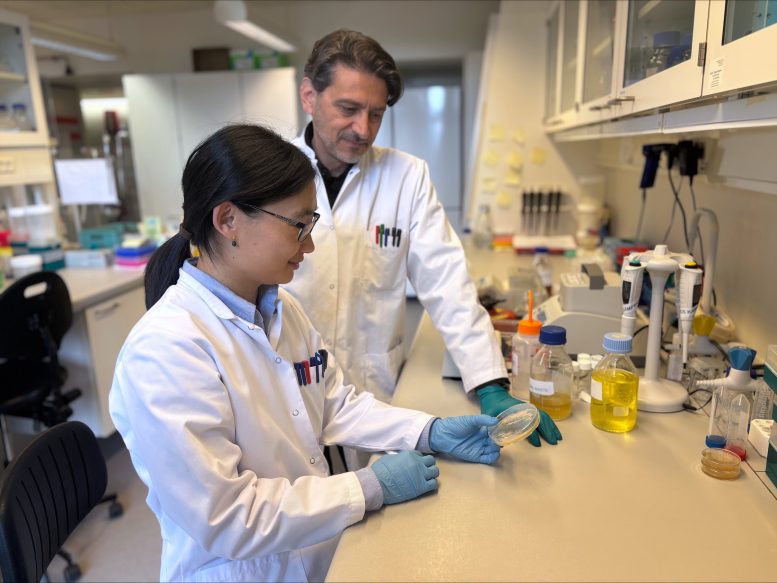
    Feiyan Liang and Sotirios Kampranis
    Feiyan Liang and Sotirios Kampranis examining the yeast strains used to produce Taxol. Credit: Yao-Tao Duan, University of Copenhagen

    Lower prices are especially crucial as ovarian cancer is on the rise globally. The prevalence of the disease is expected to increase by over 55 percent by 2050, with the vast majority of cases in low and middle-income countries. The number of women dying from ovarian cancer is projected to rise by nearly 70 percent in the same period.

    Currently, Taxol costs more than USD 20,000 per kilogram, making it one of the most expensive active pharmaceutical ingredients in use.

    “We see increasing demand for Taxol in many developing countries, where the high price is a major barrier. We hope our work will contribute to lower-priced drugs so that more people can have access to cancer treatment,” Feiyan Liang says.

    Much more sustainable

    The new method is not only more cost-effective but also more sustainable than chemical synthesis. One advantage is that the procedure does not involve harmful chemicals and solvents common in chemical production.
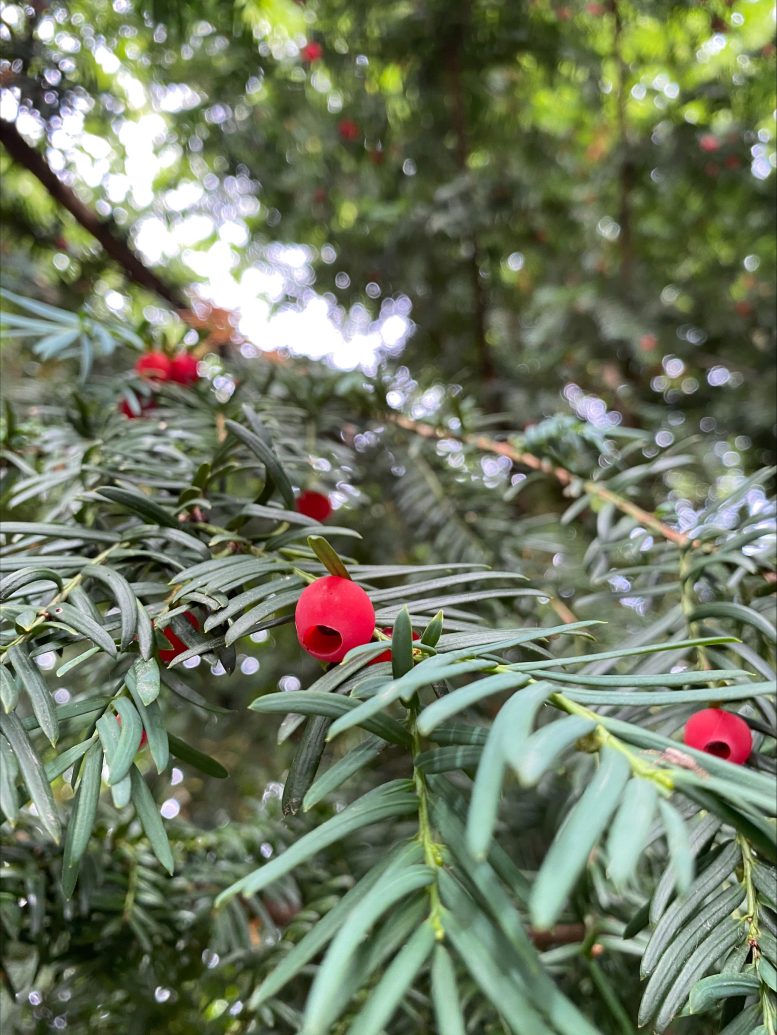
    Yew Tree at the Botanical Garden of the University of Copenhagen
    Yew tree at the botanical garden of the University of Copenhagen. Credit: Feiyan Liang, University of Copenhagen

    Another advantage is that it allows the use of more crude, less purified extracts from yew needles as starting material, much cheaper than the ultra-pure inputs required in chemical semi-synthesis. On top of that, the materials can be recycled.

    “We want to show that it’s possible to build a biotechnological drug production that is both sustainable and low-cost. There are very few examples of that today, but we now have the foundation to make it happen,” says Sotirios Kampranis.

    Reference: “Elucidation of the final steps in Taxol biosynthesis and its biotechnological production” by Feiyan Liang, Yuman Xie, Chi Zhang, Yong Zhao, Mohammed S. Motawia and Sotirios C. Kampranis, 30 April 2025, Nature Synthesis.
    DOI: 10.1038/s44160-025-00800-z

    Never miss a breakthrough: Join the SciTechDaily newsletter.
    Follow us on Google and Google News.

    Cancer Enzyme Pharmaceuticals Popular Sustainability University of Copenhagen
    Share. Facebook Twitter Pinterest LinkedIn Email Reddit

    Related Articles

    Weight-Loss Drug Mounjaro Shrinks Breast Cancer Tumors in Mice

    New Chemistry Discovery Promises More Effective Cancer Drugs With Fewer Side Effects

    Cancer’s Molecular Achilles Heel: Key to Improving Cancer Treatments Discovered

    New Harvard-Developed AI Predicts Future Pancreatic Cancer Up to Three Years Before Diagnosis

    Pulses – The Climate-Friendly Super Food That You Probably Haven’t Even Heard Of

    Traditional Chinese Medicine Shows Promise in Treating Lung Cancer

    Geneticists Reveal How Mutation Causes a Devastating Childhood Cancer – Use Drug To Reverse Its Effects

    Cancer Cells Eat Themselves to Survive Life-Threatening Damage

    Scientists Identify Specific Enzyme Related to Colon Cancer

    Leave A Reply Cancel Reply

    • Facebook
    • Twitter
    • Pinterest
    • YouTube

    Don't Miss a Discovery

    Subscribe for the Latest in Science & Tech!

    Trending News

    The Universe Is Expanding Too Fast and Scientists Can’t Explain Why

    “Like Liquid Metal”: Scientists Create Strange Shape-Shifting Material

    Early Warning Signals of Esophageal Cancer May Be Hiding in Plain Sight

    Common Blood Pressure Drug Shows Surprising Power Against Deadly Antibiotic-Resistant Superbug

    Scientists Uncover Dangerous Connection Between Serotonin and Heart Valve Disease

    Scientists Discover a “Protector” Protein That Could Help Reverse Hair Loss

    Bone-Strengthening Discovery Could Reverse Osteoporosis

    Scientists Uncover Hidden Trigger Behind Stem Cell Aging

    Follow SciTechDaily
    • Facebook
    • Twitter
    • YouTube
    • Pinterest
    • Newsletter
    • RSS
    SciTech News
    • Biology News
    • Chemistry News
    • Earth News
    • Health News
    • Physics News
    • Science News
    • Space News
    • Technology News
    Recent Posts
    • A Common Diabetes Drug May Hold the Key to Stopping HIV From Coming Back
    • Ancient “Syphilis-Like” Disease in Vietnam Challenges Key Scientific Assumptions
    • Drinking Alcohol To Cope in Your 20s Could Damage Your Brain for Life
    • Scientists Crack Alfalfa’s Chromosome Mystery After Decades of Debate
    • Ancient Ant-Plant Alliance Collapses As Predatory Wasps Move In
    Copyright © 1998 - 2026 SciTechDaily. All Rights Reserved.
    • Science News
    • About
    • Contact
    • Editorial Board
    • Privacy Policy
    • Terms of Use

    Type above and press Enter to search. Press Esc to cancel.