
Close Menu
    Facebook X (Twitter) Instagram
    SciTechDaily
    • Biology
    • Chemistry
    • Earth
    • Health
    • Physics
    • Science
    • Space
    • Technology
    Facebook X (Twitter) Pinterest YouTube RSS
    SciTechDaily
    Home»Technology»Scientists Create Synthetic Red Blood Cells That Mimic Natural Ones, Plus Have New Abilities
    Technology

    Scientists Create Synthetic Red Blood Cells That Mimic Natural Ones, Plus Have New Abilities

    By American Chemical SocietyJune 3, 2020No Comments3 Mins Read
    Facebook Twitter Pinterest Telegram LinkedIn WhatsApp Email Reddit
    Share
    Facebook Twitter LinkedIn Pinterest Telegram Email Reddit
    Synthetic Red Blood Cell
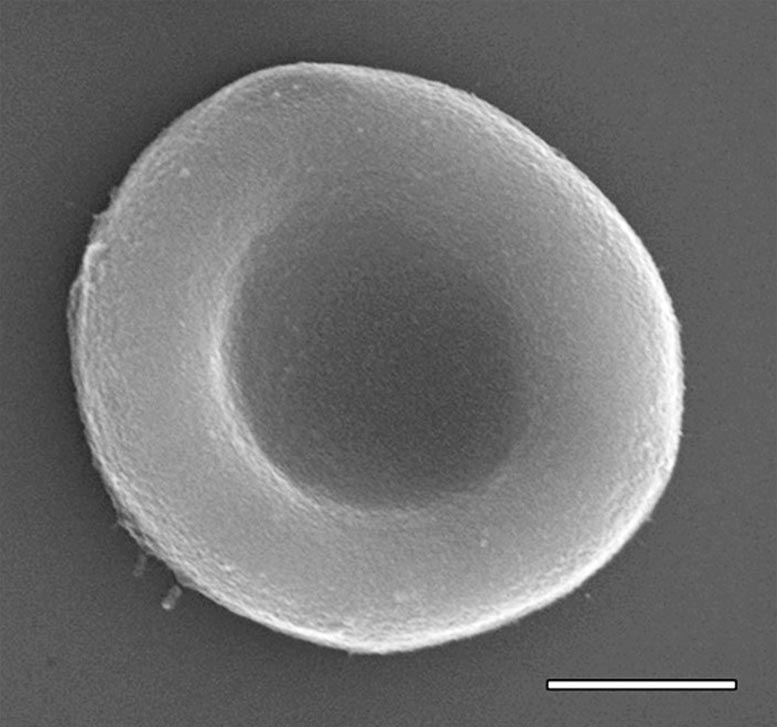
    Artificial red blood cells, like the one shown here, could carry oxygen, therapeutic drugs and other cargo in the bloodstream. Scale bar, 2 μm. Credit: Adapted from ACS Nano 2020, DOI: 10.1021/acsnano.9b08714

    Scientists have tried to develop synthetic red blood cells that mimic the favorable properties of natural ones, such as flexibility, oxygen transport, and long circulation times. But so far, most artificial red blood cells have had one or a few, but not all, key features of the natural versions. Now, researchers reporting in ACS Nano have made synthetic red blood cells that have all of the cells’ natural abilities, plus a few new ones.

    Red blood cells (RBCs) take up oxygen from the lungs and deliver it to the body’s tissues. These disk-shaped cells contain millions of molecules of hemoglobin — an iron-containing protein that binds oxygen. RBCs are highly flexible, which allows them to squeeze through tiny capillaries and then bounce back to their former shape. The cells also contain proteins on their surface that allow them to circulate through blood vessels for a long time without being gobbled up by immune cells. Wei Zhu, C. Jeffrey Brinker, and colleagues wanted to make artificial RBCs that had similar properties to natural ones, but that could also perform new jobs such as therapeutic drug delivery, magnetic targeting, and toxin detection.

    The researchers made the synthetic cells by first coating donated human RBCs with a thin layer of silica. They layered positively and negatively charged polymers over the silica-RBCs, and then etched away the silica, producing flexible replicas. Finally, the team coated the surface of the replicas with natural RBC membranes. The artificial cells were similar in size, shape, charge, and surface proteins to natural cells, and they could squeeze through model capillaries without losing their shape. In mice, the synthetic RBCs lasted for more than 48 hours, with no observable toxicity. The researchers loaded the artificial cells with either hemoglobin, an anticancer drug, a toxin sensor or magnetic nanoparticles to demonstrate that they could carry cargoes. The team also showed that the new RBCs could act as decoys for a bacterial toxin. Future studies will explore the potential of the artificial cells in medical applications, such as cancer therapy and toxin biosensing, the researchers say.

    Reference: “Biomimetic Rebuilding of Multifunctional Red Blood Cells: Modular Design Using Functional Components” by Jimin Guo, Jacob Ongudi Agola, Rita Serda, Stefan Franco, Qi Lei, Lu Wang, Joshua Minster, Jonas G. Croissant, Kimberly S. Butler, Wei Zhu and C. Jeffrey Brinker, 11 May 2020, ACS Nano.
    DOI: 10.1021/acsnano.9b08714

    The authors acknowledge funding from the Air Force Office of Scientific Research, the Laboratory Directed Research & Development Program at Sandia National Laboratories, the Department of Energy Office of Science, the National Institutes of Health and the National Natural Science Foundation of China.

    Never miss a breakthrough: Join the SciTechDaily newsletter.
    Follow us on Google and Google News.

    American Chemical Society Blood Cells Nanotechnology Popular
    Share. Facebook Twitter Pinterest LinkedIn Email Reddit

    Related Articles

    Microrobots Swarm the Seas, Capturing Microplastics and Bacteria [Video]

    Hair Regeneration: AI Helps Design Baldness Treatment That Works Better Than Testosterone or Minoxidil

    Bacteria-Sized Metallic Robots Take On Microplastics – And Win by Breaking Them Down

    COVID-19 Coronavirus Breathalyzer Test Developed

    New Manufacturing Method Enables Ultra-Efficient Atomic Computers That Use 100x Less Power

    Nanotextures Make Anti-Fogging, Self-Cleaning and Glare-Free Glass

    Engineered Coating for Implants Reduces the Risk of Complications

    Bringing Microfluidics to the Marketplace

    High Resolution 3D Printer Prints 5 Meters per Second

    Leave A Reply Cancel Reply

    • Facebook
    • Twitter
    • Pinterest
    • YouTube

    Don't Miss a Discovery

    Subscribe for the Latest in Science & Tech!

    Trending News

    Breakthrough Bowel Cancer Trial Leaves Patients Cancer-Free for Nearly 3 Years

    Natural Compound Shows Powerful Potential Against Rheumatoid Arthritis

    100,000-Year-Old Neanderthal Fossils in Poland Reveal Unexpected Genetic Connections

    Simple “Gut Reset” May Prevent Weight Gain After Ozempic or Wegovy

    2.8 Days to Disaster: Scientists Warn Low Earth Orbit Could Suddenly Collapse

    Common Food Compound Shows Surprising Power Against Superbugs

    5 Simple Ways To Remember More and Forget Less

    The Atomic Gap That Could Cost the Semiconductor Industry Billions

    Follow SciTechDaily
    • Facebook
    • Twitter
    • YouTube
    • Pinterest
    • Newsletter
    • RSS
    SciTech News
    • Biology News
    • Chemistry News
    • Earth News
    • Health News
    • Physics News
    • Science News
    • Space News
    • Technology News
    Recent Posts
    • Scientists Print Artificial Neurons That Can Talk to the Brain
    • Bowel and Ovarian Cancers Are Dramatically Rising in Young Adults and Scientists Aren’t Sure Why
    • Alzheimer’s May Begin Decades Earlier Than You Think, New Mayo Clinic Study Finds
    • The Hidden Risk of Taking Breaks From Weight-Loss Drugs Like Ozempic
    • Total Solar Eclipse Made Cities Go Eerily Quiet Beneath the Surface
    Copyright © 1998 - 2026 SciTechDaily. All Rights Reserved.
    • Science News
    • About
    • Contact
    • Editorial Board
    • Privacy Policy
    • Terms of Use

    Type above and press Enter to search. Press Esc to cancel.