
Close Menu
    Facebook X (Twitter) Instagram
    SciTechDaily
    • Biology
    • Chemistry
    • Earth
    • Health
    • Physics
    • Science
    • Space
    • Technology
    Facebook X (Twitter) Pinterest YouTube RSS
    SciTechDaily
    Home»Biology»Scientists Debunk the Myth: Do Trees Really Have Feelings?
    Biology

    Scientists Debunk the Myth: Do Trees Really Have Feelings?

    By Heidelberg UniversityOctober 13, 20234 Comments3 Mins Read
    Facebook Twitter Pinterest Telegram LinkedIn WhatsApp Email Reddit
    Share
    Facebook Twitter LinkedIn Pinterest Telegram Email Reddit
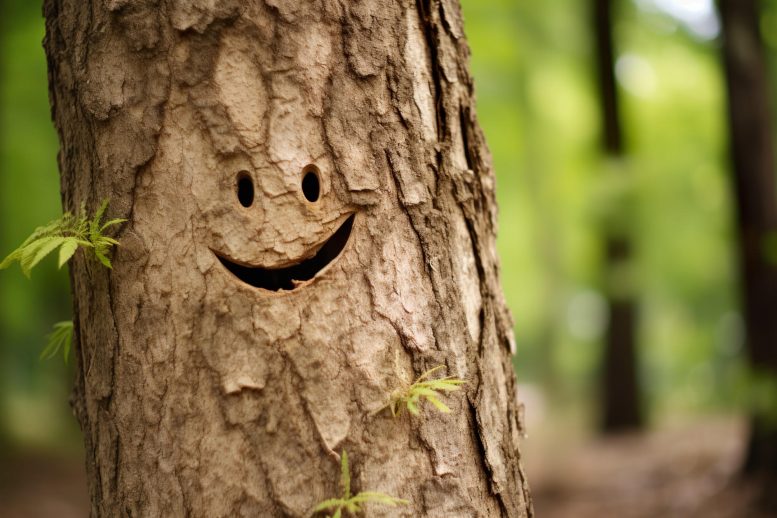
    Happy Tree Smiley Face
    Researchers scrutinized claims made in two popular books about trees having human-like traits and emotions. Published in Trends in Plant Science, their findings challenge many of these claims as unscientific. They caution against anthropomorphizing plants and highlight issues like the flawed “mother tree concept” and the dangers of making decisions based on appealing but inaccurate narratives, especially in the context of climate change adaptation.

    Many Attributions in Popular Publications Lack Scientific Evidence

    Plants are frequently often attributed with abilities similar to those recognized in animals or humans. For instance, it’s suggested that trees possess emotions, and can therefore care for their offspring, like mothers.

    In an article in the review journal Trends in Plant Science, 32 international plant and forest researchers followed up on such assertions.

    Led by Prof. David G. Robinson, professor emeritus for cell biology at the Centre for Organismal Studies (COS) of Heidelberg University, the researchers analyzed the claims in two popular publications on forests and reached the conclusion that conjecture is equated with fact. They warn against “anthropomorphizing” plants.

    Scrutinizing Popular Claims

    The article scrutinized the assertions in two widely received books about the hidden life of trees and the search for the so-called “mother tree.”

    The researchers report that in those works, trees are attributed with human characteristics and behaviors, including the ability to feel pain and pleasure, to communicate with one another, and to act altruistically.

    Based on existing research literature, Prof. Robinson and his co-authors provide detailed evidence that the main assertions are scientifically untenable.

    The Heidelberg researcher points out that numerous research papers on the significance of intraspecies competition clearly contradict the contention that trees of a single species support one another and keep each other alive.

    The “Mother Tree” Myth

    According to Prof. Robinson and his colleagues, newer studies also render the “mother tree concept” untenable.

    Many publications based on this concept that presumes to substantiate a targeted transfer of carbon from older to younger trees via networked fungi – the mycorrhizae – are flawed due to a lack of control variants.

    “And where the data does actually suggest such a transfer, the quantity of carbon transferred is so small that it is physiologically completely irrelevant for the recipient tree”, states Prof. Robinson. The researchers also criticize that both books cite evidentiary sources that were not peer-reviewed.

    Potential Ramifications and Conclusion

    Finally, the authors point out the fatal consequences such claims could have for the adaptation of forests to climate change if political decisions are “based on pleasant-sounding but false messages” rather than scientific fact, adds Robinson.

    Reference: “Mother trees, altruistic fungi, and the perils of plant personification” by David G. Robinson, Christian Ammer, Andrea Polle, Jürgen Bauhus, Roni Aloni, Peter Annighöfer, Tobias I. Baskin, Michael R. Blatt, Andreas Bolte, Harald Bugmann, Jerry D. Cohen, Peter J. Davies, Andreas Draguhn, Henrik Hartmann, Hubert Hasenauer, Peter K. Hepler, Ulrich Kohnle, Friederike Lang, Magnus Löf, Christian Messier and Torgny Näsholm, 19 September 2023, Trends in Plant Science.
    DOI: 10.1016/j.tplants.2023.08.010

    The article’s authors included researchers from the University of Göttingen as well as from Austria, Canada, Chile, Great Britain, Ireland, Israel, Spain, Sweden, Switzerland, and the USA. They represent the fields of biology, forestry, and plant science.

    Never miss a breakthrough: Join the SciTechDaily newsletter.
    Follow us on Google and Google News.

    Heidelberg University Plant Science Plants Trees
    Share. Facebook Twitter Pinterest LinkedIn Email Reddit

    Related Articles

    Walnut Trees’ 40-Million-Year-Old Secret: How They Switch Genders Every Season

    Life Mystery Solved: What Determines the Lifespan of a Tree Leaf?

    Why Do Plants Grow Towards Light?

    Scientists Have Created Genetically Modified Drought-Resistant Plants

    How Plants Activate Their Immune System Against Dangerous Pathogens in Rain

    DNA Hoarders: Genetic Duplication Linked to the Origin and Evolution of Pine Trees and Their Relatives

    Larger Trees More Likely to Die From Drought in the Amazon – Small Trees Offer Hope for Rainforests

    Scientists Find Genes to Save Ash Trees From Deadly Beetle That Is Expected to Kill Billions of Trees Worldwide

    Revealed: Plants Molecular ‘Alarm’ System That Protects Them From Predators

    4 Comments

    1. Shaun on October 13, 2023 4:25 am

      Reminder: The Giving Tree by Shel Silverstein is a work of fiction; trees aren’t really like that

      Reply
    2. A Testament on October 16, 2023 12:48 pm

      Finding the Mother Tree by Simard should be reviewed.

      Reply
      • Stanley Vejtasa on October 25, 2023 9:20 am

        Yes, it is an excellent book. Her studies were thoroughly designed and very impressive.

        Reply
    3. Stanley Vejtasa on October 24, 2023 1:02 pm

      I have a Douglas fir forest that was partially logged in the 1960s. Some of the stumps from that logging have healed over and have increased in size over the last 60 years. Clearly the nearby trees have made contact with the stump’s roots and fed it with nutrients. Certainly a communal effort.

      Reply
    Leave A Reply Cancel Reply

    • Facebook
    • Twitter
    • Pinterest
    • YouTube

    Don't Miss a Discovery

    Subscribe for the Latest in Science & Tech!

    Trending News

    Artificial Sweeteners May Harm Future Generations, Study Suggests

    Splashdown! NASA Artemis II Returns From Record-Breaking Moon Mission

    What If Consciousness Exists Beyond Your Brain

    Scientists Finally Crack the 100-Million-Year Evolutionary Mystery of Squid and Cuttlefish

    Beyond “Safe Levels”: Study Challenges What We Know About Pesticides and Cancer

    Researchers Have Found a Dietary Compound That Increases Longevity

    Scientists Baffled by Bizarre “Living Fossil” From 275 Million Years Ago

    Your IQ at 23 Could Predict Your Wealth at 27, Study Finds

    Follow SciTechDaily
    • Facebook
    • Twitter
    • YouTube
    • Pinterest
    • Newsletter
    • RSS
    SciTech News
    • Biology News
    • Chemistry News
    • Earth News
    • Health News
    • Physics News
    • Science News
    • Space News
    • Technology News
    Recent Posts
    • This Metal Melts in Your Hand – and Scientists Just Discovered Something Strange
    • Why Losing Too Much Fat Can Be Just As Dangerous as Obesity
    • Beef vs. Chicken: Surprising Results From New Prediabetes Study
    • Alzheimer’s Breakthrough: Scientists Discover Key Protein May Prevent Toxic Protein Clumps in the Brain
    • Scientists Discover New Way To Make Protein Shakes Taste Better
    Copyright © 1998 - 2026 SciTechDaily. All Rights Reserved.
    • Science News
    • About
    • Contact
    • Editorial Board
    • Privacy Policy
    • Terms of Use

    Type above and press Enter to search. Press Esc to cancel.