
Close Menu
    Facebook X (Twitter) Instagram
    SciTechDaily
    • Biology
    • Chemistry
    • Earth
    • Health
    • Physics
    • Science
    • Space
    • Technology
    Facebook X (Twitter) Pinterest YouTube RSS
    SciTechDaily
    Home»Health»Scientists Develop a Skin Crawling Treatment for Acne
    Health

    Scientists Develop a Skin Crawling Treatment for Acne

    By McGill UniversitySeptember 4, 2021No Comments3 Mins Read
    Facebook Twitter Pinterest Telegram LinkedIn WhatsApp Email Reddit
    Share
    Facebook Twitter LinkedIn Pinterest Telegram Email Reddit
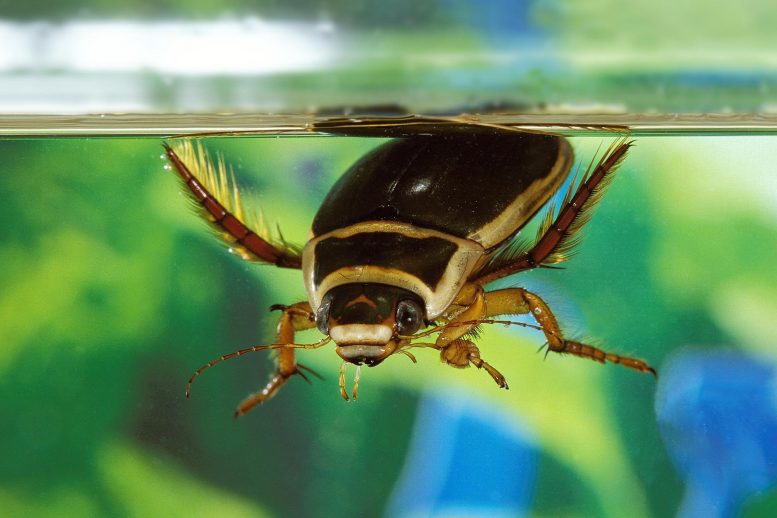
    Great Diving Beetle
    Scientists created a smart skin care device inspired by the male diving beetle.

    Scientists Develop Beetle-Inspired Device for Skincare

    Drawing inspiration from nature, a team of international scientists have invented a smart device for personalized skin care modeled after the male diving beetle. This tool collects and monitors body fluids while sticking to the skin’s surface, paving the way for more accurate diagnostics and treatment for skin diseases and conditions like acne. The team includes Bo-yong Park, a former postdoctoral researcher at The Neuro at McGill University.

    Q&A with Bo-yong Park

    What problem did you set out to solve?

    Traditional non-invasive diagnostic devices developed for skin care have several limitations. These devices tend to be less accurate, hard to use, and require expensive equipment to analyze results. The chemical adhesives used in the process can also cause skin irritation or sometimes damage, making them difficult to use repeatedly or for a long time. Maintaining adhesion in different conditions like a wet or a curved skin surface can also be very challenging.
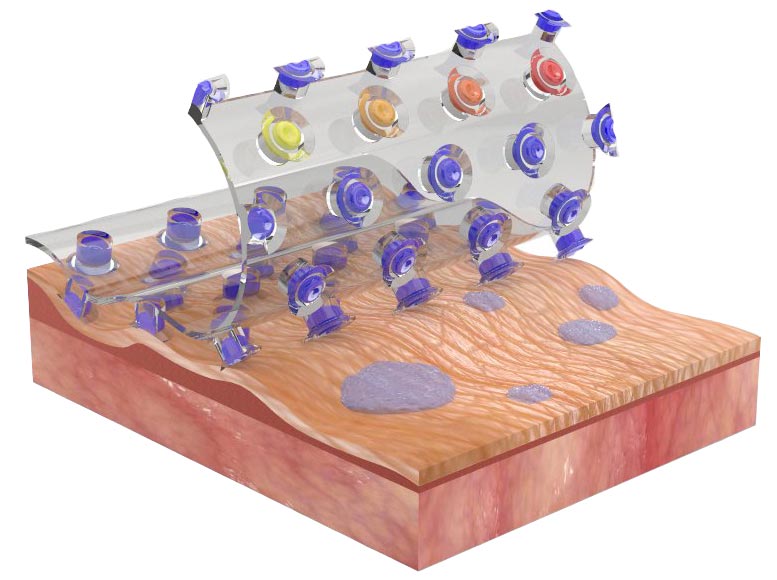
    Beetle Inspired Skin Care Device
    Schematic illustration of the adhesive patch with diving beetle–inspired suction chambers against rough and wet human skin. Credit: Bo-yong Park et al.

    Why did you look to nature for inspiration?

    Male diving beetles or Hydaticus pacificus are aquatic insects that have evolved special adhesive hairs, or setae, to latch onto their mates underwater. The setae, which are present on the male’s forelegs, have unique suction cup-like structures and cavities, providing strong attachment against wet and irregular surfaces. Inspired by male diving beetles, we developed an intelligent device for real-time monitoring of skin health that attaches to the skin’s irregular surface.

    Male Diving Beetle
    Image of the forelegs of the male diving beetle (Hydaticus pacificus). Credit: Bo-yong Park et al.

    How does the device work?

    We created micro-sized artificial suction cups that can collect and monitor body fluids while adhering to the skin. We embedded fluid-capturing hydrogels within the cavities of the cups to monitor pH levels. The hydrogel changes color with differing acidity levels. Integrating machine learning techniques, we also develop a software application that can automatically quantify pH levels from the color indicated by the pH-responsive hydrogels. We expect that this device will be applied to personalized skin treatment patches, medical adhesive materials, and diagnostic technologies. Based on the results of our research, we expect it could be used for on-site diagnosis of biomarkers for skin disease.

    Reference: “Diving beetle–like miniaturized plungers with reversible, rapid biofluid capturing for machine learning–based care of skin disease” by Sangyul Baik, Jihyun LeeEun Je Jeon, Bo-yong Park, Da Wan Kim, Jin Ho Song, Heon Joon Lee, Seung Yeop Han, Seung-Woo Cho and Changhyun Pang, Science Advances.
    DOI: 10.1126/sciadv.abf5695

    About this study

    “Diving beetle–like miniaturized plungers with reversible, rapid biofluid capturing for machine learning–based care of skin disease” by Sangyul Baik, Jihyun Lee, Eun Je Jeon, Bo-yong Park, Da Wan Kim, Jin Ho Song, Heon Joon Lee, Seung Yeop Han, Seung-Woo Cho, and Changhyun Pang was published in Science Advances. The authors acknowledge support from the National Research Foundation of Korea, Korea Health Technology R&D Project, the Korea Evaluation Institute of Industrial Technology grant funded by the Korean government, and the Institute for Basic Science.

    Never miss a breakthrough: Join the SciTechDaily newsletter.
    Follow us on Google and Google News.

    Beetle Dermatology McGill University Popular Skin
    Share. Facebook Twitter Pinterest LinkedIn Email Reddit

    Related Articles

    Rewriting Textbooks: RNA, Not DNA, Is the True Culprit Behind Sunburns

    Is Your Acne Treatment Turning Toxic? Investigators Uncover Carcinogens Lurking in Benzoyl Peroxide Products

    According to Scientists, This Collagen Drink Improves Skin Aging in Just Weeks

    A New Way To Treat Obesity? UV Light Found To Prevent Body Weight Gain

    New “Super Melanin” Cream Heals Skin Injuries From Sunburn, Chemical Burns

    Narasin – Scientists Discover Potential Magic Bullet for Acne

    Scientists Discover Protein That Plays a Key Role in Skin Aging

    Researchers Surprised: Skin Creams Aren’t What We Thought They Were

    Warning: Moisturizers May Be Turning Your Skin Into ‘Swiss Cheese’

    Leave A Reply Cancel Reply

    • Facebook
    • Twitter
    • Pinterest
    • YouTube

    Don't Miss a Discovery

    Subscribe for the Latest in Science & Tech!

    Trending News

    Popular Sugar-Free Sweetener Linked to Liver Disease, Study Warns

    What Is Hantavirus? The Deadly Disease Raising Alarm Worldwide

    Scientists Just Discovered How the Universe Builds Monster Black Holes

    Scientists Unveil New Treatment Strategy That Could Outsmart Cancer

    A Simple Vitamin May Hold the Key to Treating Rare Genetic Diseases

    Scientists Think the Real Fountain of Youth May Be Hiding in Your Gut

    Ravens Don’t Follow Wolves, They Predict Them

    This Common Knee Surgery May Be Doing More Harm Than Good

    Follow SciTechDaily
    • Facebook
    • Twitter
    • YouTube
    • Pinterest
    • Newsletter
    • RSS
    SciTech News
    • Biology News
    • Chemistry News
    • Earth News
    • Health News
    • Physics News
    • Science News
    • Space News
    • Technology News
    Recent Posts
    • Why Are So Many New Fathers Dying? Scientists Say the U.S. Has a Dangerous Blind Spot
    • Scientists Identify Simple Supplement That Greatly Reduces Alzheimer’s Damage
    • You May Have a Dangerous Type of Cholesterol Even if Your Tests Look Normal
    • Study Reveals Dangerous Flaw in AI Symptom Checkers
    • New MRI Breakthrough Captures Stunningly Clear Images of the Eye and Brain
    Copyright © 1998 - 2026 SciTechDaily. All Rights Reserved.
    • Science News
    • About
    • Contact
    • Editorial Board
    • Privacy Policy
    • Terms of Use

    Type above and press Enter to search. Press Esc to cancel.