
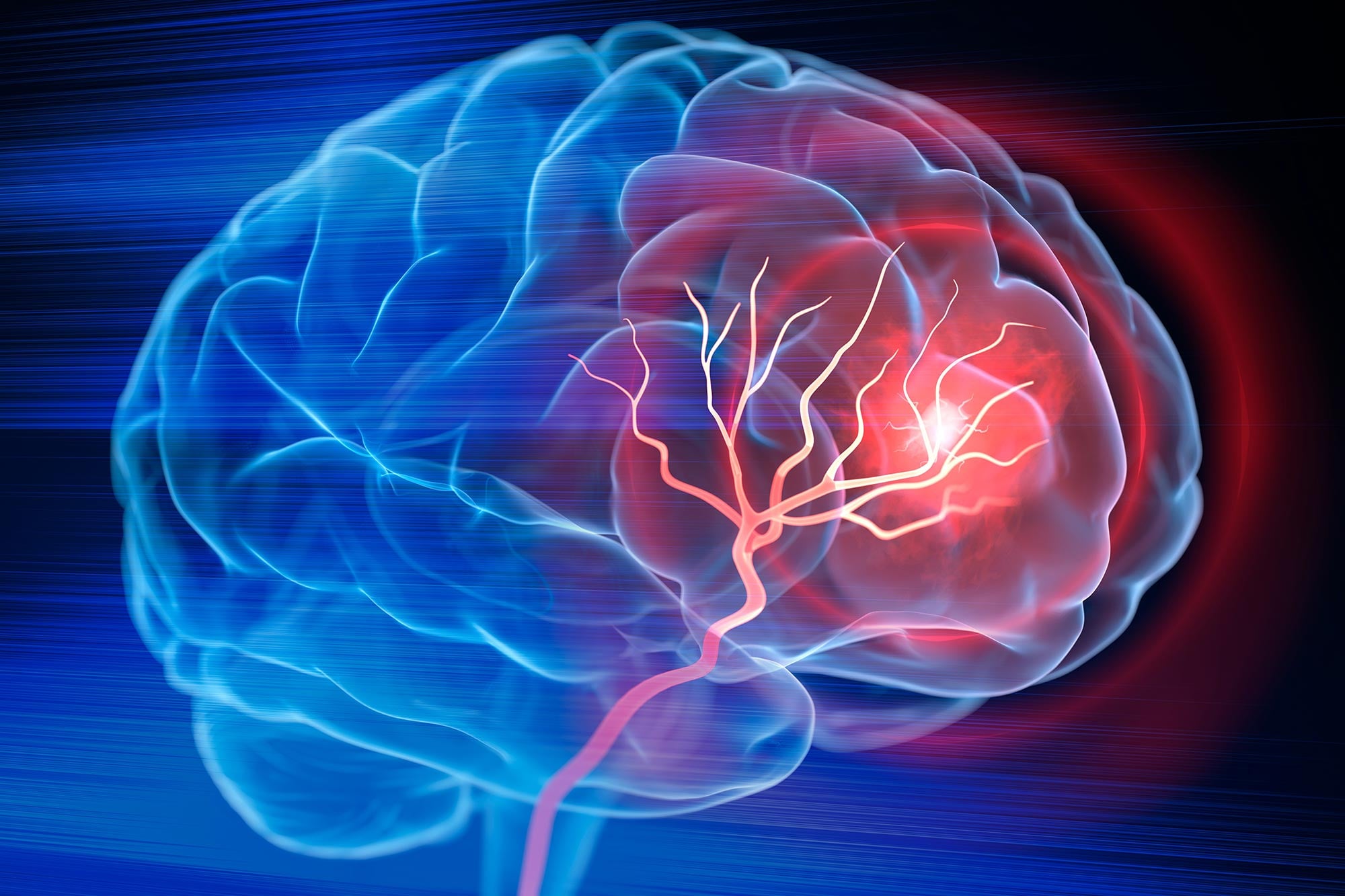
New nanomaterial passes the blood-brain barrier to reduce damaging inflammation after the most common form of stroke.
When someone experiences a stroke, doctors must quickly restore blood flow to the brain to prevent death. However, this sudden return of circulation can also set off a harmful cascade that damages brain cells, drives inflammation, and raises the risk of lasting disability.
Researchers at Northwestern University have now created an injectable regenerative nanomaterial designed to protect the brain during this critical period after blood flow is restored.
In a new preclinical study, the scientists tested a single intravenous dose given immediately following reperfusion in a mouse model of ischemic stroke, the most common form of the condition. The therapy was able to cross the blood-brain barrier, a hurdle that prevents many treatments from reaching brain tissue, and promote repair. Mice that received the treatment showed significantly less brain damage, with no evidence of side effects or toxicity in major organs.
The results, published in the journal Neurotherapeutics, indicate that this approach could eventually work alongside existing stroke therapies by reducing secondary injury and aiding recovery.
“Current clinical approaches are entirely focused on blood flow restoration,” said co-corresponding author Dr. Ayush Batra, associate professor, neurology (neurocritical care) and pathology at Northwestern University Feinberg School of Medicine, co-director of the NeuroVascular Inflammation Laboratory at Northwestern and a neurocritical care physician with Northwestern Medicine. “Any treatment that facilitates neuronal recovery and minimizes injury would be very powerful, but that holy grail doesn’t yet exist. This study is promising because it’s leading us down a pathway to develop these technologies and therapeutics for this unmet need.”
https://youtube.com/shorts/d9qy8VOmhS8
This video shows, in real time within the first 24 hours of the injection, immune cells (shown in red) rushing into an area injured by ischemic stroke. The peptide treatment (blue) successfully crosses the blood-brain barrier (red). Microglia (green) become active and surround the treatment, which indicates an elevated immune response. Recorded over five minutes and sped up here 60x.
Credit: Northwestern University
“One of the most promising aspects of this study is that we were able to show this therapeutic technology, which has shown incredible promise in spinal cord injury, can now begin to be applied in a stroke model and that it can be delivered systemically,” said Stupp, co-corresponding author and Board of Trustees Professor of Materials Science and Engineering, Chemistry, Medicine and Biomedical Engineering at Northwestern. “This systemic delivery mechanism and the ability to cross the blood-brain barrier is a significant advance that could also be useful in treating traumatic brain injuries and neurodegenerative diseases such as ALS.”
Stupp also is founding director of the Center for Regenerative Nanomedicine. He has appointments in the McCormick School of Engineering, Weinberg College of Arts and Sciences and Feinberg School of Medicine.
Study mimicked real-world stroke treatment
Acute ischemic stroke, which accounts for 80% of all strokes in the U.S., is a devastating condition and is one of the leading causes of morbidity and mortality worldwide, Batra said. Ischemic strokes occur when a clot blocks blood flow to the brain. Physicians reopen the vessel by administering “clot-busting” drugs or using devices to surgically remove the clot.
Severe strokes can lead to permanent, significant disability that affects a patient’s quality of life and their ability to return to work and engage with their family and society.
“It has not only a significant personal and emotional burden on patients, but also a financial burden on families and communities,” he said. “Reducing this level of disability with a therapy that could potentially help in restoring function and minimizing injury would really have a powerful long-term impact.”
The findings are highly relevant for future clinical applications because the scientists tested the approach in a mouse model that closely mimics real-world ischemic stroke treatment, Batra said. They first blocked blood flow to simulate a major ischemic stroke and then restored it (a process called reperfusion), just as doctors restore blood flow acutely for ischemic stroke patients.
This animation shows the hypothesized process of the smaller peptide assemblies forming larger nanofibers once they cross the blood-brain barrier. This phenomenon could produce a more potent therapeutic effect. Credit: Mark Seniw/Northwestern University
The scientists monitored the mice for seven days and didn’t observe any significant side effects or biocompatibility issues such as toxicity or immune system rejection. They used advanced imaging techniques, such as real-time intravital intracranial microscopy, to confirm the therapy localized to the stroke injury site. Compared to untreated mice, those treated with the “dancing molecules” had significantly less brain tissue damage, reduced signs of inflammation, and reduced signs of excessive, damaging immune response.
Stupp said the therapy has pro-regenerative and anti-inflammatory properties, both of which contributed to the positive results.
“You get an accumulation of harmful molecules once the blockage occurs and then suddenly you remove the clot and all those ‘bad actors’ get released into the bloodstream, where they cause additional damage,” Stupp said. “But the dancing molecules carry with them some anti-inflammatory activity to counteract these effects and at the same time help repair neural networks.”
Dynamic ‘dancing molecules’ can be dialed down in concentration
The secret behind Stupp’s “dancing molecules” breakthrough therapeutic is tuning the collective motion of molecules, so they can find and properly engage constantly moving cellular receptors. The treatment sends signals that encourage nerve cells to repair themselves. For example, it can help nerve fibers (called axons) grow again and reconnect with other nerve cells, restoring lost communication. This process is called plasticity, which means the brain and spinal cord can adapt and rebuild connections after injury.
In previous studies, scientists injected the dancing molecules as a liquid, and when used to treat spinal cord injury, the therapy immediately gels into a complex network of nanofibers that mimic the dense, extracellular matrix of the spinal cord. By matching the matrix’s structure, mimicking the motion of biological molecules and incorporating signals for receptors, the synthetic materials are able to communicate with cells.
In the new study, the scientists dialed down the concentration of supramolecular peptide assemblies to prevent possible clotting as the therapy enters the bloodstream. Smaller aggregates of peptides easily crossed the blood-brain barrier. Once enough molecules cross, larger nanofiber assemblies can form in brain tissue to produce a more potent therapeutic effect, Stupp said.
“We chose for this stroke study one of the most dynamic therapies we had in terms of its molecular structure so that supramolecular assemblies would have a better probability of crossing the blood-brain barrier,” Stupp said.
Optimizing therapeutic targeting
The fact that seemingly effective therapies cannot cross the blood-brain barrier has plagued the neuroscience field for decades, Batra said. This new therapy could change that.
When a physician acutely restores blood flow to a region of the brain in a stroke patient, the blood-brain barrier permeability is locally increased, naturally creating a transient opening and opportunity for therapeutic intervention, Batra said.
“Add to that a dynamic peptide that is able to cross more readily, and you’re really optimizing the chances that your therapy is going where you want it to go,” Batra said.
Next steps
Further studies will need to assess whether this treatment can support longer-term, functional recovery, Batra said. For instance, many stroke patients suffer from significant cognitive decline throughout the subsequent year after a stroke. The new therapy is primed to address that secondary injury, Batra said, but the studies will require a longer follow-up period and more sophisticated behavioral testing.
In addition, the team is interested in testing whether additional regenerative signals could be incorporated into the therapeutic peptides to produce even better results.
Reference: “Toward development of a dynamic supramolecular peptide therapy for acute ischemic stroke” by Zijun Gao, Luisa Helena Andrade da Silva, Zhiwei Li, Feng Chen, Cara Smith, Zoie Lipfert, Ryan Martynowicz, Erika Arias, William A. Muller, David P. Sullivan, Samuel I. Stupp and Ayush Batra, 8 January 2026, Neurotherapeutics.
DOI: 10.1016/j.neurot.2025.e00820
Funding for this study was primarily provided by the SQI Synthesizer Grant Program at the Center for Regenerative Nanomedicine.
Never miss a breakthrough: Join the SciTechDaily newsletter.
Follow us on Google and Google News.
12 Comments
What hospitals/ERs need to do first is change their policy of not doing MRIs on ER patients. I have had 2 strokes and I was rushed to the ER lights and sirens only to have the ER doc completely fail to diagnose my strokes because their policy is to only do CT scans on ER patients, and only to do MRIs on admitted patients. They openly admit that CT scans miss most strokes. By the time an ER patient gets admitted in many cases that 4 hour window closes before they even get the MRI. Which means they don’t get diagnosed in time to treat the stroke with a clot busting drug. For both of my strokes I had to contact my regular doctor to get an order for a brain MRI which diagnosed the strokes days later and in the case of the first stroke, a week and a half later. PATHETIC. I was extremely lucky in that my strokes have been small and my brain recovered 95% of what was lost (my estimate) but I am still living with minor effects that I will probably have for the rest of my life.
This newly discovered treatment for strokes will not help many people unless the ERs change their policy on MRIs. The ERs, at least the ones near me, are currently incapable of diagnosing ischemic strokes so what is the point of developing treatments for them?
Ive had the same experience. Cat scans came too late for any treatment.
It sounds like you have a lawsuit gift wrapped for you. The added benefit of seeking out a team that handles malpractice and pursuing a case is that this is the only real change agent against these hospitals. Enough lawsuits happening is how policy gets changed.
This framing is misleading. Stroke treatment isn’t just about “a molecule” or drugs—it’s about time-sensitive access to care. When policies delay or block ER evaluation, patients can miss the treatment window entirely, with devastating consequences. I experienced this firsthand after policy changes affected emergency response, and the outcome was life-altering. Accuracy matters here. This oversimplifies stroke care. When access to the ER is delayed by policy changes, people can miss the critical treatment window, and the consequences are permanent. I lived this. The way this is described minimizes the real harm caused by delayed or denied emergency care.
It sounds like you have a lawsuit gift wrapped for you. The added benefit of seeking out a team that handles malpractice and pursuing a case is that this is the only real change agent against these hospitals. Enough lawsuits happening is how policy gets changed.
So what do they need some people to try it out on
This study is about one new intervention for stroke. It doesn’t claim anything about ERs or scanning techniques. You need to approach Emergency Medicine admin and Public Health specialists who can advise and campaign for access/
This framing is misleading. Stroke treatment isn’t just about “a molecule” or drugs—it’s about time-sensitive access to care. When policies delay or block ER evaluation, patients can miss the treatment window entirely, with devastating consequences. I experienced this firsthand after policy changes affected emergency response, and the outcome was life-altering. Accuracy matters here. This oversimplifies stroke care. When access to the ER is delayed by policy changes, people can miss the critical treatment window, and the consequences are permanent. I lived this. The way this is described minimizes the real harm caused by delayed or denied emergency care.
Well, someone understands the medical system the same way I do. Good reading. Very good reading. Vast majority of cases it is indeed pathetic.
If you want good care you’re never getting it unless you literally live in a hospice and even then you probably won’t.
It’s why barbiturates are becoming so highly sought after. One day I suspect people such as myself will need these in case their quality of life suddenly declines massively to a point they are no longer capable of enjoying life. Euthanasia comes to mind. I want the right to not exist because I suffer from cochlear/vestibular migraines so I can only imagine what it is like for stroke victims who are treated this poorly. And I too will likely have one. I have many of the risk factors. But I also believe I have the last civil right.
They need to allow anyone who deems their own quality of life to be too poor to have the right to end it. Sadly as the USA has recently downgraded women’s healthcare I cannot see this ever happening. We are going in the wrong direction – taking away our human rights and our healthcare. Why should anyone have the right to control OUR bodies?
I had 2left brain stroke (ischemic) right hand and right dropfoot paralysis, from 24/4/2024 ,since 20months ,I did all kinds of physiotherapy without any solution, I am ready to travel to any country to take all solution even it will a surgery, my phone number 09613342974&my email address [email protected], please I am waiting a reply thank you in advance.
I had 2left brain stroke (ischemic) right hand and right dropfoot paralysis, from 24/4/2024,since 20months ,I did all kinds of physiotherapy without any solution, I am ready to travel to any country to take all solutions in my case even it will be a brain surgery, my phone number 09613342974&my email address [email protected], I am waiting your reply, thank you in advance
Regenerative medicine is a nightmare in my Country Uganda where such innovation is grabbed by top government officials and you who has made the discovery, is stigmatized and discriminated against as a schizophrenic.
No wonder Uganda can not partent drugs, due to such a bad record of not protecting people’s gains and or intellectual properties.
Good work and keep it up.
Dr. Akusa Yuma Darlington,