
Close Menu
    Facebook X (Twitter) Instagram
    SciTechDaily
    • Biology
    • Chemistry
    • Earth
    • Health
    • Physics
    • Science
    • Space
    • Technology
    Facebook X (Twitter) Pinterest YouTube RSS
    SciTechDaily
    Home»Technology»Scientists Develop New “Unbreakable Glass” Inspired by Nature – 3x Stronger, 5x More Fracture-Resistant
    Technology

    Scientists Develop New “Unbreakable Glass” Inspired by Nature – 3x Stronger, 5x More Fracture-Resistant

    By McGill UniversityOctober 10, 20214 Comments3 Mins Read
    Facebook Twitter Pinterest Telegram LinkedIn WhatsApp Email Reddit
    Share
    Facebook Twitter LinkedIn Pinterest Telegram Email Reddit
    Shiny Nacre Abalone Paua Shell
    Shiny nacre of Abalone washed ashore.

    Strongest and toughest glass known developed by McGill University scientists.

    Scientists from McGill University develop stronger and tougher glass, inspired by the inner layer of mollusk shells. Instead of shattering upon impact, the new material has the resiliency of plastic and could be used to improve cell phone screens in the future, among other applications.

    While techniques like tempering and laminating can help reinforce glass, they are costly and no longer work once the surface is damaged. “Until now there were trade-offs between high strength, toughness, and transparency. Our new material is not only three times stronger than the normal glass, but also more than five times more fracture-resistant,” says Allen Ehrlicher, an Associate Professor in the Department of Bioengineering at McGill University.
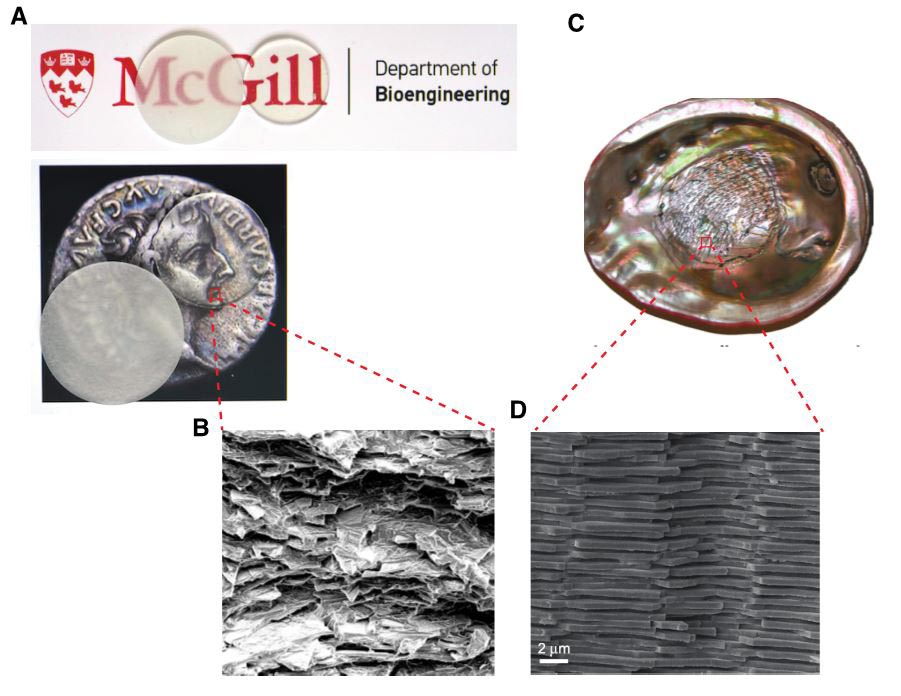
    Unbreakable Glass Composite
    (A) Glass composite (without index-matching strategy on left and with index-matching on right), (B) Glass composite’s microstructure, (C) View of the nacreous layer in red abalone shell, and (D) Nacre’s microstructure. Credit: Allen Ehrlicher

    Nature as Master of Design

    Drawing inspiration from nature, the scientist created a new glass and acrylic composite material that mimics nacre or mother of pearl. “Nature is a master of design. Studying the structure of biological materials and understanding how they work offers inspiration, and sometimes blueprints, for new materials,” says Ehrlicher.

    “Amazingly, nacre has the rigidity of a stiff material and durability of a soft material, giving it the best of both worlds,” he explains. “It’s made of stiff pieces of chalk-like matter that are layered with soft proteins that are highly elastic. This structure produces exceptional strength, making it 3000 times tougher than the materials that compose it.”

    The scientists took the architecture of nacre and replicated it with layers of glass flakes and acrylic, yielding an exceptionally strong yet opaque material that can be produced easily and inexpensively. They then went a step further to make the composite optically transparent. “By tuning the refractive index of the acrylic, we made it seamlessly blend with the glass to make a truly transparent composite,” says lead author Ali Amini, a Postdoctoral Researcher at McGill. As next steps, they plan to improve it by incorporating smart technology allowing the glass to change its properties, such as color, mechanics, and conductivity.
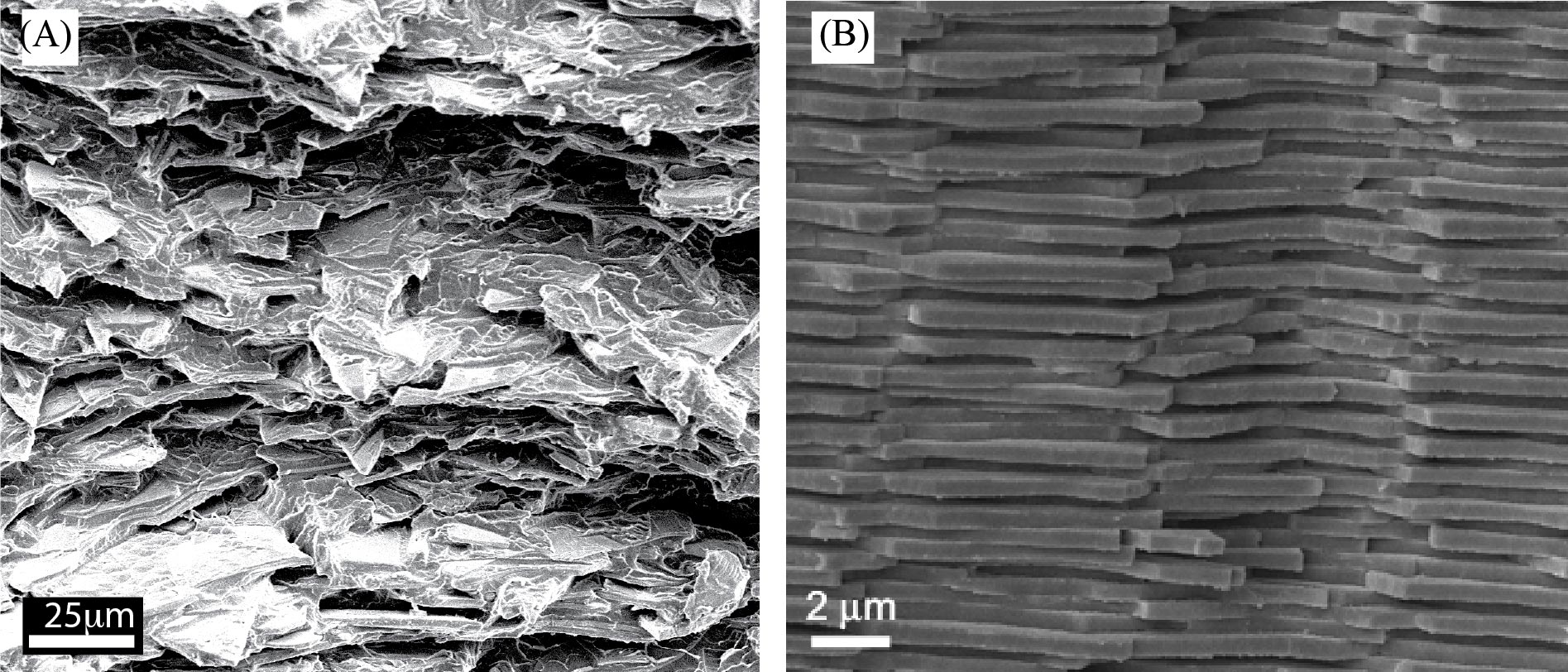
    Glass Composite’s Microstructure
    (A) Glass composite’s microstructure and (B) Nacre’s microstructure. Credit: Allen Ehrlicher

    Lost Invention of Flexible Glass

    Flexible glass is supposedly a lost invention from the time of the reign of the Roman Emperor Tiberius Caesar. According to popular historical accounts by Roman authors Gaius Plinius Secundus and Petronius, the inventor brought a drinking bowl made of the material before the Emperor. When the bowl was put to the test to break it, it only dented instead of shattering.

    After the inventor swore he was the only person who knew how to produce the material, Tiberius had the man executed, fearing that the glass would devalue gold and silver because it might be more valuable.

    “When I think about the story of Tiberius, I’m glad that our material innovation leads to publication rather than execution,” says Ehrlicher.

    Reference: “Centrifugation and index-matching yields a strong and transparent bioinspired nacreous composite” by Ali Amini, Adele Khavari, Francois Barthelat, and Allen J. Ehrlicher, 10 September 2021, Science.
    DOI: 10.1126/science.abf0277

    Never miss a breakthrough: Join the SciTechDaily newsletter.
    Follow us on Google and Google News.

    Glass Materials Science McGill University Popular
    Share. Facebook Twitter Pinterest LinkedIn Email Reddit

    Related Articles

    Yale Engineers Alter the Microanatomy of Glass

    Engineers Show Feasibility of Organic Topological Insulators

    Controlled Graphene Crumpling Used as Artificial Muscle Actuators

    Nanoscale Coating Repels Virtually Any Liquid

    Liquid Metal Used in Ultra-Stretchable Conducting Wires

    Duke University Creates “Perfect” Microwave Cloak

    Nanosheet-Flower Structure Boosts Energy Storage

    Spray Paint Battery Can be Painted on Virtually Any Surface

    Nanotextures Make Anti-Fogging, Self-Cleaning and Glare-Free Glass

    4 Comments

    1. xABBAAA on October 10, 2021 8:03 am

      … yes, but could this be a good packaging idea, it might help, though….

      Reply
    2. Steve Nordquist on October 12, 2021 2:49 pm

      Eggshell glasses that last are attractive! Green lerne let’s hope.

      Reply
    3. John-Paul Hunt on October 14, 2021 9:12 pm

      ahh natual ac as i leave my window closed and ac unit off.

      Reply
    4. Randy on October 22, 2021 5:48 am

      What are the thermal qualities as compared to current glasses?

      Reply
    Leave A Reply Cancel Reply

    • Facebook
    • Twitter
    • Pinterest
    • YouTube

    Don't Miss a Discovery

    Subscribe for the Latest in Science & Tech!

    Trending News

    New Study Reveals Why Ozempic Works Better for Some People Than Others

    Climate Change Is Altering a Key Greenhouse Gas in a Way Scientists Didn’t Expect

    New Study Suggests Gravitational Waves May Have Created Dark Matter

    Scientists Discover Why the Brain Gets Stuck in Schizophrenia

    Scientists Engineer “Tumor-Eating” Bacteria That Devour Cancer From Within

    Even “Failed” Diets May Deliver Long-Term Health Gains, Study Finds

    NIH Scientists Discover Powerful New Opioid That Relieves Pain Without Dangerous Side Effects

    Collapsing Plasma May Hold the Key to Cosmic Magnetism

    Follow SciTechDaily
    • Facebook
    • Twitter
    • YouTube
    • Pinterest
    • Newsletter
    • RSS
    SciTech News
    • Biology News
    • Chemistry News
    • Earth News
    • Health News
    • Physics News
    • Science News
    • Space News
    • Technology News
    Recent Posts
    • Revolutionary Gas Turbine Generates Power Without Air Compression
    • Is AI Really Just a Tool? It Could Be Altering How You See Reality
    • JWST Reveals a “Forbidden” Planet With a Baffling Composition
    • New Research Challenges 30-Year-Old Theory of Eye Development
    • The Protein “Sabotaging” Aging Muscle Recovery Could Be Key to Surviving Aging
    Copyright © 1998 - 2026 SciTechDaily. All Rights Reserved.
    • Science News
    • About
    • Contact
    • Editorial Board
    • Privacy Policy
    • Terms of Use

    Type above and press Enter to search. Press Esc to cancel.