
Close Menu
    Facebook X (Twitter) Instagram
    SciTechDaily
    • Biology
    • Chemistry
    • Earth
    • Health
    • Physics
    • Science
    • Space
    • Technology
    Facebook X (Twitter) Pinterest YouTube RSS
    SciTechDaily
    Home»Health»Scientists Discover 5 Proteins That Can Predict Liver Disease up to 16 Years Before Symptoms
    Health

    Scientists Discover 5 Proteins That Can Predict Liver Disease up to 16 Years Before Symptoms

    By Digestive Disease WeekApril 30, 2025No Comments3 Mins Read
    Facebook Twitter Pinterest Telegram LinkedIn WhatsApp Email Reddit
    Share
    Facebook Twitter LinkedIn Pinterest Telegram Email Reddit
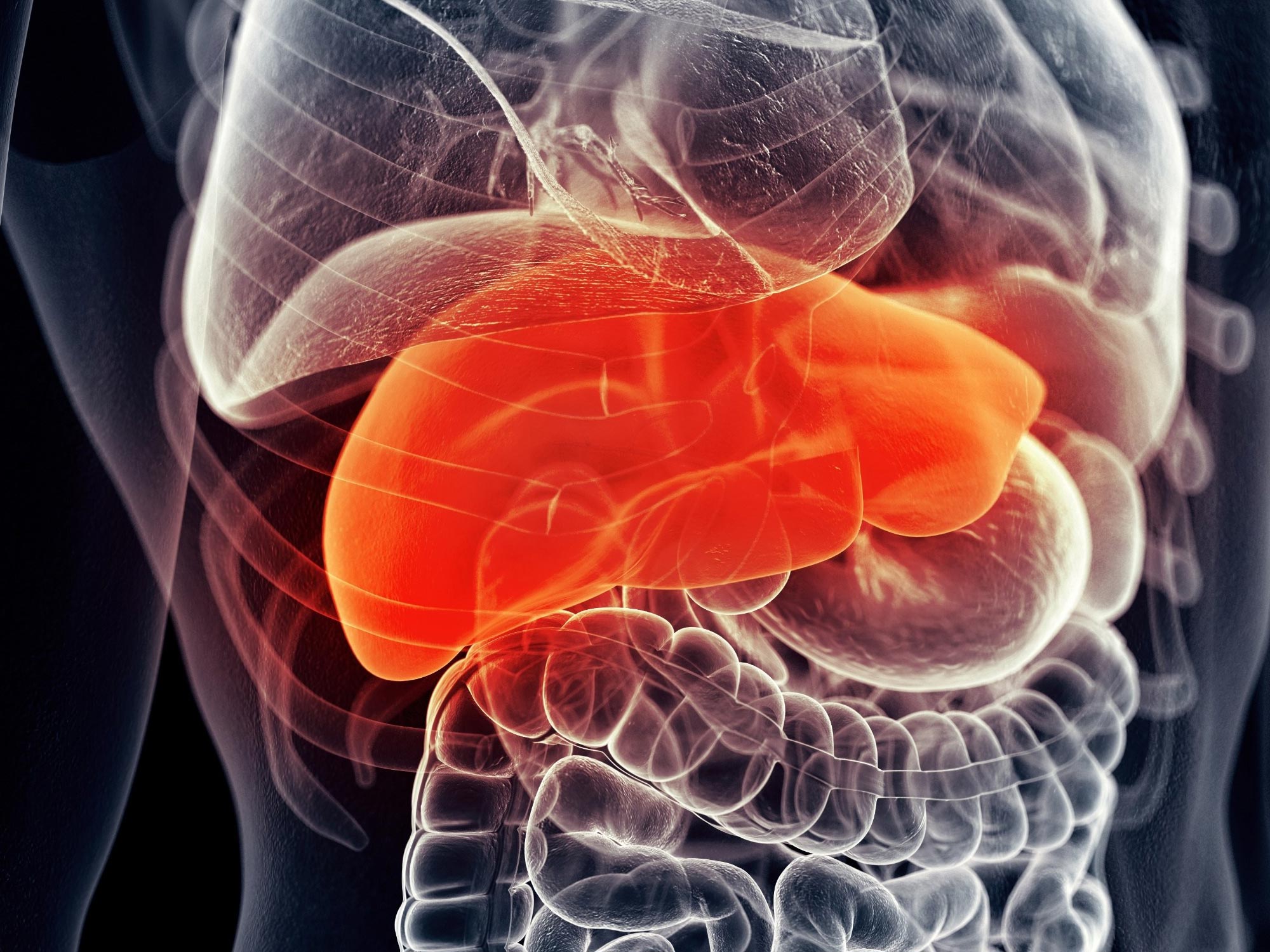
    Human Liver.Pain Disease
    Five blood proteins can predict liver disease up to 16 years in advance with high accuracy, offering a powerful new tool for early detection and prevention of MASLD.

    The ability to predict well in advance could allow for early intervention and prevention.

    Researchers have discovered five specific blood proteins that can reliably predict an individual’s risk of developing a severe form of liver disease up to 16 years before symptoms arise. These findings, which will be presented at Digestive Disease Week (DDW) 2025, could pave the way for earlier diagnosis, timely intervention, and potentially more effective treatment.

    The study focuses on metabolic dysfunction-associated steatotic liver disease (MASLD), now the most prevalent form of liver disease globally. Cases of MASLD are continuing to rise, and the condition is associated with a mortality rate up to twice as high as that of individuals without the disease.

    The Promise of Plasma Protein Biomarkers

    “Imagine if we could predict the risk of MASLD years before it starts,” said Shiyi Yu, MD, resident physician in the department of gastroenterology, Guangdong Provincial People’s Hospital in China. “Too often, people do not find out they are at risk for liver disease before they are diagnosed and coping with symptoms. The field urgently needs effective biomarkers and predictive models, and our research shows that plasma proteins offer novel potential strategies for early prediction and intervention.”

    Researchers analyzed blood samples from more than 50,000 participants in the UK Biobank. They followed their health records for more than 16 years, identifying levels and combinations of proteins in the blood associated with developing liver disease later in life. Screening more than 2,700 proteins, they found five — CDHR2, FUOM, KRT18, ACY1, and GGT1 — that appear to be early warning signals for MASLD.

    Impressive Predictive Accuracy

    The combined levels of these five proteins achieved 83.8% accuracy at predicting disease five years from onset and 75.6% accuracy at predicting 16 years ahead of diagnosis. Adding clinical biomarkers such as body mass index and daily exercise amount to the protein levels achieved even greater accuracy of 90.4% at five years and 82.2% at 16 years.

    “We achieved similar results when we tested this predictive model in a separate cohort of people in China, further supporting the robustness of the model and showing it can be effective across diverse populations,” Dr. Yu said.

    As an observational study, the research does not demonstrate a causal connection between the plasma proteins and the development of liver disease. Further research is underway to explore possible pathways.

    Meeting: Digestive Disease Week

    Dr. Yu will present data from the study, “Plasma proteomic profiles predict metabolic dysfunction-associated steatotic liver disease up to 16 years before onset,” abstract 323, at 8 a.m. PDT, Sunday, May 4.

    Never miss a breakthrough: Join the SciTechDaily newsletter.
    Follow us on Google and Google News.

    Biomarkers Gastroenterology Liver Public Health
    Share. Facebook Twitter Pinterest LinkedIn Email Reddit

    Related Articles

    This Simple Test Can Predict Risk of Severe Liver Disease Up to 10 Years in Advance

    New Research Reveals the Effects of Alcohol on the Entire Digestive System

    Scientists Discover New Life-Saving Benefit of Ozempic and Semaglutide

    A Health Crisis Looms: Alarming Rise in Chronic Liver Disease Predicted by 2050

    Warning: Columbia University Uncovers High Metal Levels in Blood of Marijuana Users

    Scientists Identify Potential New Treatment for Liver Disease

    New COVID-19 Biomarker Discovery – Can Predict Patient Death or Hospitalization

    New Research Uncovers Dangers of Artificial Sweeteners – Potentially Leading to Serious Health Issues

    Drinking Any Type of Coffee (Even Decaf) Associated With Reduced Risk of Chronic Liver Disease

    Leave A Reply Cancel Reply

    • Facebook
    • Twitter
    • Pinterest
    • YouTube

    Don't Miss a Discovery

    Subscribe for the Latest in Science & Tech!

    Trending News

    Your Blood Pressure Reading Could Be Wrong Because of One Simple Mistake

    Astronomers Stunned by Ancient Galaxy With No Spin

    Physicists May Be on the Verge of Discovering “New Physics” at CERN

    Scientists Solve 320-Million-Year Mystery of Reptile Skin Armor

    Scientists Say This Daily Walking Habit May Be the Secret to Keeping Weight Off After Dieting

    New Therapy Rewires the Brain To Restore Joy in Depression Patients

    Giant Squid Detected off Western Australia in Stunning Deep-Sea Discovery

    Popular Sugar-Free Sweetener Linked to Liver Disease, Study Warns

    Follow SciTechDaily
    • Facebook
    • Twitter
    • YouTube
    • Pinterest
    • Newsletter
    • RSS
    SciTech News
    • Biology News
    • Chemistry News
    • Earth News
    • Health News
    • Physics News
    • Science News
    • Space News
    • Technology News
    Recent Posts
    • Hidden Warm Water Beneath Antarctica Could Rapidly Raise Global Sea Levels
    • Scientists Revive Ancient Chemistry Trick To Engineer Next-Generation Glass
    • Scientists Use AI To Supercharge Ultrafast Laser Simulations by More Than 250x
    • Scientists Just Found a Surprising Way To Destroy “Forever Chemicals”
    • Popular Supplement Ingredient Linked to Shorter Lifespan in Men
    Copyright © 1998 - 2026 SciTechDaily. All Rights Reserved.
    • Science News
    • About
    • Contact
    • Editorial Board
    • Privacy Policy
    • Terms of Use

    Type above and press Enter to search. Press Esc to cancel.