
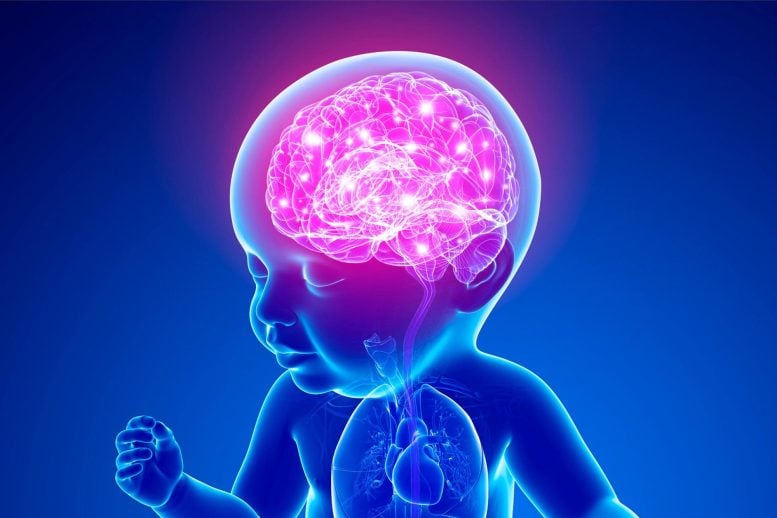
A New Genetic Disease Slows Down Children’s Brain Development
A new genetic disease that causes some children’s brains to grow abnormally and postpone intellectual development has been discovered by scientists.
The majority of people with the disease, which is still so new that it lacks a name, struggle with significant learning challenges that have a negative impact on their quality of life.
Changes in the protein-coding gene known as Glutamate Ionotropic Receptor AMPA Type Subunit 1 (GRIA1) were the underlying cause of this uncommon genetic disorder, according to an international team of researchers from the universities of Portsmouth, Southampton, and Copenhagen.
The discovery of the variant will help doctors in developing focused treatments to help patients and their families and will pave the way for screening and prenatal diagnosis.
The GRIA1 gene facilitates the movement of electrical impulses inside the brain. The brain’s ability to remember information may be hampered if this process is interfered with or if it is rendered less efficient.
Use of Tadpoles to Test Genetic Mutations
To demonstrate that GRIA1 mutations are the fundamental cause of the behavior-altering disease, the study team—which consists of frog geneticists, biochemists, and clinical geneticists—used tadpoles in which the human gene variations were replicated via gene editing. The biochemical analysis of the variants was also carried out in frog oocytes.
The results were published in the American Journal of Human Genetics.
Study co-author Professor Matt Guille, who leads a laboratory in the Epigenetics and Developmental Biology research group at the University of Portsmouth, said: “Next generation DNA sequencing is transforming our ability to make new diagnoses and discover new genetic causes of rare disorders.
“The main bottleneck in providing diagnoses for these patients is linking a change discovered in their genome firmly to their disease. Making the suspect genetic change in tadpoles allows us to test whether it causes the same illness in humans.
“The resulting data allow us to support our colleagues in providing the more timely, accurate diagnosis that patients and their families so desperately need.”
Future Applications for Neurodevelopmental Diseases
Co-author Dr. Annie Goodwin, a Research Fellow at the University of Portsmouth who performed much of the study, said: “This was a transformational piece of work for us; the ability to analyze human-like behaviors in tadpoles with sufficient accuracy to detect genetic disease-linked changes opens the opportunity to help identify a huge range of diseases. This is particularly important given that so many neurodevelopmental diseases are currently undiagnosed.”
Co-author Professor Diana Baralle, Professor of Genomic Medicine and Associate Dean (Research) in the Faculty of Medicine at the University of Southampton added: “Discovering these new causes for genetic disorders ends our patients’ diagnostic odyssey and this has been made possible by collaborative interdisciplinary working across universities.”
One in 17 people will suffer from a rare disease at some time in their lives. Most of these rare diseases have a genetic cause and often affect children, but proving which gene change causes disease is a huge challenge.
Professor Guille said that previously, while studies connecting a gene and a disease were mainly performed in mice; several labs, including his own at the University of Portsmouth, have recently shown that experiments in tadpoles can also provide very strong evidence about the function of variant human genes. The process of re-creating some gene variants in tadpoles is straightforward and can be done in as little as three days.
Professor Guille added: “We are currently extending and improving our technology in a program funded by the Medical Research Council; this is making it applicable to the wider range of disease-related DNA changes provided to us by our clinical collaborators.
“If the clinical researchers find the information sufficiently useful, then we will continue to work together to scale up the pipeline of gene function analysis so it can be used to direct effective interventions for a significant number of patients.”
Reference: “Identification and functional evaluation of GRIA1 missense and truncation variants in individuals with ID: An emerging neurodevelopmental syndrome” by Vardha Ismail, Linda G. Zachariassen, Annie Godwin, Mane Sahakian, Sian Ellard, Karen L. Stals, Emma Baple, Kate Tatton Brown, Nicola Foulds, Gabrielle Wheway, Matthew O. Parker, Signe M. Lyngby, Miriam G. Pedersen, Julie Desir, Allan Bayat, Maria Musgaard, Matthew Guille, Anders S. Kristensen and Diana Baralle, 7 June 2022, American Journal of Human Genetics.
DOI: 10.1016/j.ajhg.2022.05.009
Never miss a breakthrough: Join the SciTechDaily newsletter.
Follow us on Google and Google News.
2 Comments
Teachers keep making up excuses for not doing their jobs.
damn fr