
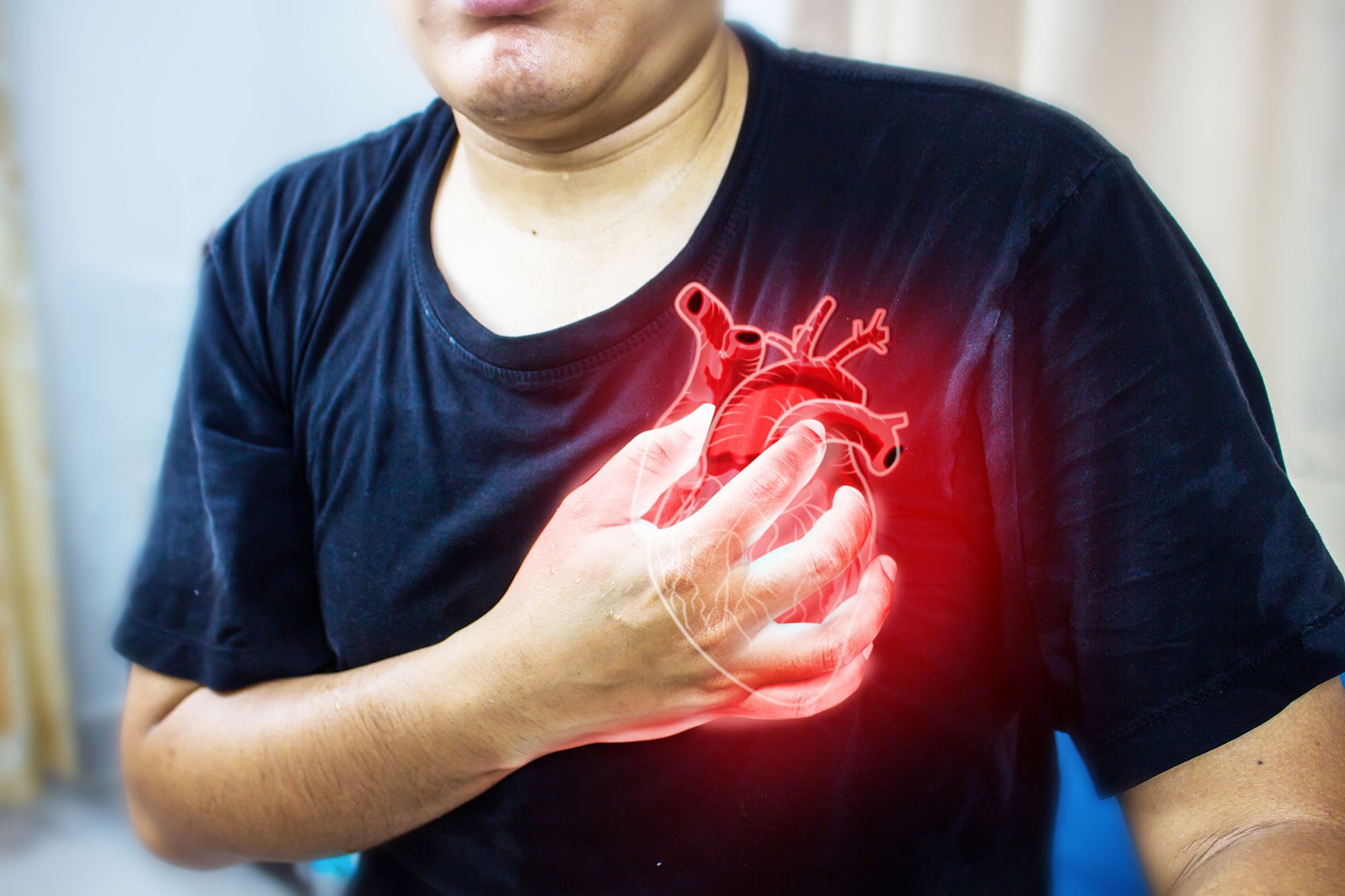
RELMy from immune cells disrupts heart rhythm after heart attacks. Blocking it may improve survival.
In a new study published in Science, researchers at Massachusetts General Hospital (MGH) uncover a surprising link between the immune system and life-threatening heart rhythm disorders. The paper, titled “Resistin-like molecule γ attacks cardiomyocyte membranes and promotes ventricular tachycardia,” identifies a protein produced by immune cells that directly damages heart muscle cells following a heart attack.
The research was led by Nina Kumowski, MD, of the Department of Radiology and Center for Systems Biology at MGH, with Matthias Nahrendorf, MD, PhD, serving as senior author. Their work sheds light on how neutrophils, white blood cells best known for fighting infections, can instead contribute to arrhythmias such as ventricular tachycardia (VT) and ventricular fibrillation (VF), two of the most dangerous complications after myocardial infarction.
In the following Q&A, Dr. Kumowski and Dr. Nahrendorf explain their findings, methods, and the future implications of this research for preventing sudden cardiac death.
Q: How would you summarize your study for a lay audience?
In short: We found that the defense protein “Resistin-like molecule gamma” (Relmy), produced by neutrophils, punches holes into heart cells after a heart attack. This promotes dangerous, fast, and irregular heart rhythm and cell death in the heart.
The longer version: The most lethal complications of coronary artery disease are myocardial infarction (MI) and sudden cardiac death.
In MI, the blockage of a heart artery leads to insufficient oxygen supply to heart muscle cells (cardiomyocytes). This compromises their ability to maintain a stable rhythm and can give rise to a dangerous, unstable heart rhythms (arrhythmia) called ventricular tachycardia (VT) and ventricular fibrillation (VF).
VT and VF are both serious arrhythmias that can lead to sudden cardiac arrest and death within minutes. In VT, the heart beats very rapidly, but in a coordinated rhythm. In VF, the rhythm is chaotic and uncoordinated.

Most arrhythmias occur within 48 hours after MI and coincide with massive immune cell infiltration into the heart tissue. We were interested in how these immune cells may promote arrhythmia.
We found neutrophils that get recruited into the infarct (the area of dead tissue resulting from the cutoff of oxygen supply) in large numbers upregulate the gene “Retnlg,” coding the protein resistin-like molecule gamma (RELMy). We also found a comparable gene, “RETN,” in human infarcted heart tissue. When we removed this protein from neutrophils in mice, the arrhythmia burden after MI was reduced 12-fold.
Q: What question were you investigating?
We were investigating the question of how neutrophils, a specific kind of immune cell, promote ventricular arrhythmia (a dangerous fast irregular heartbeat) after heart attacks. Cardiomyocytes as the main actors in arrhythmia, are very well studied, but if and how immune cells can promote arrhythmia is less clear. This work is important because ventricular arrhythmia is the most lethal complication after myocardial infarction. We need to understand better what promotes arrythmia to help us develop new antiarrhythmic drugs.
Q: What methods or approaches did you use?
We used a plethora of methods to figure this out. For an initial understanding about which proteins in neutrophils might be important, we used deposited data on gene expression generated by single cell and spatial RNA-sequencing from mice that underwent myocardial infarction. But we also used data from human studies to find similarities in human tissue.
We also relied on confocal and super-high resolution microscopy in isolated mouse heart muscle cells that were treated with the labeled protein. Further, we deployed in vitro assays such as a liposome model and cell culture techniques to investigate the mouse and the human version of the protein to find out if they work similar.
Q: What did you find?
We found that after MI in mouse models, neutrophils upregulate the expression of “Retnlg,” the gene coding for RELMy. We also found that the human biological homolog “RETN,” the gene coding for Resistin, was higher expressed in human infarcted myocardial tissue compared to non-infarcted tissue, similar to mice.
We saw that deleting the gene from bone marrow-derived cells (such as neutrophils) and deleting the gene from neutrophils specifically significantly reduced incidents of ventricular arrhythmia in the mouse models.
Q: What are the implications?
The implications are that immune cells play a crucial role in sudden death and arrhythmia.
We should think about treating both the myocardial infarction both by quick recanalization of the vessel to restore oxygenated blood supply and also by targeting immune cells to mitigate the arrhythmic effects of the injury.

When we understand the underlying mechanisms better, we can pursue therapeutic targets that go beyond the broad immune suppression that is used today.
If we can treat targets more specifically, we can reduce unwanted side effects and unravel the full potential of immune modulation in cardiovascular disease.
Q: What are the next steps?
The next steps are to find a way to neutralize the harmful protein and test if this can reduce VT burden and infarct size. First in the mouse models, but, we hope, eventually also in humans.
We should gather more evidence about the significance of this protein in human disease. It is also interesting to see these findings have implications for other diseases with neutrophil recruitment and activation.
Reference: “Resistin-like molecule γ attacks cardiomyocyte membranes and promotes ventricular tachycardia” by Nina Kumowski, Steffen Pabel, Jana Grune, Noor Momin, Van K. Ninh, Laura Stengel, Kyle I. Mentkowski, Yoshiko Iwamoto, Yi Zheng, I-Hsiu Lee, Jessica Matthias, Jan O. Wirth, Fadi E. Pulous, Hana Seung, Alexandre Paccalet, Charlotte G. Muse, Kenneth K. Y. Ting, Paul Delgado, Andrew J. M. Lewis, Vaishali Kaushal, Antonia Kreso, Dennis Brown, Sikander Hayat, Rafael Kramann, Filip K. Swirski, Kamila Naxerova, Daniel C. Propheter, Lora V. Hooper, Michael A. Moskowitz, Kevin R. King, Nadia Rosenthal, Maarten Hulsmans and Matthias Nahrendorf, 4 September 2025, Science.
DOI: 10.1126/science.adp7361
This work was supported by grants from the Leducq Foundation, the National Institutes of Health (NIH grants HL155097, HL149647, HL142494, HL176359, NS136068, DP2AR075321); the Deutsche Forschungsgemeinschaft (DFG) Walter Benjamin Programm (491497342 and 530157297); the British Heart Foundation (FS/ICRF/24/26111 and RE/18/3/342140), and the NIHR Oxford Biomedical Research Centre.
Nahrendorf has received funds or material research support from Alnylam, Biotronik, CSL Behring, GlycoMimetics, GSK, Medtronic, Novartis, and Pfizer, and has received consulting fees from Biogen, Gimv, IFM Therapeutics, Molecular Imaging, Sigilon, Verseau Therapeutics and Bitterroot. Matthias and Wirth are employees of the company Abberior Instruments America, which commercializes the MINFLUX technology. Lewis is on the advisory board of Abbott, AstraZeneca, and Novartis. Pabel is employed by the Novartis Institute of Biomedical Research. Hayat is a cofounder and shareholder of Sequantrix GmbH and has received research funding from Novo Nordisk and AskBio. The remaining authors declare no competing interests.
Never miss a breakthrough: Join the SciTechDaily newsletter.
Follow us on Google and Google News.
1 Comment
This is Lacto-Bacilli-Villi. Right?