
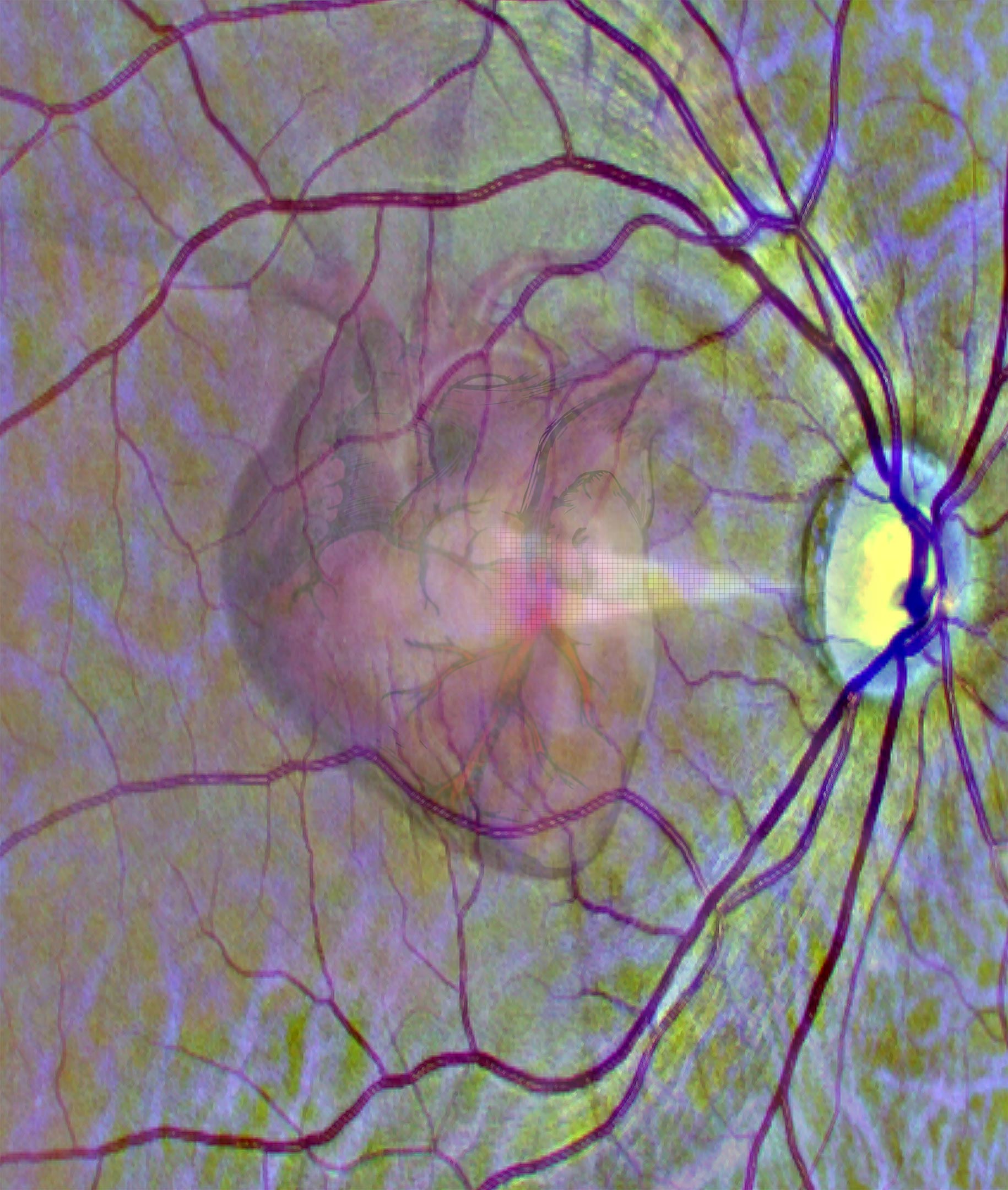
Researchers have created an AI system that analyzes eye scans to predict heart attack risk, achieving 70-80% accuracy.
This system, utilizing deep learning, could significantly improve routine cardiac screening, providing early identification and preventive treatment for high-risk individuals.
AI Detection of Heart Attack Risk from Eye Scans
Scientists have developed an artificial intelligence (AI) system that can analyze eye scans taken during a routine visit to an optician or eye clinic and identify patients at a high risk of a heart attack.
Doctors have recognized that changes to the tiny blood vessels in the retina are indicators of broader vascular disease, including problems with the heart.
In the research, led by the University of Leeds, deep learning techniques were used to train the AI system to automatically read retinal scans and identify those people who, over the following year, were likely to have a heart attack.
Deep learning is a complex series of algorithms that enable computers to identify patterns in data and to make predictions.
Accuracy and Impact of AI Analysis
Writing in the journal Nature Machine Intelligence, the researchers report that the AI system had an accuracy of between 70% and 80% and could be used as a second referral mechanism for in-depth cardiovascular investigation.
The use of deep learning in the analysis of retinal scans could revolutionize the way patients are regularly screened for signs of heart disease.
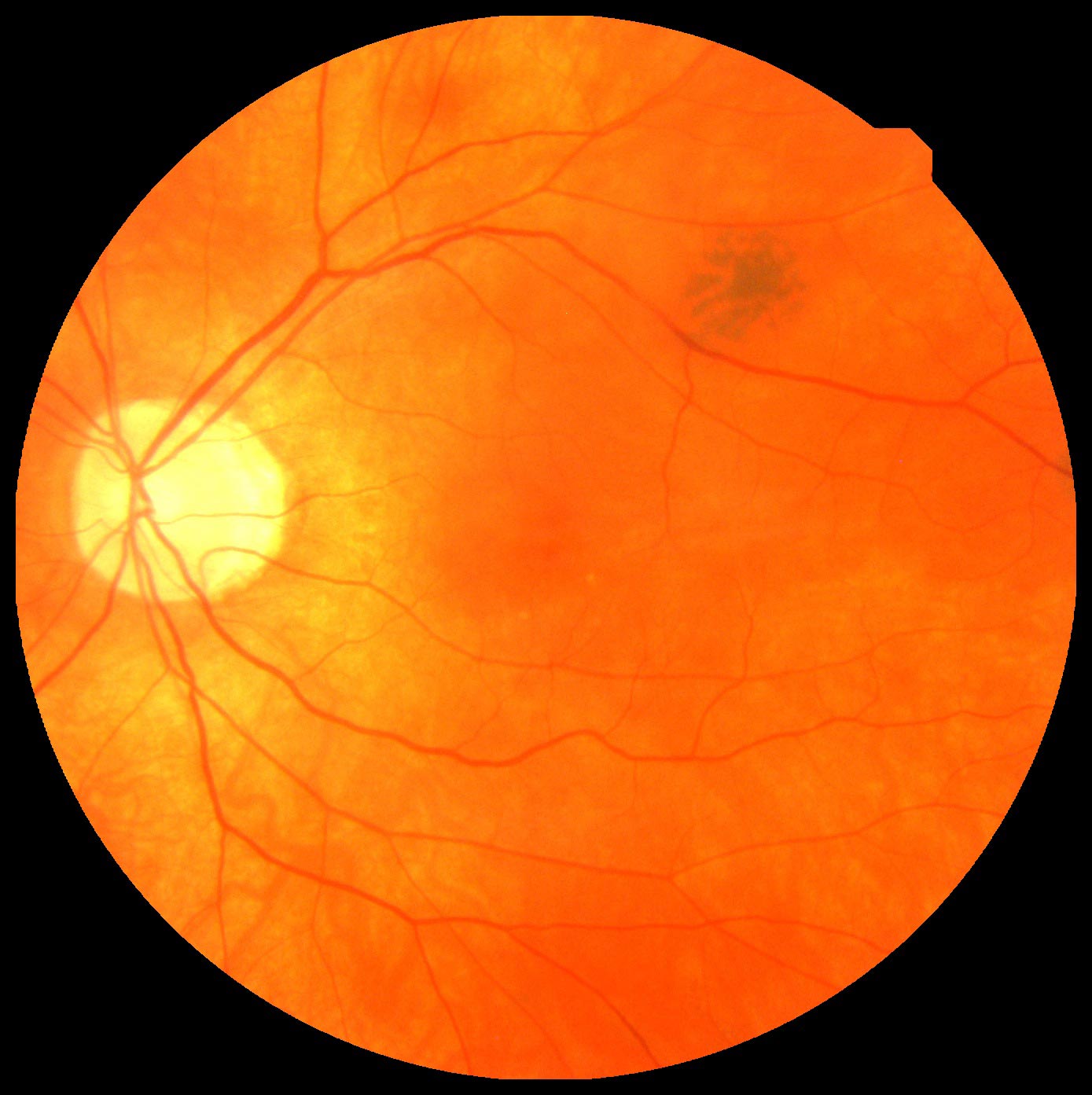
Professor Alex Frangi, who holds the Diamond Jubilee Chair in Computational Medicine at the University of Leeds and is a Turing Fellow at the Alan Turing Institute, supervised the research. He said: “Cardiovascular diseases, including heart attacks, are the leading cause of early death worldwide and the second-largest killer in the UK. This causes chronic ill-health and misery worldwide.
“This technique opens up the possibility of revolutionizing the screening of cardiac disease. Retinal scans are comparatively cheap and routinely used in many optician practices. As a result of automated screening, patients who are at high risk of becoming ill could be referred to specialist cardiac services.
“The scans could also be used to track the early signs of heart disease.”
The study involved a worldwide collaboration of scientists, engineers, and clinicians from the University of Leeds; Leeds Teaching Hospitals’ NHS Trust; the University of York; the Cixi Institute of Biomedical Imaging in Ningbo, part of the Chinese Academy of Sciences; the University of Cote d’Azur, France; the National Centre for Biotechnology Information and the National Eye Institute, both part of the National Institutes for Health in the US; and KU Leuven in Belgium.
The UK Biobank provided data for the study.
AI’s Potential in Preventive Cardiac Care
Chris Gale, Professor of Cardiovascular Medicine at the University of Leeds and a Consultant Cardiologist at Leeds Teaching Hospitals NHS Trust, was one of the authors of the research paper.
He said: “The AI system has the potential to identify individuals attending routine eye screening who are at higher future risk of cardiovascular disease, whereby preventative treatments could be started earlier to prevent premature cardiovascular disease.”
During the deep learning process, the AI system analyzed the retinal scans and cardiac scans from more than 5,000 people. The AI system identified associations between pathology in the retina and changes in the patient’s heart.
Once the image patterns were learned, the AI system could estimate the size and pumping efficiency of the left ventricle, one of the heart’s four chambers, from retinal scans alone. An enlarged ventricle is linked with an increased risk of heart disease.
With information on the estimated size of the left ventricle and its pumping efficiency combined with basic demographic data about the patient, their age and sex, the AI system could make a prediction about their risk of a heart attack over the subsequent 12 months.
AI’s Role in Assessing Heart Health
Currently, details about the size and pumping efficiency of a patient’s left ventricle can only be determined if they have diagnostic tests such as echocardiography or magnetic resonance imaging of the heart. Those diagnostic tests can be expensive and are often only available in a hospital setting, making them inaccessible for people in countries with less well-resourced healthcare systems — or unnecessarily increasing healthcare costs and waiting times in developed countries.
Sven Plein, British Heart Foundation Professor of Cardiovascular Imaging at the University of Leeds and one of the authors of the research paper, said: “The AI system is an excellent tool for unraveling the complex patterns that exist in nature, and that is what we have found here – the intricate pattern of changes in the retina linked to changes in the heart.”
Reference: “Predicting Infarction through your Retinal Scans and Minimal Personal Information” by Andres Diaz-Pinto, Nishant Ravikumar, Rahman Attar, Avan Suinesiaputra, Yitian Zhao, Eylem Levelt, Erica Dall’Armellina, Marco Lorenzi, Qingyu Chen, Tiarnan D. L. Keenan, Elvira Agrón, Emily Y. Chew, Zhiyong Lu, Chris P. Gale, Richard P. Gale, Sven Plein and Alejandro F. Frangi, 25 January 2022, Nature Machine Intelligence.
DOI: 10.1038/s42256-021-00427-7
Funding: NIH/National Library of Medicine, EU Horizon 2020 InSilc Project
Never miss a breakthrough: Join the SciTechDaily newsletter.
Follow us on Google and Google News.
2 Comments
Very Interesting.
Sharing a few thoughts which may be useful and can be implemented fairly quickly , as such infrastructure is already in place , to gain access or entry to secure sites.
Normally a biometric access using fingerscan or eye scan is used to allow entry into secure sites. The data is already available on a daily basis of retina scans. It needs to be captured, stored , compared and used. The same can be used to monitor changes in heart health of the person being scanned. It can also be used to compare with Others whose heart health may be better. After all the heart muscle is a biological pump keeping the circulatory system going through a network of veins, arteries to supply energy to the cells provided by the digestive system, which changes the food we eat into energy
And the blood transports the same to the cells.
Drawing a parallel with the neuron network of the human body may not be too far fetched. The Use of AI in the same , in a current issue of Physicsal review letters is worth reading.
Refining the system.
Look at finger print data as well as palm print scans or other body parts scanned data and corelate the same with Aging {which is basically a deterioration of cells} and using predictive analytics, a fairly accurate forecasr of the time span for exit stage right { Death} could be obtained.
The ability to ensure preventive actions to ensure good health of their employees can be borne by Health and Life Insurance Companies and actuaries can play a useful role to make this world slightly better as far as ensuring healthy persons on their payroll.
It may be appropriate to point out that the good health as well as Immunity of a employee changes over their lifetime. So using such tools to monitor data which enhances their health is advisable.
Views expressed are personal and not binding on anyone.
Did AI write this?
Second image is a retinal photograph, not a scan