

Researchers have found a way to stop active cancer cells in their tracks – meaning they can then be eliminated by new drug treatments.
A collaborative research project between the University of Dundee’s Drug Discovery Unit (DDU) and Queen Mary University of London, has identified chemical compounds, called tool molecules, that can halt active cancer cells.
Advancing Cancer Therapy Through Collaboration
Using these tool molecules forces tumor cells from a specific type of breast cancer into a pro-senescence state – similar to a sleep-like state in which they can no longer divide or cause tumor growth.
This condition makes the cancer cells sensitive to a second group of tool molecules, called senolytic drugs, which can eliminate them. It may also ‘uncloak’ the cancer cells, making them visible to the body’s immune system, offering further therapeutic opportunities.
Researchers developed this ‘two-punch’ method while looking at basal-like breast cancer (BLBC).
Potential for New Cancer Treatments
A team funded by Barts Charity, and led by Cleo Bishop, Professor of Senescence at Queen Mary University of London and Academic Lead for the Phenotypic Screening Facility, uncovered a pathway to force BLBC cells into pro-senescence.
They then collaborated with another team based at the University of Dundee’s Drug Discovery Unit (DDU) to develop tool molecules to promote senescence within the cells.
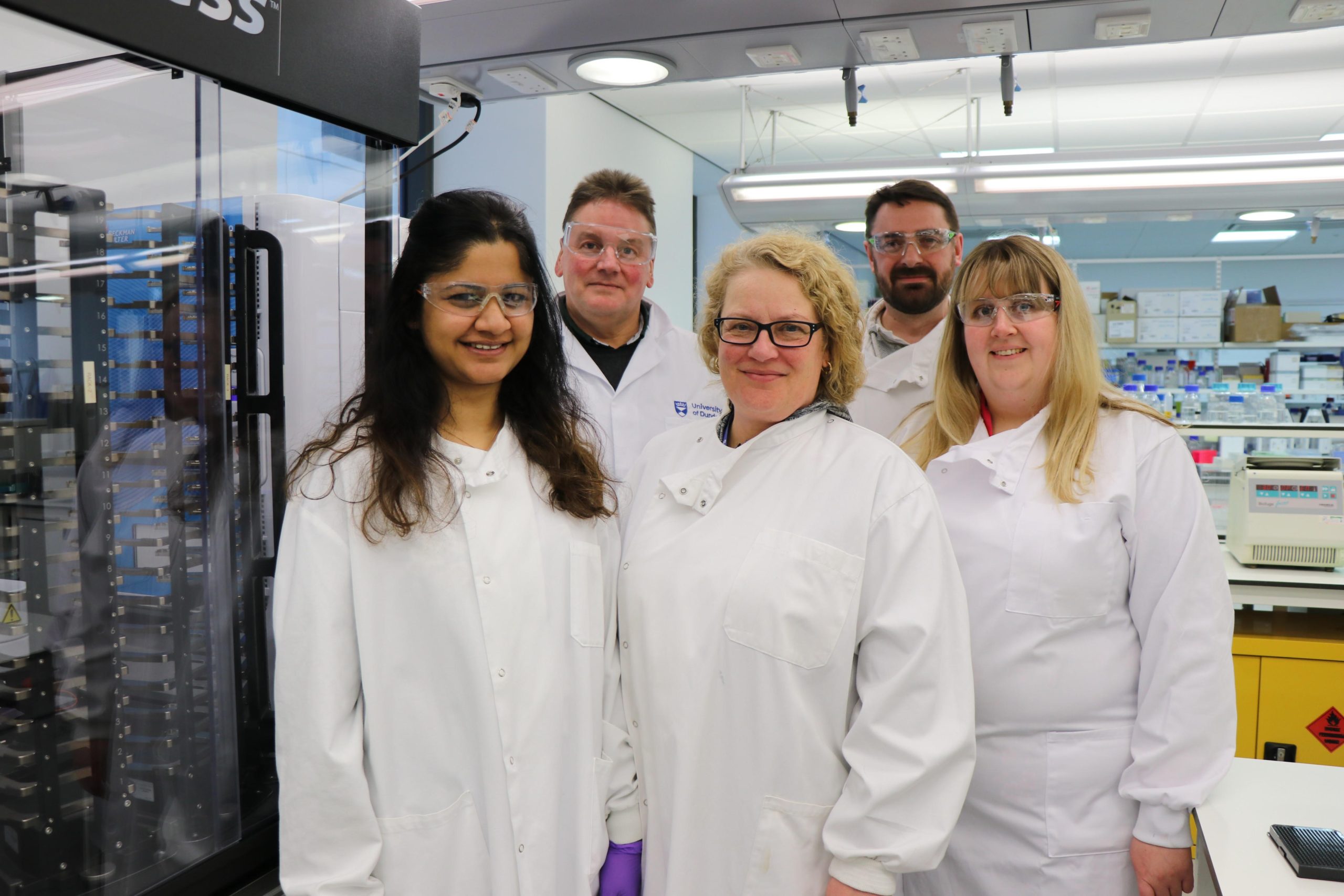
Drug treatments to deliver the ‘second punch’ of cell elimination are currently being developed elsewhere.
Professor Bishop, said, “At present, the most common treatments for BLBC are surgery and unsophisticated chemotherapy regimens.
“Consequently, the lack of possible targets for tailored therapies and the aggressive clinical course means that women with BLBC have a particularly poor prognosis.
“Pro-senescence therapies activate a stable cell cycle arrest halting tumor growth, trigger anti-tumor immune responses and expose cancers to novel treatment regimes called senolyitcs.”
This research utilized high-content imaging to identify the tool molecules from DDU’s diversity libraries, which have now been selected by the pharmaceutical company ValiRx for further evaluation.
The University of Dundee has this month signed a five-year agreement with the company, which focuses on early-stage cancer therapeutics and women’s health.
The pro-senescent ‘first punch’ tool molecules are the first to enter into a 12-month evaluation phase under this agreement and if successful, could result in a new company being established as a joint venture with all three parties.
Charlotte Green, Head of Business Development at the University of Dundee’s Drug Discovery Unit, said, “The one-two punch approach has gained lots of interest in recent years but currently there is no clinical precedent, by moving the project forward with ValiRx we are leading the way in translating the research to the clinic.”
Dr Suzy Dilly, CEO of ValiRx said, “The strength of the DDU and research facilities at Dundee are very impressive, and having reviewed multiple projects from teams there over the past year, we believe that this evaluation agreement will be the first of a series of new projects that can be brought into our pipeline.”
Never miss a breakthrough: Join the SciTechDaily newsletter.
Follow us on Google and Google News.
2 Comments
Tnx for this news. It would be great if off patent compounds would be looked into like Fenbendazol and the compound that now can’t be uttered iverm***n. Lots of DIY success of arresting most of the cancer types but no effort put into formal studies. Folks dyeing of cancer really isn’t a serious priority. Best to all, curt
https://apnews.com/article/fact-check-ivermectin-nih-cancer-cure-629592291079
Propagation of non-proven “cures” is dangerous, as it may prevent people using effective treatments or enrolling in clinical trials. Pharma can make money from off patent compounds if they are shown to be effective as you can patent a new use; in addition, you can also try variations of the molecule which may be more efficacious. The idea that old drugs are not of interest to pharma companies for cancer treatment is a myth. What they are not interested in is treatment for diseases mainly in less well off countries or were there already exist too many effective drugs.