
Close Menu
    Facebook X (Twitter) Instagram
    SciTechDaily
    • Biology
    • Chemistry
    • Earth
    • Health
    • Physics
    • Science
    • Space
    • Technology
    Facebook X (Twitter) Pinterest YouTube RSS
    SciTechDaily
    Home»Chemistry»Scientists Discover Nano-Crystal (Cluster) of PbS
    Chemistry

    Scientists Discover Nano-Crystal (Cluster) of PbS

    By Johns Hopkins UniversityFebruary 2, 2012No Comments2 Mins Read
    Facebook Twitter Pinterest Telegram LinkedIn WhatsApp Email Reddit
    Share
    Facebook Twitter LinkedIn Pinterest Telegram Email Reddit
    Abstract Crystal Structure
    Abstract Crystal Structure

    A team of scientists from Johns Hopkins University and McNeese State University have determined that when 32 units of lead sulfide, PbS, molecules assemble together, you get the smallest nano-crystal (cluster) possible that still exhibits the same crystal structure as bulk lead sulfide.

    A team of scientists has determined the size of the smallest, cubic, lead sulfide cluster that exhibits the same crystal structure as bulk lead sulfide, (rock salt). Determining the size of nano and sub-nano scale assemblies of atoms or molecules at which they first take on recognizable properties of the same substance in the macroscopic world is an important goal in nanoscience.
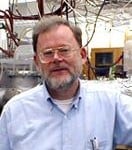
    (PbS)32 baby crystals
    Kit Bowen. Credit: Johns Hopkins University

    Working together, experimental and computational scientists at The Johns Hopkins University and McNeese State University in Louisiana have determined that for lead sulfide, the smallest nano-crystal (cluster) with the same structural (coordination) properties as the bulk occurs when 32 units of lead sulfide, PbS, molecules assemble together. Their results were published in the Journal of Chemical Physics and The Virtual Journal of Nanoscale Science & Technology.

    After their calculations made this prediction, the team tested it by gently depositing size-selected (PbS)32 clusters onto a graphite surface, where they could easily migrate and merge together to form larger nanoscale structures.

    “By using scanning tunneling microscope (STM) images to measure the dimensions of the resultant lead sulfide nano-blocks, we confirmed that (PbS)32 baby crystals had indeed stacked together as predicted by theory,” said Kit Bowen Jr., the E. Emmet Reid Professor in the Department of Chemistry at The Johns Hopkins University, who worked with his colleague, Howard Fairbrother, on the project.

    Conceptually, these results shed light on how solids are formed. Technologically, these clusters are perhaps the smallest lead sulfide quantum dots, species that may have applications as photovoltaics.

    Never miss a breakthrough: Join the SciTechDaily newsletter.
    Follow us on Google and Google News.

    Crystals Johns Hopkins University Nanocrystals Nanoscale Structures Nanoscience Photovoltaics
    Share. Facebook Twitter Pinterest LinkedIn Email Reddit

    Related Articles

    Unveiling the Dark Secret: How Black Silicon Gets Its Edge in Solar Cells

    AI-Driven Discovery: Mysteries of Polycrystalline Materials Unraveled

    Powering the Future of Clean Energy: Scientists Unlock Zirconium Nitride Secrets

    Ancient Architecture Technique Inspires Nanoscale Window to the Future

    Previously Unknown Material Could Revolutionize Cancer Treatment

    Challenging Conventional Wisdom: New Discovery Transforms Our Understanding of Crystals

    Researchers Discover Hidden Chemical Order in Disordered Compound

    This Pyramid Scheme Could Be Helpful: Controlled Growth of Tetrahedron-Shaped Nanoparticles

    All-Carbon Photovoltaic Cell to Harness Infrared Light

    Leave A Reply Cancel Reply

    • Facebook
    • Twitter
    • Pinterest
    • YouTube

    Don't Miss a Discovery

    Subscribe for the Latest in Science & Tech!

    Trending News

    Millions Take These IBS Drugs, But a New Study Finds Serious Risks

    Scientists Unlock Hidden Secrets of 2,300-Year-Old Mummies Using Cutting-Edge CT Scanner

    Bread Might Be Making You Gain Weight Even Without Eating More Calories

    Scientists Discover Massive Magma Reservoir Beneath Tuscany

    Europe’s Most Active Volcano Just Got Stranger – Here’s Why Scientists Are Rethinking It

    Alzheimer’s Symptoms May Start Outside the Brain, Study Finds

    Millions Take This Popular Supplement – Scientists Discover a Concerning Link to Heart Failure

    The Universe Is Expanding Too Fast and Scientists Can’t Explain Why

    Follow SciTechDaily
    • Facebook
    • Twitter
    • YouTube
    • Pinterest
    • Newsletter
    • RSS
    SciTech News
    • Biology News
    • Chemistry News
    • Earth News
    • Health News
    • Physics News
    • Science News
    • Space News
    • Technology News
    Recent Posts
    • Scientists Say a Hidden Structure May Exist Inside Earth’s Core
    • Doctors Surprised by the Power of a Simple Drug Against Colon Cancer
    • Why Popular Diabetes Drugs Like Ozempic Don’t Work for Everyone: The “Genetic Glitch”
    • Scientists Create Improved Insulin Cells That Reverse Diabetes in Mice
    • Scientists Stunned After Finding Plant Thought Extinct for 60 Years
    Copyright © 1998 - 2026 SciTechDaily. All Rights Reserved.
    • Science News
    • About
    • Contact
    • Editorial Board
    • Privacy Policy
    • Terms of Use

    Type above and press Enter to search. Press Esc to cancel.