
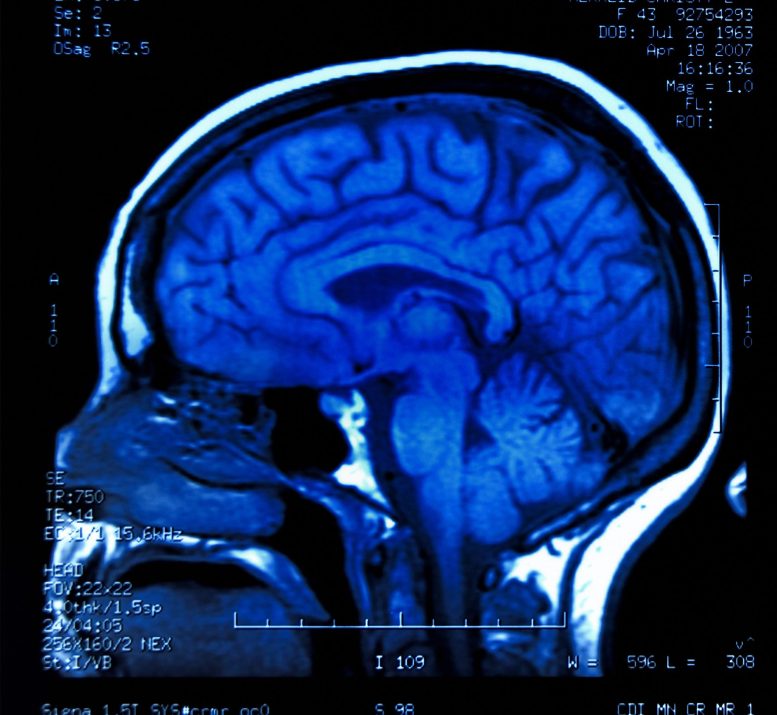
The newly discovered SLYM membrane segregates clean and dirty CSF, supporting the brain’s immune defenses and glymphatic system, paving the way for targeted treatments and deeper understanding of brain diseases.
The human brain, with its intricacies ranging from neural networks to fundamental biological functions and structures, remains elusive in revealing its secrets. However, recent advancements in neuro-imaging and molecular biology have provided scientists with the ability to study the living brain with unprecedented detail, revealing many previously unknown mysteries.
A recent discovery, reported in the journal Science, describes a previously undiscovered component of brain anatomy. This new component serves both as a protective barrier and a base from which immune cells can keep an eye out for any signs of infection or inflammation within the brain.
The new study comes from the labs of Maiken Nedergaard, co-director of the Center for Translational Neuromedicine at University of Rochester and the University of Copenhagen and Kjeld Møllgård, M.D., a professor of neuroanatomy at the University of Copenhagen.
Nedergaard and her colleagues have transformed our understanding of the fundamental mechanics of the human brain and made significant findings to the field of neuroscience, including detailing the many critical functions of previously overlooked cells in the brain called glia and the brain’s unique process of waste removal, which the lab named the glymphatic system.
“The discovery of a new anatomic structure that segregates and helps control the flow of cerebrospinal fluid (CSF) in and around the brain now provides us a much greater appreciation of the sophisticated role that CSF plays not only in transporting and removing waste from the brain but also in supporting its immune defenses,” said Nedergaard.
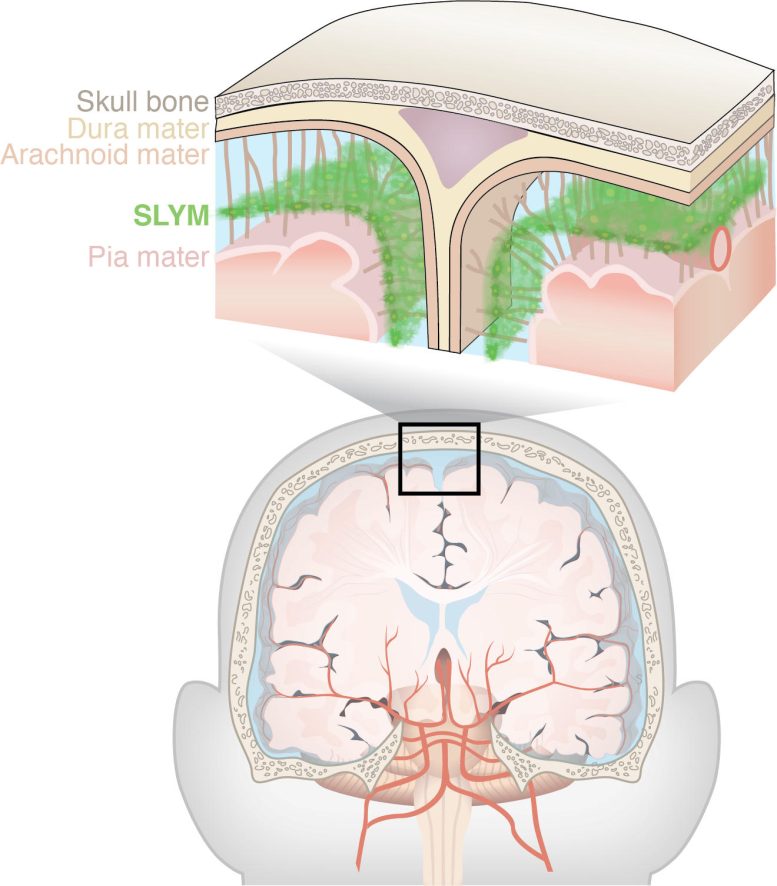
The study focuses on the membranes that encase the brain, which create a barrier from the rest of the body, and keeps it bathed in CSF. The traditional understanding of what is collectively called the meningeal layer, a barrier comprised of individual layers known as the dura, arachnoid, and pia matter.
The new layer discovered by the U.S. and Denmark-based research team further divides the space below the arachnoid layer, the subarachnoid space, into two compartments, separated by the newly described layer, which the researchers name the SLYM, an abbreviation of Subarachnoidal LYmphatic-like Membrane. While much of the research in the paper describes the function of SLYM in mice, they also report its actual presence in the adult human brain as well.
Structure and Purpose of the SLYM Membrane
The SLYM is a type of membrane called mesothelium, which is known to line other organs in the body, including the lungs and heart. Mesothelia typically surround and protect organs, and harbor immune cells. The idea that a similar membrane might exist in the central nervous system was a question first posed by Møllgård, the first author of the study. His research focuses on developmental neurobiology, and on the systems of barriers that protect the brain.
The new membrane is very thin and delicate, and consists of only one or a few cells in thickness. Yet the SLYM is a tight barrier, and allows only very small molecules to transit; it seems to separate “clean” and “dirty” CSF.
This last observation hints at the likely role played by SLYM in the glymphatic system, which requires a controlled flow and exchange of CSF, allowing the influx of fresh CSF while flushing the toxic proteins associated with Alzheimer’s and other neurological diseases from the central nervous system.
This discovery will help researchers more precisely understand the mechanics of the glymphatic system, which was the subject of a recent $13 million grant from the National Institutes of Health’s BRAIN Initiative to the Center for Translational Neuromedicine at the University of Rochester.
SLYM and Brain Immune Defense
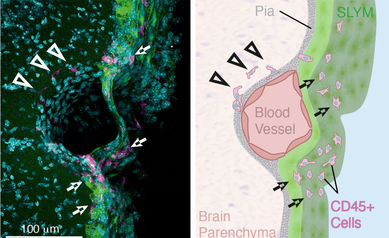
The SLYM also appears important to the brain’s defenses. The central nervous system maintains its own native population of immune cells, and the membrane’s integrity prevents outside immune cells from entering. In addition, the SLYM appears to host its own population of central nervous system immune cells that use the SLYM for surveillance at the surface of brain, allowing them to scan passing CSF for signs of infection.
The Discovery of the SLYM opens the door for further study of its role in brain disease. For example, the researchers note that larger and more diverse concentrations of immune cells congregate on the membrane during inflammation and aging. When the membrane was ruptured during traumatic brain injury, the resulting disruption in the flow of CSF impaired the glymphatic system and allowed non-central nervous system immune cells to enter the brain.
These and similar observations suggest that diseases as diverse as multiple sclerosis, central nervous system infections, and Alzheimer’s might be triggered or worsened by abnormalities in SLYM function. They also suggest that the delivery of drugs and gene therapeutics to the brain may be impacted by SLYM function, which will need to be considered as new generations of biologic therapies are being developed.
Reference: “A mesothelium divides the subarachnoid space into functional compartments” by Kjeld Møllgård, Felix R. M. Beinlich, Peter Kusk, Leo M. Miyakoshi, Christine Delle, Virginia Plá, Natalie L. Hauglund, Tina Esmail, Martin K. Rasmussen, Ryszard S. Gomolka, Yuki Mori and Maiken Nedergaard, 5 January 2023, Science.
DOI: 10.1126/science.adc8810
The study was funded by the Lundbeck Foundation, Novo Nordisk Foundation, the National Institute of Neurological Disorders and Stroke, the U.S. Army Research Office, the Human Frontier Science Program, the Dr. Miriam and Sheldon G. Adelson Medical Research Foundation, and the Simons Foundation.
Never miss a breakthrough: Join the SciTechDaily newsletter.
Follow us on Google and Google News.
2 Comments
A B C D E F G H I J K L M N O P Q R S T U V W X Y Z next time wont you sing with me. uh uh uh uh uh uh uh uh uh uh uh
hi