
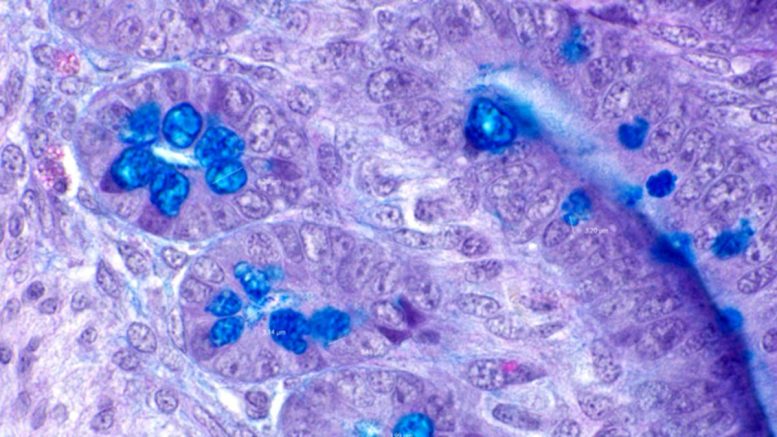
Metal oxide nanoparticles, such as titanium dioxide, commonly used in food may harm intestinal health by affecting digestive and absorptive proteins, with potential long-term effects still under investigation.
According to a recent study by scientists at Cornell and Binghamton University, metal oxide nanoparticles which are frequently utilized as food coloring and anti-caking agents in the food industry, may cause damage to certain sections of the human intestine.
“We found that specific nanoparticles – titanium dioxide and silicon dioxide – ordinarily used in food may negatively affect intestinal functionality,” said senior author Elad Tako, associate professor of food science at Cornell. “They have a negative effect on key digestive and absorptive proteins.”
In their study, the research team administered human-equivalent doses of titanium dioxide and silicon dioxide in the Tako laboratory’s in vivo system, which provides a health response that closely resembles that of the human body.
The scientists injected the nanoparticles into chicken eggs. After the chickens hatched, the scientists detected changes in the functional, morphological, and microbial biomarkers in the blood, the duodenum (upper intestine), and the cecum (a pouch connected to the intestine).
“We are consuming these nanoparticles on a daily basis,” said Tako. “We don’t really know how much we consume; we don’t really know the long-term effects of this consumption. Here, we were able to demonstrate some of these effects, which is a key to understanding gastrointestinal health and development.”
Despite the finding, the scientists are not yet calling for an end to the use of these nanoparticles.
“Based on the information, we suggest simply being aware,” Tako said. “Science needs to conduct further investigations based on our findings. We are opening the door for discussion.”
Reference: “Food-Grade Metal Oxide Nanoparticles Exposure Alters Intestinal Microbial Populations, Brush Border Membrane Functionality and Morphology, In Vivo (Gallus gallus)” by Jacquelyn Cheng, Nikolai Kolba, Alba García-Rodríguez, Cláudia N. H. Marques, Gretchen J. Mahler and Elad Tako, 9 February 2023, Antioxidants.
DOI: 10.3390/antiox12020431
The study was funded by the National Institutes of Health.
Nanoparticles are used in food colorings to improve their stability, solubility, and color intensity. Food coloring nanoparticles are made by reducing the size of color particles to the nanoscale range, typically between 1 and 100 nanometers in diameter.
Nanoparticles have a larger surface area than larger particles, which makes them more reactive and improves their ability to disperse in food. This improved dispersion leads to better color stability, as the nanoparticles are less likely to clump together or settle out of the food product.
In addition to stability, nanoparticles can also enhance the intensity of food colors. This is because the smaller size of the particles allows them to interact more efficiently with light, resulting in more vivid and intense colors.
However, it is important to note that the use of nanoparticles in food has raised concerns about their potential health effects. As a result, regulatory bodies such as the U.S. Food and Drug Administration (FDA) require that food manufacturers provide evidence that the nanoparticles they use are safe for consumption.
Never miss a breakthrough: Join the SciTechDaily newsletter.
Follow us on Google and Google News.
6 Comments
Another item the FDA has approved that causes bodily harm. We need to revamp the FDA and insure proper testing of products before 20 years of ingesting poisons or cancer causing agents 1 in 25 Americans will have a battle with colon or prostate cancers in there lifetime.
FDA exists to protect pharma cartels and businessess
FDA approval doesn’t actually mean anything. In the US you’re on your own.
EU bans them I do believe
EU ban SiO2 and TiO2 colorants? This is a neat study, all done in maturing chicken eggs…er, except the chick surgery. More fun than the followthrough on senescent chickens. Yeah, FDA review starts to look good if only we have the followthrough study on at least awesome colorants we should try some of.
Oho! So 7 Sept. 2022, EU banned TiO2 in colorants. EU 2022/63. Also azodicarbonamide which is bleachy baking stuff that cooks sideways.