

Scientists have found a clean, low-energy way to recycle Teflon using only sodium and motion.
New scientific findings reveal a straightforward and environmentally friendly approach for breaking down Teflon, one of the most resilient plastics on Earth, into valuable chemical components.
A team of scientists from Newcastle University and the University of Birmingham has created a clean, energy-efficient process for recycling Teflon (PTFE), a material widely recognized for its role in non-stick cookware and other uses that require exceptional heat and chemical resistance.
The study shows that discarded Teflon can be transformed into reusable materials using only sodium metal and mechanical motion (movement by shaking) at room temperature, all without the need for harmful solvents.
Detailed in the Journal of the American Chemical Society (JACS) on October 22, the research introduces a low-energy, waste-free method that provides a new alternative to traditional fluorine recycling techniques.
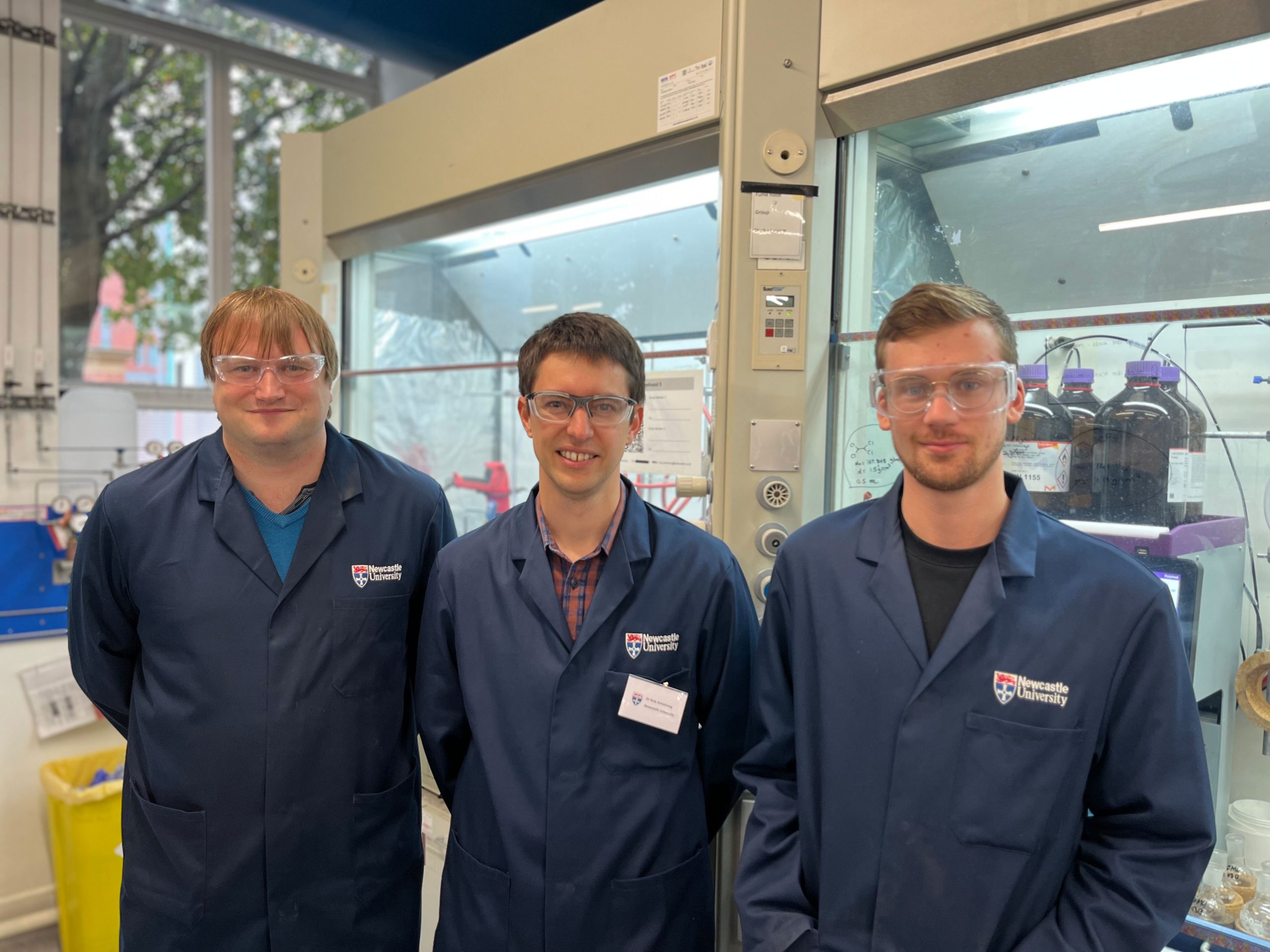
Dr. Roly Armstrong, Lecturer in Chemistry at Newcastle University and corresponding author said: “The process we have discovered breaks the strong carbon–fluorine bonds in Teflon, converting it into sodium fluoride which is used in fluoride toothpastes and added to drinking water.
Turning Waste Into Resources
“Hundreds of thousands of tonnes of Teflon are produced globally each year – it’s used in everything from lubricants to coatings on cookware, and currently there are very few ways to get rid of it. As those products come to the end of their lives, they currently end up in landfill – but this process allows us to extract the fluorine and upcycle it into useful new materials.”
Associate Professor Dr. Erli Lu, from the University of Birmingham, commented: “Fluorine is a vital element in modern life – it’s found in around one-third of all new medicines and in many advanced materials. Yet fluorine is traditionally obtained through energy-intensive and heavily polluting mining and chemical processes. Our method shows that we can recover it from everyday waste and reuse it directly – turning a disposal problem into a resource opportunity.”
Polytetrafluoroethylene (PTFE), best known by the brand name Teflon, is prized for its resistance to heat and chemicals, making it ideal for cookware, electronics, and laboratory equipment, but those same properties make it almost impossible to recycle.
When burned or incinerated, PTFE releases persistent pollutants known as ‘forever chemicals’ (PFAS), which remain in the environment for decades. Traditional disposal methods, therefore, raise major environmental and health concerns.
Mechanochemistry: A Green Solution
The research team tackled this challenge using mechanochemistry – a green approach that drives chemical reactions by applying mechanical energy instead of heat.
Inside a sealed steel container known as a ball mill, sodium metal fragments are ground with Teflon, which causes them to react at room temperature. The process breaks the strong carbon–fluorine bonds in Teflon, converting it into harmless carbon and sodium fluoride, a stable inorganic salt which is widely used in fluoride toothpastes.
The researchers then showed that the sodium fluoride recovered in this way can also be used directly, without purification, to create other valuable fluorine-containing molecules. These include compounds used in pharmaceuticals, diagnostics, and other fine chemicals.
Associate Professor Dr. Dominik Kubicki, who leads the University of Birmingham’s solid-state Nuclear Magnetic Resonance (NMR) team, commented: “We used advanced solid-state NMR spectroscopy – one of our specialties at Birmingham – to look inside the reaction mixture at the atomic level. This allowed us to prove that the process produces clean sodium fluoride without any by-products. It’s a perfect example of how state-of-the-art materials characterization can accelerate progress toward sustainability.”
A Blueprint for a Circular Fluorine Economy
The discovery provides a blueprint for a circular economy for fluorine, in which valuable elements are recovered from industrial waste rather than discarded. This could significantly reduce the environmental footprint of fluorine-based chemicals, which are vital in medicine, electronics, and renewable-energy technologies.
“Our approach is simple, fast, and uses inexpensive materials,” said Dr. Lu. “We hope it will inspire further work on reusing other kinds of fluorinated waste and help make the production of vital fluorine-containing compounds more sustainable.”
The work also highlights the growing importance of mechanochemistry – an emerging branch of green chemistry that replaces high-temperature or solvent-intensive reactions with simple mechanical motion – as a tool for sustainable innovation.
Dr. Kubicki added: “This research shows how interdisciplinary science, combining materials chemistry with advanced spectroscopy, can turn one of the most persistent plastics into something useful again. It’s a small but important step toward sustainable fluorine chemistry.”
Reference: “A Reductive Mechanochemical Approach Enabling Direct Upcycling of Fluoride from Polytetrafluoroethylene (PTFE) into Fine Chemicals” by Matthew E. Lowe, Benjamin M. Gallant, Nathan Davison, Matthew N. Hopkinson, Dominik J. Kubicki, Erli Lu and Roly J. Armstrong, 21 October 2025, Journal of the American Chemical Society.
DOI: 10.1021/jacs.5c14052
Never miss a breakthrough: Join the SciTechDaily newsletter.
Follow us on Google and Google News.
3 Comments
What if they refined this ball-milling process, by adding a molecularly-thin coating of pure Platinum, to the stainless steel balls involved? Many years ago, the Gillette razor company invented a method of coating the edges of their razor blades with a super-thin Platinum coating, which actually uses very little of this expensive metal element, to greatly extend the razor’s service life. Because Platinum is a powerful chemical catalyst, perhaps that tweaking could make this recycling process even more efficient. Also, could passing a weak electrostatic charge through the ‘shaker’ container do that as well!
Oh great we can convert an inert material into sodium fluoride which is an extremely potent neurotoxin. The sodium fluoride scam is so old that people don’t even know it’s a scam anymore. That crap doesn’t help your teeth and it doesn’t improve your health. It doesn’t make drinking water safer. But it will lower your IQ by 5% or more. The Nazis used it to control the slaves they had building weapons in certain secret factories. It worked so well that the elite decided to use it on all of us.
thanks for this