
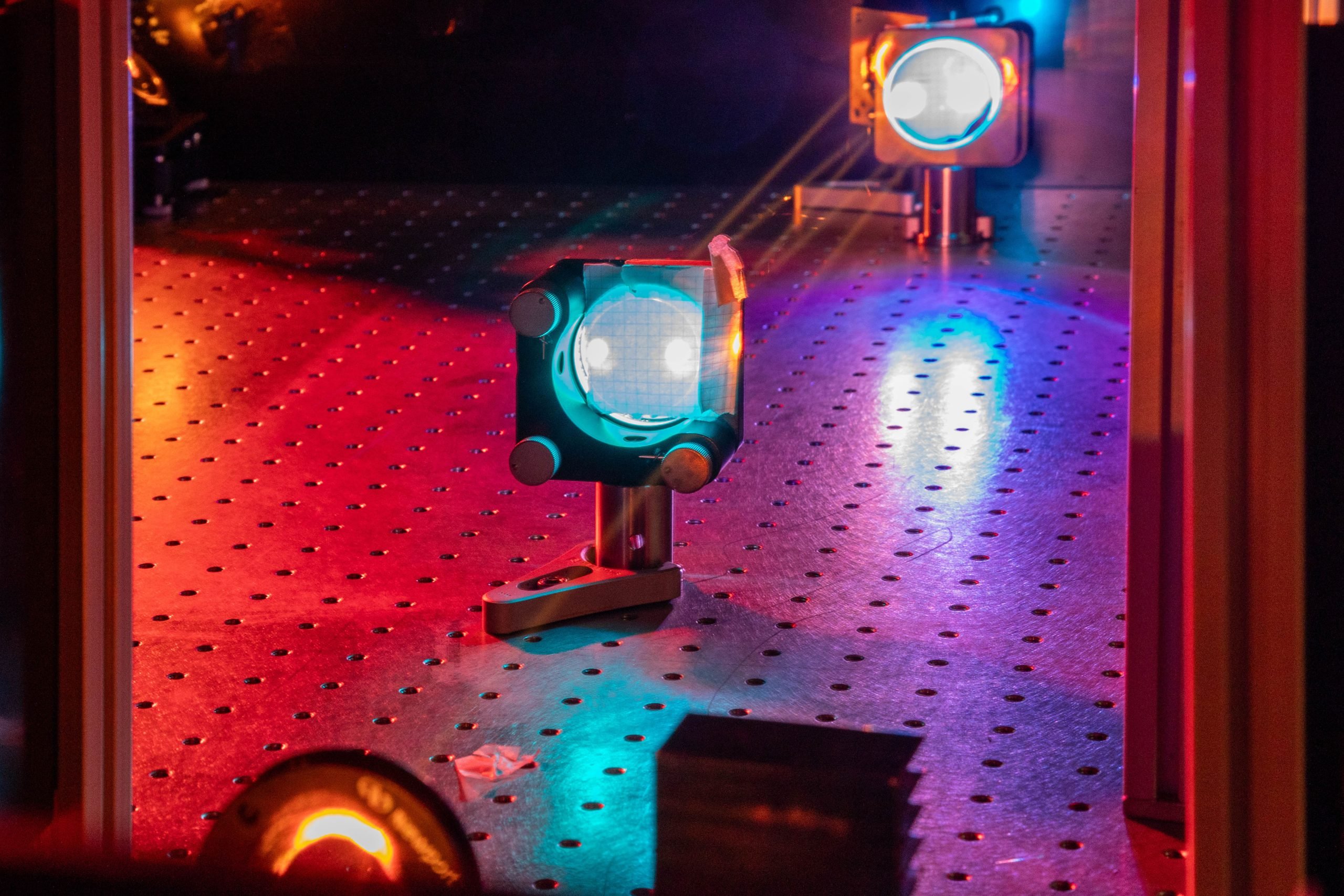
A study led by Politecnico di Milano, recently published in Nature Photonics, highlights the crucial role of virtual charges in insulating materials.
One of the biggest challenges in modern physics and photonics is understanding how materials behave when struck by extremely brief flashes of light. A new study, published in Nature Photonics and led by researchers at Politecnico di Milano, uncovers a crucial factor that has often been overlooked: the role of virtual charges. These are charge carriers that exist only during their interaction with light, yet they have a significant impact on how a material responds.
To explore this phenomenon, scientists from Politecnico di Milano collaborated with the University of Tsukuba, the Max Planck Institute for the Structure and Dynamics of Matter, and the Institute of Photonics and Nanotechnology (Cnr-Ifn).
Their experiments focused on monocrystalline diamonds exposed to light pulses lasting just a few attoseconds (a billionth of a billionth of a second). The team employed an advanced method known as attosecond-scale transient reflection spectroscopy to capture these ultrafast processes in action.
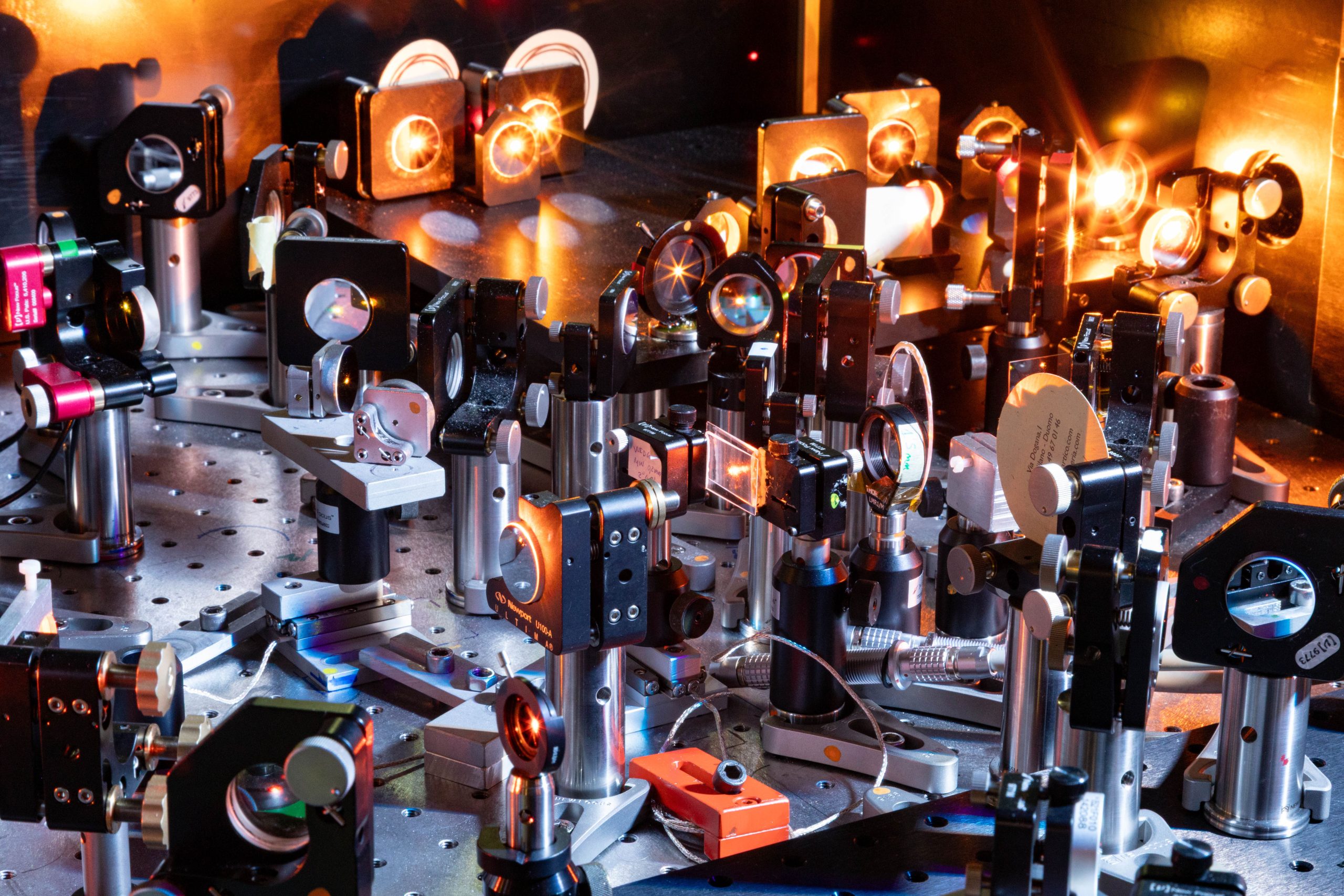
By comparing experimental data with state-of-the-art numerical simulations, researchers were able to isolate the effect of so-called virtual vertical transitions between the electronic bands of the material. Such an outcome changes the perspective on how light interacts with solids, even in extreme conditions hitherto attributed only to the movement of actual charges.
Rethinking Light–Matter Interactions
“Our work shows that virtual carrier excitation, which develops in a few billionths of a billionth of a second, are indispensable to correctly predict the rapid optical response in solids,” said Matteo Lucchini, professor at the Department of Physics, senior author of the study, and associate at CNR-Ifn.
“These results mark a key step in the development of ultra-fast technologies in electronics,” adds Rocío Borrego Varillas, researcher at CNR-IFN.
The progress achieved offers new insights into the creation of ultra-fast optical devices, such as switches and modulators capable of operating at petahertz frequencies, a thousand times faster than current electronic devices. This requires a deep understanding of both the behavior of actual charges, and of virtual charges, as demonstrated by this study.
Reference: “Attosecond virtual charge dynamics in dielectrics” by Gian Luca Dolso, Shunsuke A. Sato, Giacomo Inzani, Nicola Di Palo, Bruno Moio, Rocío Borrego-Varillas, Mauro Nisoli and Matteo Lucchini, 16 June 2025, Nature Photonics.
DOI: 10.1038/s41566-025-01700-6
Research was carried out at the Attosecond Research Center (ARC) of the Politecnico di Milano, in the framework of the European and national projects ERC AuDACE (Attosecond Dynamics in AdvanCed matErials) and MIUR FARE PHorTUNA (PHase Transition Ultrafast dyNAmics in Mott insulators).
Never miss a breakthrough: Join the SciTechDaily newsletter.
Follow us on Google and Google News.
5 Comments
Scientists Discover “Virtual Charges” That Exist Only When Light Hits.
VERY GOOD!
This is the typical self-organization and emergence in different spin interactions.
Space constitutes the fundamental medium in which matter (or objects) exist and undergo motion. Within this framework, diverse forms of matter manifest, occupying distinct spatial domains and persisting through specific temporal intervals. This raises profound questions: What governs the origin of matter in space? Can space autonomously generate and structure matter? By what mechanisms are motion, vitality, and cyclical dynamics imparted to cosmic entities?
Symmetry principles dominate the formulation of fundamental physical laws, acting as both heuristic and axiomatic guides. Theoretical unification efforts are intrinsically tied to symmetry preservation, with global symmetries often approximating emergent gauge symmetries—a perspective corroborated by condensed-matter physics and experimental evidence. Crucially, symmetries enable the extraction of universal laws from chaotic initial conditions, underscoring their indispensability in physical discovery.
Vortex research intersects fluid mechanics, astrophysics, and quantum theory, offering fertile ground for interdisciplinary innovation. Cross-disciplinary synthesis may catalyze paradigm shifts in modern physics, driving novel methodologies and unifying disparate phenomena under coherent theoretical frameworks.
Excerpted from https://zhuanlan.zhihu.com/p/1933828835322856603.
Scientists Discover “Virtual Charges” That Exist Only When Light Hits.
VERY GOOD!
This is the typical self-organization and emergence in different spin interactions.
Space constitutes the fundamental medium in which matter (or objects) exist and undergo motion. Within this framework, diverse forms of matter manifest, occupying distinct spatial domains and persisting through specific temporal intervals. This raises profound questions: What governs the origin of matter in space? Can space autonomously generate and structure matter? By what mechanisms are motion, vitality, and cyclical dynamics imparted to cosmic entities?
Symmetry principles dominate the formulation of fundamental physical laws, acting as both heuristic and axiomatic guides. Theoretical unification efforts are intrinsically tied to symmetry preservation, with global symmetries often approximating emergent gauge symmetries—a perspective corroborated by condensed-matter physics and experimental evidence. Crucially, symmetries enable the extraction of universal laws from chaotic initial conditions, underscoring their indispensability in physical discovery.
Vortex research intersects fluid mechanics, astrophysics, and quantum theory, offering fertile ground for interdisciplinary innovation. Cross-disciplinary synthesis may catalyze paradigm shifts in modern physics, driving novel methodologies and unifying disparate phenomena under coherent theoretical frameworks.
Свет это выброшенные электронами избытки вращения грозящие нарушить стабильность орбиты. Фотоны не имеют массы либо оно ничтожно, но это пакет избытка собственного времени вращения электрона и излишек длины орбиты. Потому фотоны так близко к сердцу принимает любой электрон. Принимая, как нагрев, это вращение, либо как скорость вместе с длиной. Но короткий импульс лазера электронами воспринят, как древняя тяжелая пехота принимает залп стрел врага, одновременно вскинув щиты. Заряд, и вчера был, согласованным поворотом спин электронов. И согласование орбит создает поле, либо поле их согласовывает. Как в конденсаторах строятся Македонские фаланги. Мир един. В большом и малом законы те же.
给您点赞:Мир един. В большом и малом законы те же.
Please ask researchers to think deeply:
Is the matter in space derived from the dynamic evolution of space itself or from God?