
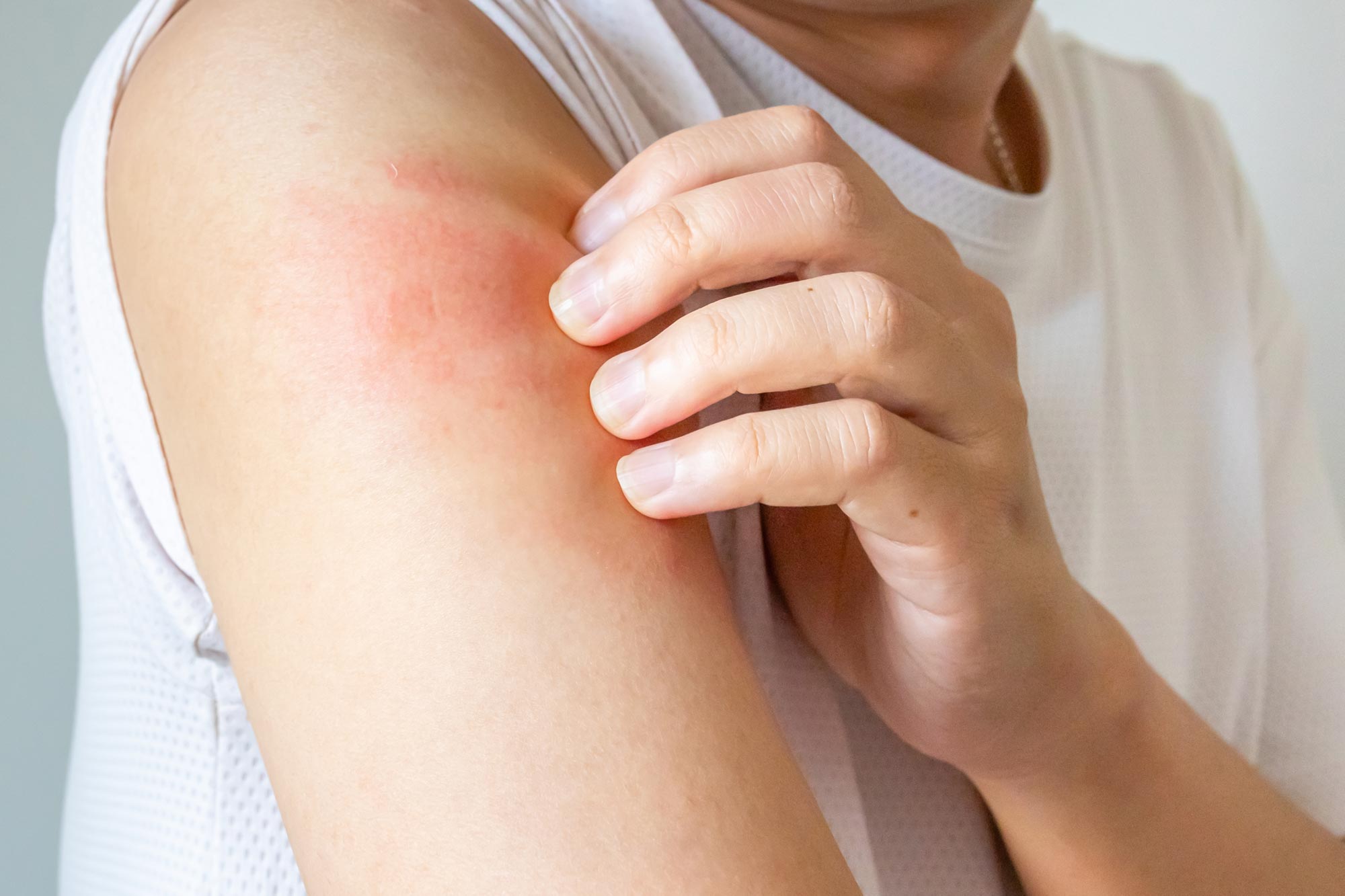
Scientists have identified a neural feedback mechanism that helps determine when scratching an itch should stop.
When you scratch an itch, something tells your brain when to stop. That moment of relief, when scratching feels “enough,” is not accidental. Scientists have now identified a key molecular and neural mechanism behind this built-in braking system, shedding new light on how the body regulates itch and why this control fails in chronic conditions. The research will be presented at the 70th Biophysical Society Annual Meeting in San Francisco from February 21–25, 2026.
In a new study from the laboratory of Roberta Gualdani, professor at the University of Louvain in Brussels, researchers reveal an unexpected role for the ion channel TRPV4 in mechanically evoked itch.
“We were initially studying TRPV4 in the context of pain,” Gualdani explained. “But instead of a pain phenotype, what emerged very clearly was a disruption of itch, specifically, how scratching behavior is regulated.”
TRPV4 belongs to a family of ion channels that act as molecular gates in the membranes of sensory neurons, allowing ions to flow in response to physical or chemical stimuli. These channels help the nervous system detect temperature, pressure, and tissue stress. While TRPV4 has long been suspected to participate in mechanosensation, its role in itch, and especially in chronic itch, has remained controversial.
A Neuron-Specific Approach
To address this question with precision, Gualdani’s team engineered a genetic mouse model, selectively deleting TRPV4 only in sensory neurons. This neuron-specific approach avoided a major limitation of earlier studies, in which TRPV4 was removed from all tissues, making it difficult to pinpoint where the channel was actually acting.
Using a combination of genetic tools, calcium imaging, and behavioral assays, the researchers demonstrated that TRPV4 is expressed in neurons classically associated with touch, called Aβ low-threshold mechanoreceptors (Aβ-LTMRs), as well as in subsets of sensory neurons linked to itch and pain pathways, including those expressing TRPV1.
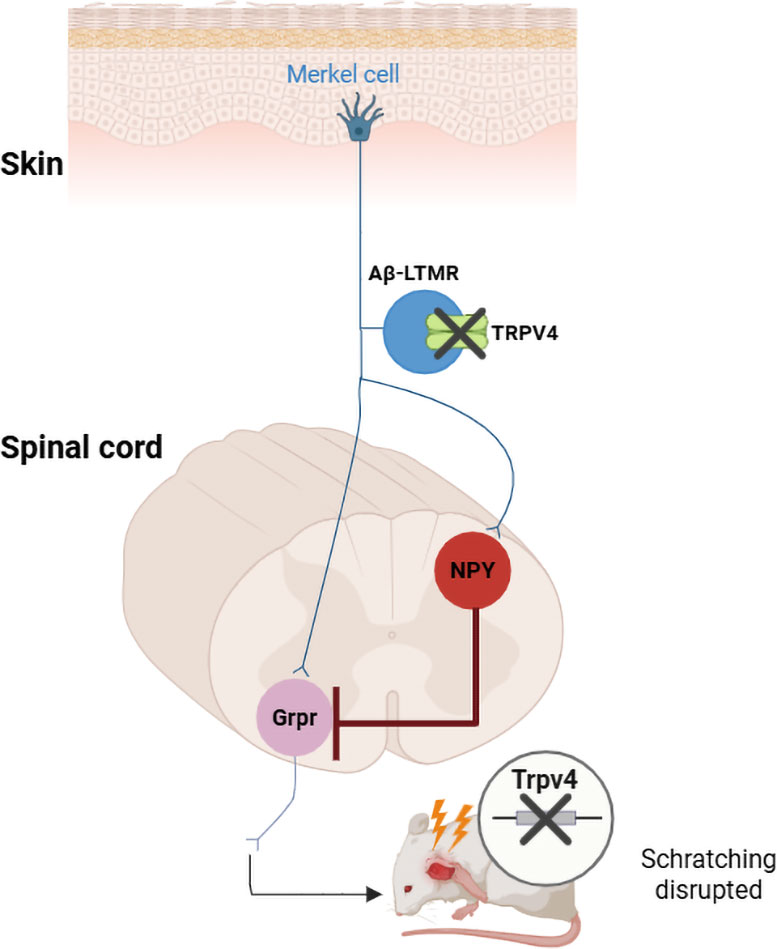
When the team induced a chronic itch condition resembling atopic dermatitis, the results were striking. Mice lacking neuronal TRPV4 scratched less frequently, but each scratching bout lasted much longer than normal.
“At first glance, that seems paradoxical,” Gualdani said. “But it actually reveals something very important about how itch is regulated.”
The ‘Stop-Scratching’ Circuit
The data suggest that TRPV4 does not simply generate itch. Instead, in mechanosensory neurons, it helps trigger a negative feedback signal, a neural message that tells the spinal cord and brain that scratching has been sufficient. Without this signal, the sensation of relief is blunted, and scratching continues excessively. In other words, TRPV4 acts as part of the nervous system’s internal ‘stop-scratching’ circuit.
“When we scratch an itch, at some point we stop because there’s a negative feedback signal that tells us we’re satisfied,” Gualdani explained. “Without TRPV4, the mice don’t feel this feedback, so they continue scratching much longer than normal.”
The findings suggest that TRPV4’s role in itch is more complex than previously thought. While the channel in skin cells appears to trigger itch sensations, the same channel in neurons seems to help regulate and restrain them. This dual role has important implications for drug development.
“This means that broadly blocking TRPV4 may not be the solution,” Gualdani noted. “Future therapies may need to be much more targeted—perhaps acting only in the skin, without interfering with the neuronal mechanisms that tell us when to stop scratching.”
Chronic itch affects millions of people with conditions like eczema, psoriasis, and kidney disease, yet effective treatments remain limited. Understanding the precise mechanisms that regulate itch—including when to stop scratching—could open new avenues for therapeutic development.
Meeting: 70th Biophysical Society Annual Meeting
Never miss a breakthrough: Join the SciTechDaily newsletter.
Follow us on Google and Google News.