
Close Menu
    Facebook X (Twitter) Instagram
    SciTechDaily
    • Biology
    • Chemistry
    • Earth
    • Health
    • Physics
    • Science
    • Space
    • Technology
    Facebook X (Twitter) Pinterest YouTube RSS
    SciTechDaily
    Home»Space»Scientists Discuss a New Power Source for Future Space Exploration
    Space

    Scientists Discuss a New Power Source for Future Space Exploration

    By Gina Anderson, NASAJanuary 10, 20181 Comment2 Mins Read
    Facebook Twitter Pinterest Telegram LinkedIn WhatsApp Email Reddit
    Share
    Facebook Twitter LinkedIn Pinterest Telegram Email Reddit
    A New Power Source for Future Space Exploration
    Mars fission power system concept. Credit: NASA

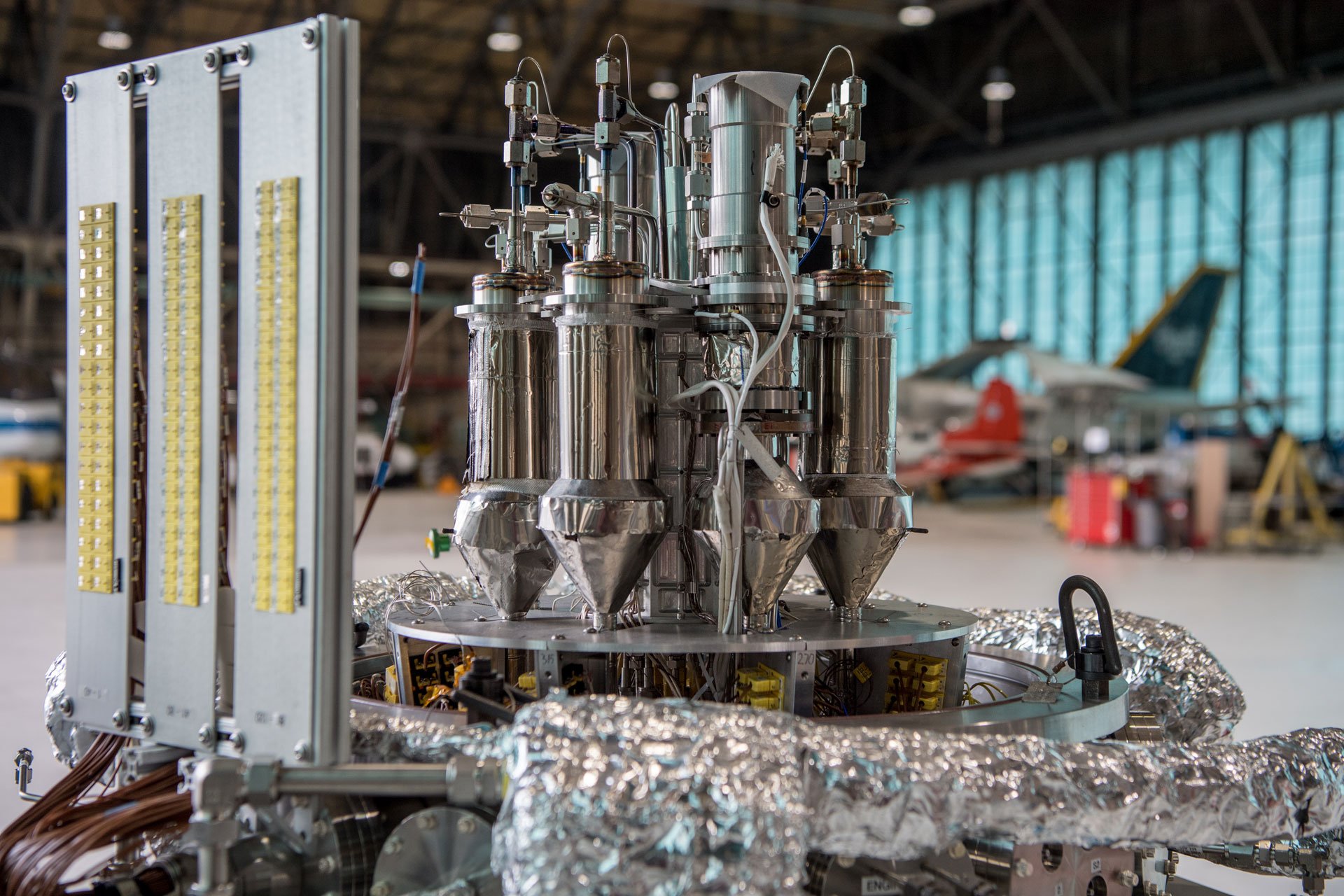
    NASA and its partners will host a news conference at noon EST (9 a.m. PST) Thursday, January 18, at the National Atomic Testing Museum in Las Vegas, to discuss a recent experiment involving a new power source that could provide the safe, efficient and plentiful energy needed for future robotic and human space exploration missions.

    Audio of the news conference and presentation slides will stream live on NASA’s website.

    Representatives from NASA, the National Nuclear Security Administration’s (NNSA’s) Los Alamos National Laboratory and Nevada National Security Site (NNSS) will discuss and take questions on the Kilopower project, which aims to demonstrate space fission power systems technology that has the potential to enable future crewed surface missions to the Moon, Mars and beyond. Testing began in November 2017 and is expected to continue through March.

    The news conference participants will be:

    • Steve Jurczyk, associate administrator of NASA’s Space Technology Mission Directorate
    • Angela Chambers, manager of the Department of Energy’s Nuclear Criticality Safety Program
    • Mark Martinez, president of Mission Support and Test Services, LLC, which manages and operates the Nevada National Security Site for the NNSA
    • Janet Kavandi, director of NASA’s Glenn Research Center
    • Lee Mason, NASA’s principal technologist for power and energy storage
    • Pat McClure, Kilopower project lead at Los Alamos
    • Marc Gibson, Kilopower lead engineer at Glenn Research Center
    • Dave Poston, chief reactor designer at Los Alamos

    Media interested in participating in the event, in person or by phone, must send their name, media affiliation and phone number to Gina Anderson at [email protected] no later than 5 p.m. Tuesday, January 16.

    Members of the public also can ask questions during the briefing on social media using #AskNASA.

    Supporting images and video will be available online at: https://www.nasa.gov/directorates/spacetech/kilopower

    The Kilopower project is part of NASA’s Game Changing Development program and is led by the agency’s Glenn Research Center, in partnership with NASA’s Marshall Space Flight Center in Huntsville, Alabama, Los Alamos, NNSS and the Y-12 National Security Complex.

    Never miss a breakthrough: Join the SciTechDaily newsletter.
    Follow us on Google and Google News.

    Astronomy NASA Planetary Science Space Exploration
    Share. Facebook Twitter Pinterest LinkedIn Email Reddit

    Related Articles

    NASA’s Exploration Campaign: Back to the Moon and on to Mars

    NASA Reveals Details for the Next Steps in the Journey to Mars

    NASA is Working on Technology to Protect Astronauts from Space Radiation on Mars

    NASA’s New Horizons Begins Intensive Data Downlink

    Soyuz TMA-18M Successfully Launched, Heads to International Space Station

    Kepler-452b and the Search for Another Earth

    Color HiRISE Image of Curiosity Rover on Mars

    First 360-Degree Color Panorama From NASA’s Curiosity Mars Rover

    Near Miss Asteroid – An Opportunity To Test a Rapid Response Program

    1 Comment

    1. T. Lipinski on January 11, 2018 3:44 am

      The Kilopower Project is long over due for NASA and others ! This Power can power Ion Rocket Engines to the outer Solar System without cutting back on power. And powerful radar can map below the surface of a planet or other Space Bodies ! And maybe can fund JIMO again… Also this Power can power the commercial Clementine Base at the Lunar South Pole. The Lunar Base can map and learn how to recover the Lunar Water Ice. The Water Ice can be broken down to LUNar OXygen (LUNOX) that has many uses. The Hydrogen can be used as Rocket Fuel. And Heated Hydrogen can recover Solar Wind Gases from the Lunar Regolith. Back to the Moon to Stay and onto Mars and Beyond-Ad Astra… tjl

      Reply
    Leave A Reply Cancel Reply

    • Facebook
    • Twitter
    • Pinterest
    • YouTube

    Don't Miss a Discovery

    Subscribe for the Latest in Science & Tech!

    Trending News

    Researchers Warn Widely Prescribed Blood Pressure Drugs Could Be Harming Diabetic Kidneys

    James Webb Spots Something Strange Between Day and Night on an Alien Planet

    How Ancient People Moved a 6-Ton Stone 700 Kilometers to Stonehenge

    The Unexpected Gut Health Risk of Cutting Out Sugar

    Popular Weight-Loss Drugs Like Ozempic Linked to Lower Breast Cancer Risk

    AI Learned the Rules of the Universe and That Became a Problem

    Scientists Found a Hidden Brain Signal That Predicts Social Behavior

    Even GPT-5 Failed This Human Attention Test

    Follow SciTechDaily
    • Facebook
    • Twitter
    • YouTube
    • Pinterest
    • Newsletter
    • RSS
    SciTech News
    • Biology News
    • Chemistry News
    • Earth News
    • Health News
    • Physics News
    • Science News
    • Space News
    • Technology News
    Recent Posts
    • Ancient Black Holes May Have Survived a Cosmic Era Before the Big Bang
    • What if Time Isn’t Fundamental? Physicists Just Tested the Idea in the Lab
    • Scientists Let People Play Video Games Using Only Their Thoughts
    • Women’s Brains May Be More Vulnerable to Dementia Risk Factors Than Scientists Realized
    • Scientists Say We’ve Been Wrong About the Aging Brain
    Copyright © 1998 - 2026 SciTechDaily. All Rights Reserved.
    • Science News
    • About
    • Contact
    • Editorial Board
    • Privacy Policy
    • Terms of Use

    Type above and press Enter to search. Press Esc to cancel.