
Close Menu
    Facebook X (Twitter) Instagram
    SciTechDaily
    • Biology
    • Chemistry
    • Earth
    • Health
    • Physics
    • Science
    • Space
    • Technology
    Facebook X (Twitter) Pinterest YouTube RSS
    SciTechDaily
    Home»Biology»Scientists Explain the Survivability of Viruses
    Biology

    Scientists Explain the Survivability of Viruses

    By Yana Khlyustova, Lomonosov Moscow State UniversityApril 26, 2018No Comments3 Mins Read
    Facebook Twitter Pinterest Telegram LinkedIn WhatsApp Email Reddit
    Share
    Facebook Twitter LinkedIn Pinterest Telegram Email Reddit
    Scientists Explain the Survivability of Viruses
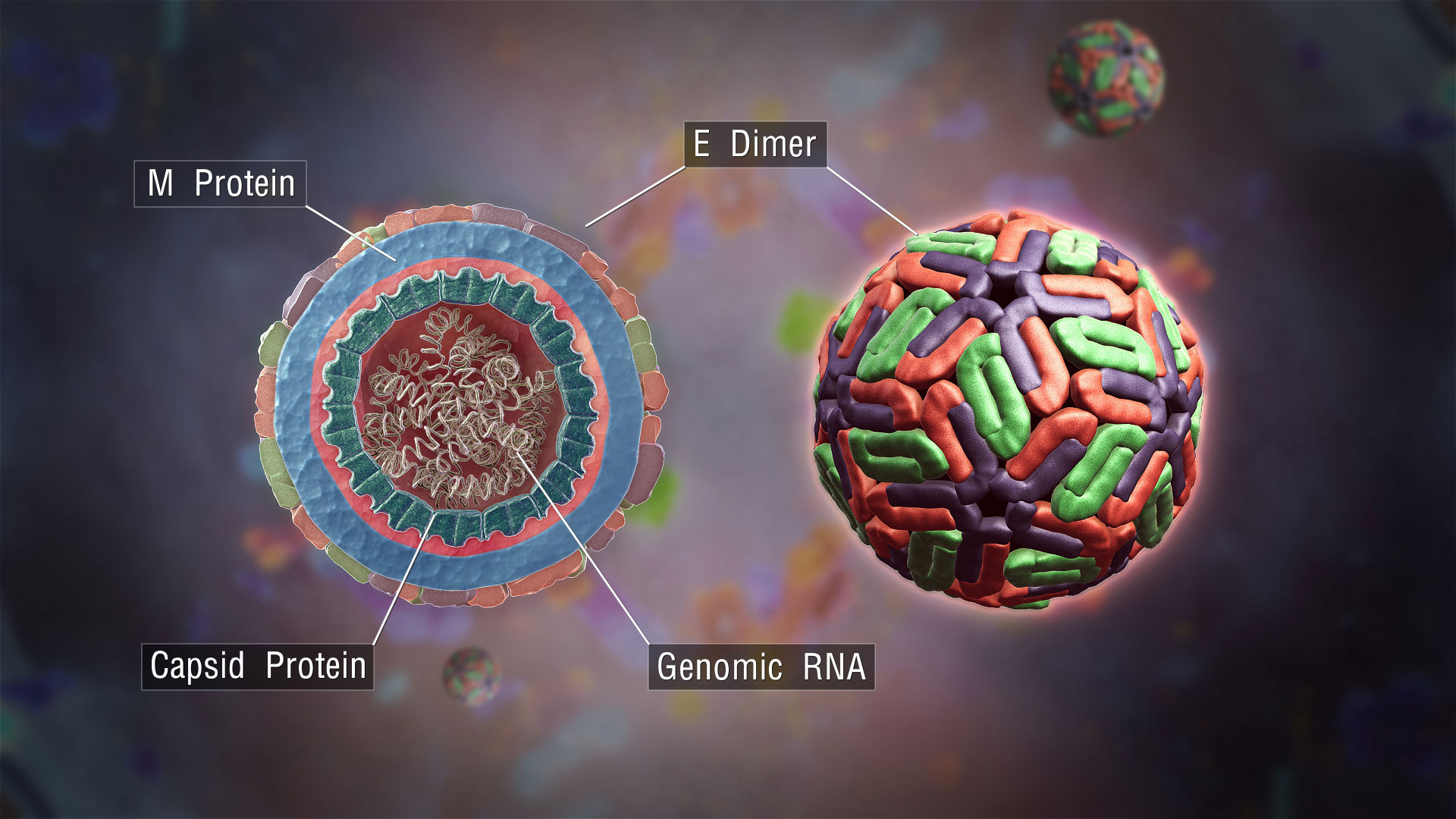
    Cross section of a dengue virus showing structural components.

    An employee of Belozersky Research Institute of Physico-Chemical Biology (RI PCB), MSU together with a Russian colleague analyzed the ways of increasing the survivability of RNA-containing viruses as well as the mechanisms that help them get rid of adverse mutations. The study was published in Microbiology and Molecular Biology Reviews journal.

    The work is an overview of the authors’ own studies, as well as publications on conservation and variability in the genomes of viruses that store their genetic material in the form of RNA molecules. The authors put together previously discrete facts and formulated general trends that explain the sustainability of genomes and at the same time their ability to quickly change and preserve beneficial mutations.

    In the course of reproduction of RNA viruses, their genomes experience lots of mutations (errors that occur when strains of nucleotides are copied. This is explained by low precision in the activity of viral RNA polymerases, the enzymes that synthesize daughter molecules on the genome RNA matrix. Due to these inaccuracies the populations of these viruses have enormous genetic variety.

    Some mutations can dramatically reduce the viability of viruses or even be deadly dangerous for them. However, even in this case the population usually preserves its main properties. This is due to the work of natural selection: the carriers of adverse features have a lower chance of survival, and therefore future generations are unlikely to inherit their properties. The stability of genomes is so high that the populations remain almost identical even if the viruses are grown for 30 years in different countries.

    The coexistence of viruses with different genomes helps the population survive in rapidly changing conditions (for example, when a patient develops tolerance or starts taking antiviral medications). In this case the viruses that possess necessary properties as a result of genetic errors will live.

    However, when viruses spread within a body or between bodies, they often face various obstacles that only a small number of viral particles can overcome. Occasionally they may be mutants with reduced survivability rate. Ironically, it may increase due to copying errors that, among others, may create favorable mutations.

    Viruses have two ways of restoring their survivability: they can either “repair” a damaged element or change another functional site to compensate for the damage. Both scenarios lead to the restoration of the main biological properties or cause a new variety of viruses to emerge.

    “Therefore, the “recovery” of viruses is based on inaccurate genetic copying. Moreover, it is an important factor that helps viruses adapt to adverse conditions, including protective mechanisms of the body and antiviral medications,” – concluded Vadum Agol, a co-author of the work and the head of the Department of Virus-Cell Interactions at RI PCB.

    Reference: “Emergency Services of Viral RNAs: Repair and Remodeling” Vadim I. Agola and Anatoly P. Gmyl, 14 March 2018, Microbiology and Molecular Biology Reviews.
    DOI: 10.1128/MMBR.00067-17

    Never miss a breakthrough: Join the SciTechDaily newsletter.
    Follow us on Google and Google News.

    Lomonosov Moscow State University Microbiology Molecular Biology RNA Virus
    Share. Facebook Twitter Pinterest LinkedIn Email Reddit

    Related Articles

    Chemists Discovered the Structure of a Key Influenza Protein – Breakthrough Could Lead to Flu Treatment

    Scientists Demonstrate How Primordial Life on Earth Replicated

    Researchers Identify a Protein That Blocks HIV

    Key Differences in Seemingly Synonymous Parts of the Genetic Code

    Atomic Level Splicing Further Establishes RNA’s Chemical and Structural Complexity

    Chemical Model Shows How First Life Forms Might Have Packaged RNA

    Virus Has the Potential To Stop Acne

    Viruses Attack Mitochondria to Travel and Spread Within the Nervous System

    MSU Researchers Show How New Viruses Evolve Through Mutations

    Leave A Reply Cancel Reply

    • Facebook
    • Twitter
    • Pinterest
    • YouTube

    Don't Miss a Discovery

    Subscribe for the Latest in Science & Tech!

    Trending News

    The Universe Is Expanding Too Fast and Scientists Can’t Explain Why

    “Like Liquid Metal”: Scientists Create Strange Shape-Shifting Material

    Early Warning Signals of Esophageal Cancer May Be Hiding in Plain Sight

    Common Blood Pressure Drug Shows Surprising Power Against Deadly Antibiotic-Resistant Superbug

    Scientists Uncover Dangerous Connection Between Serotonin and Heart Valve Disease

    Scientists Discover a “Protector” Protein That Could Help Reverse Hair Loss

    Bone-Strengthening Discovery Could Reverse Osteoporosis

    Scientists Uncover Hidden Trigger Behind Stem Cell Aging

    Follow SciTechDaily
    • Facebook
    • Twitter
    • YouTube
    • Pinterest
    • Newsletter
    • RSS
    SciTech News
    • Biology News
    • Chemistry News
    • Earth News
    • Health News
    • Physics News
    • Science News
    • Space News
    • Technology News
    Recent Posts
    • A Common Diabetes Drug May Hold the Key to Stopping HIV From Coming Back
    • Ancient “Syphilis-Like” Disease in Vietnam Challenges Key Scientific Assumptions
    • Drinking Alcohol To Cope in Your 20s Could Damage Your Brain for Life
    • Scientists Crack Alfalfa’s Chromosome Mystery After Decades of Debate
    • Ancient Ant-Plant Alliance Collapses As Predatory Wasps Move In
    Copyright © 1998 - 2026 SciTechDaily. All Rights Reserved.
    • Science News
    • About
    • Contact
    • Editorial Board
    • Privacy Policy
    • Terms of Use

    Type above and press Enter to search. Press Esc to cancel.