

Close Menu
    Facebook X (Twitter) Instagram
    SciTechDaily
    • Biology
    • Chemistry
    • Earth
    • Health
    • Physics
    • Science
    • Space
    • Technology
    Facebook X (Twitter) Pinterest YouTube RSS
    SciTechDaily
    Home»Health»Scientists Finally Uncover Why the World’s Most Common Heart Drug Causes Muscle Pain
    Health

    Scientists Finally Uncover Why the World’s Most Common Heart Drug Causes Muscle Pain

    By Erik Rolfsen, University of British ColumbiaDecember 9, 2025No Comments4 Mins Read
    Facebook Twitter Pinterest Telegram LinkedIn WhatsApp Email Reddit
    Share
    Facebook Twitter LinkedIn Pinterest Telegram Email Reddit
    Statins Cholesterol Lowering Medication
    Scientists have finally uncovered how statins, lifesaving cholesterol-lowering drugs, can unexpectedly trigger muscle pain and weakness in some patients. Using high-resolution cryo-EM, researchers captured an unusual interaction between statins and a key muscle-calcium channel that may explain these effects. Credit: Stock

    A new study explains how cholesterol-lowering medications can lead to muscle damage and identifies a possible approach to making these treatments safer.

    Statins have dramatically improved cardiovascular health by lowering cholesterol levels and reducing the likelihood of heart attacks and strokes. Yet many people who take these medications experience unwanted muscle symptoms, including soreness, weakness, and in rare situations, severe muscle breakdown that can harm the kidneys.

    Identifying the molecular cause of statin-related muscle damage

    Researchers at the University of British Columbia, working with colleagues at the University of Wisconsin-Madison, have now uncovered the biological reason behind these side effects. Their results, published last week in Nature Communications, may help guide the development of statins that do not trigger muscle problems.

    Using cryo-electron microscopy, a technique capable of visualizing proteins at extremely high resolution, the team observed how statins interact with a key muscle protein known as the ryanodine receptor (RyR1). This receptor controls the flow of calcium inside muscle cells and opens only when a muscle is meant to contract. When statins attach to it, however, the channel is forced open, causing calcium to escape continuously, which can injure the surrounding muscle fibers.

    “We were able to see, almost atom by atom, how statins latch onto this channel,” said lead author Dr. Steven Molinarolo, a postdoctoral researcher in UBC’s department of biochemistry and molecular biology. “That leak of calcium explains why some patients experience muscle pain or, in extreme cases, life-threatening complications.”

    How statins bind to the calcium channel

    The study examined atorvastatin, one of the most commonly used statins, but the evidence suggests the same effect could occur with other drugs in this class. The researchers found that three statin molecules gather within a single pocket of the protein. The first molecule connects when the channel is closed, preparing it to open, while the other two settle in afterward and push the channel fully open.
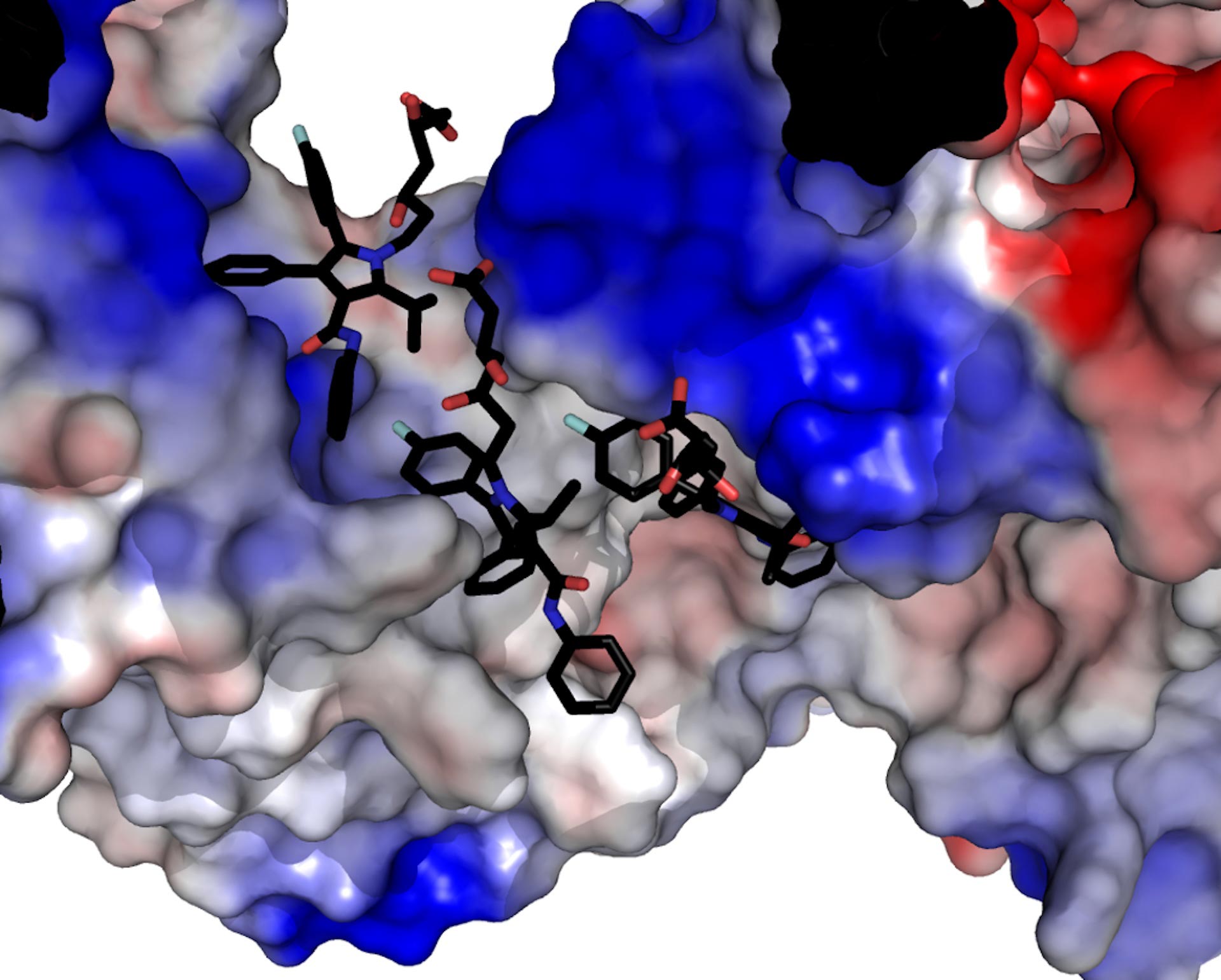
    Statins Binding to Muscle Protein
    This illustration, based on what researchers were able to observe using high-resolution macromolecular cryo-electron microscopy, shows statin moelcules in black binding to the RyR1 protein. Credit: The Bioelectricity Lab, UBC Life Sciences Institute

    “This is the first time we’ve had a clear picture of how statins activate this channel,” said Dr. Filip Van Petegem, senior author and professor at UBC’s Life Sciences Institute. “It’s a big step forward because it gives us a roadmap for designing statins that don’t interact with muscle tissue.”

    By adjusting only those parts of the statin molecule that are responsible for the negative effects, scientists could preserve the part that lowers cholesterol while reducing the risk.

    Implications for patient safety and future drug design

    While severe muscle damage affects only a small fraction of over 200 million statin users worldwide, milder symptoms like aches and fatigue are far more common, and often lead patients to stop treatment. The new findings could help prevent those problems and improve adherence to life-saving therapy.

    The research underscores the importance of advanced imaging technology in driving medical breakthroughs. Using the UBC faculty of medicine’s high-resolution macromolecular cryo-electron microscopy facility, the team was able to visualize the statin-protein interaction in extraordinary detail—turning a fundamental question about drug safety into practical insights that could shape the next generation of therapies.

    “Statins have been a cornerstone of cardiovascular care for decades,” Dr. Van Petegem said. “Our goal is to make them even safer, so patients can benefit without fear of serious side effects.”

    For millions of people who rely on statins, that could mean fewer muscle problems—and a better quality of life.

    Reference: “Cryo-electron microscopy reveals sequential binding and activation of Ryanodine Receptors by statin triplets” by Steven Molinarolo, Carmen R. Valdivia, Héctor H. Valdivia and Filip Van Petegem, 20 November 2025, Nature Communications.
    DOI: 10.1038/s41467-025-66522-0

    Funding: National Institutes of Health

    Never miss a breakthrough: Join the SciTechDaily newsletter.
    Follow us on Google and Google News.

    Cardiology Cholesterol Molecular Biology Muscle University of British Columbia
    Share. Facebook Twitter Pinterest LinkedIn Email Reddit

    Related Articles

    Scientists Finally Crack Decades-Old Mystery Behind Statins’ Painful Side Effects

    Muscle Pain or Fatigue From Statins? What Cholesterol Patients Need To Know

    Statins Used to Lower Cholesterol Linked to Doubled Risk of Developing Dementia

    Reduced Risk of Cancer Among Heart Failure Patients That Use Statins

    Does Statin Use for Cholesterol Control Cause Cognitive Decline, Dementia?

    The Science Behind Superfoods: Mangoes, Honey and Spices Could Bring Important Health Benefits

    Researchers Warn: Not All “Good” Cholesterol Is Healthy

    Circle Back: New Evidence Linking Eggs, Cholesterol to Poor Cardiovascular Health and Death

    Warning: Commonly Used Antibiotics May Lead to Heart Problems

    Leave A Reply Cancel Reply

    • Facebook
    • Twitter
    • Pinterest
    • YouTube

    Don't Miss a Discovery

    Subscribe for the Latest in Science & Tech!

    Trending News

    AI Could Detect Early Signs of Alzheimer’s in Under a Minute – Far Before Traditional Tests

    What if Dark Matter Has Two Forms? Bold New Hypothesis Could Explain a Cosmic Mystery

    This Metal Melts in Your Hand – and Scientists Just Discovered Something Strange

    Beef vs. Chicken: Surprising Results From New Prediabetes Study

    Alzheimer’s Breakthrough: Scientists Discover Key Protein May Prevent Toxic Protein Clumps in the Brain

    Quantum Reality Gets Stranger: Physicists Put a Lump of Metal in Two Places at Once

    Scientists May Have Found the Key to Jupiter and Saturn’s Moon Mystery

    Scientists Uncover Brain Changes That Link Pain to Depression

    Follow SciTechDaily
    • Facebook
    • Twitter
    • YouTube
    • Pinterest
    • Newsletter
    • RSS
    SciTech News
    • Biology News
    • Chemistry News
    • Earth News
    • Health News
    • Physics News
    • Science News
    • Space News
    • Technology News
    Recent Posts
    • Century-Old Cleaning Chemical Linked to 500% Increased Risk of Parkinson’s Disease
    • What if Your Memories Never Happened? Physicists Take a New Look at the Boltzmann Brain Paradox
    • Students Found an Ancient Star That Shouldn’t Be in the Milky Way
    • Astronomers Solve 50-Year Mystery and Reveal Hidden Culprit Behind Strange X-Ray Emissions
    • One of the Universe’s Largest Stars May Be Getting Ready To Explode
    Copyright © 1998 - 2026 SciTechDaily. All Rights Reserved.
    • Science News
    • About
    • Contact
    • Editorial Board
    • Privacy Policy
    • Terms of Use

    Type above and press Enter to search. Press Esc to cancel.