
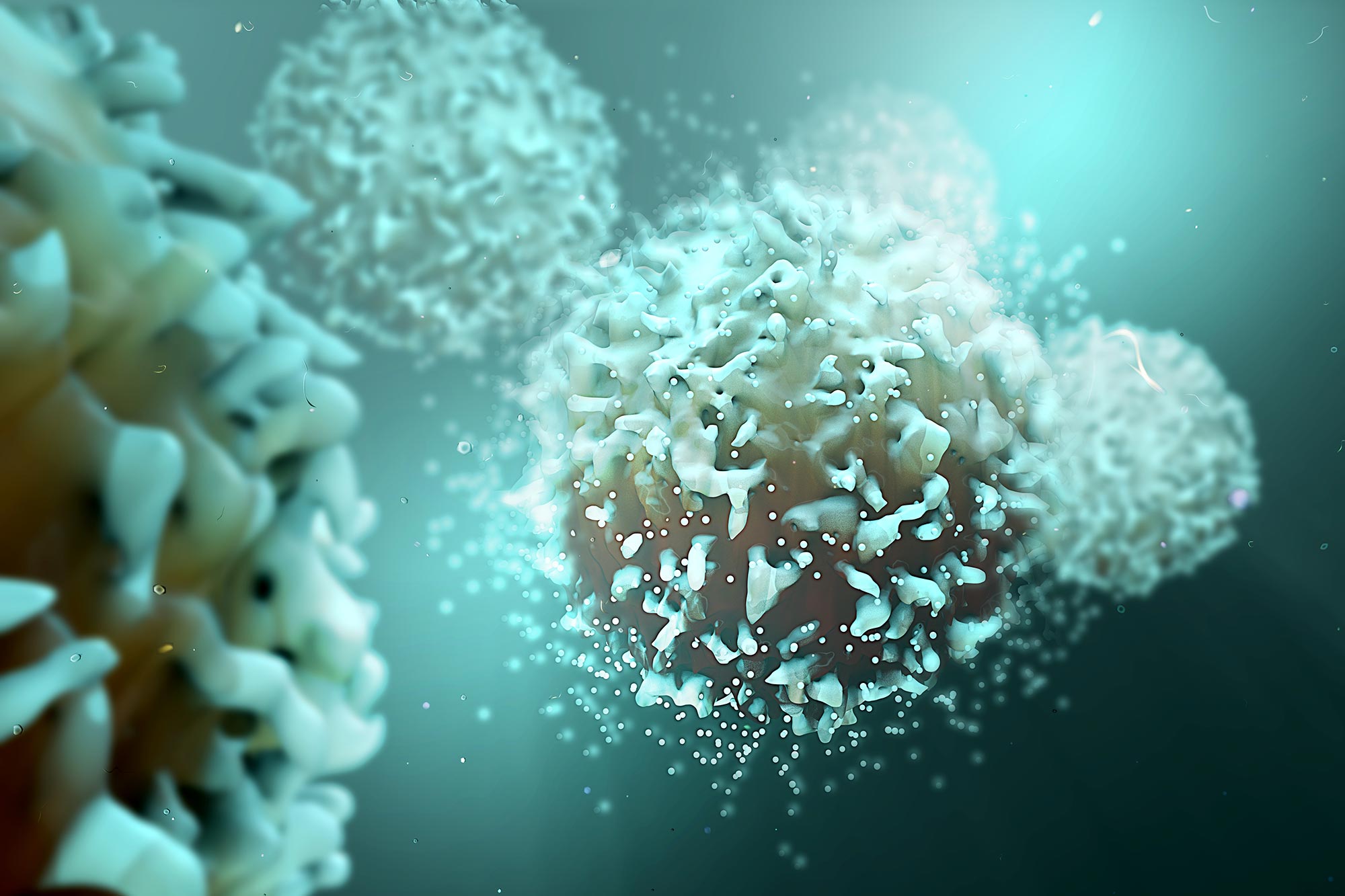
Telomere damage drives T cell exhaustion. Antioxidants restored their cancer-fighting strength in mice.
Tumor environments place heavy stress on immune cells that fight cancer. Limited oxygen, elevated acidity, and other harsh conditions overload mitochondria, the cell’s energy producers, which contributes to T cell fatigue and worsens cancer outcomes.
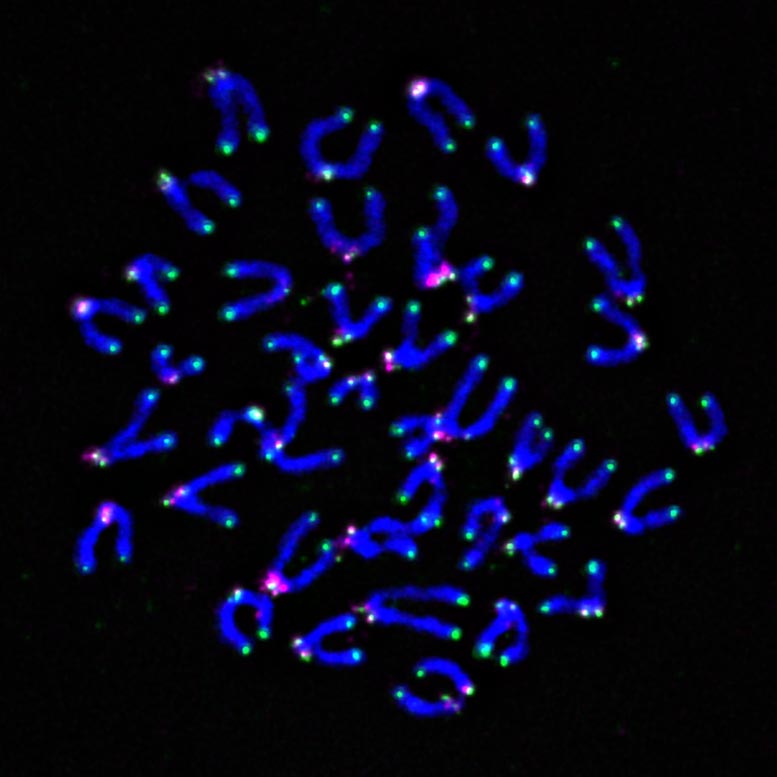
A new study in Immunity, led by researchers at the University of Pittsburgh, showed in mice that these conditions prompt mitochondria to release reactive oxygen species (ROS). These molecules travel to the nucleus and damage telomeres, ultimately pushing T cells into a dysfunctional state.
“The really exciting part about this research is that by preventing damage to telomeres via a targeted antioxidant, we can rescue T cell function,” said lead author Dayana Rivadeneira, assistant professor in the Pitt Department of Immunology and UPMC Hillman Cancer Center. “This opens the door to novel therapies to improve the effectiveness of cancer immunotherapies.”
Unexpected mitochondrial connection
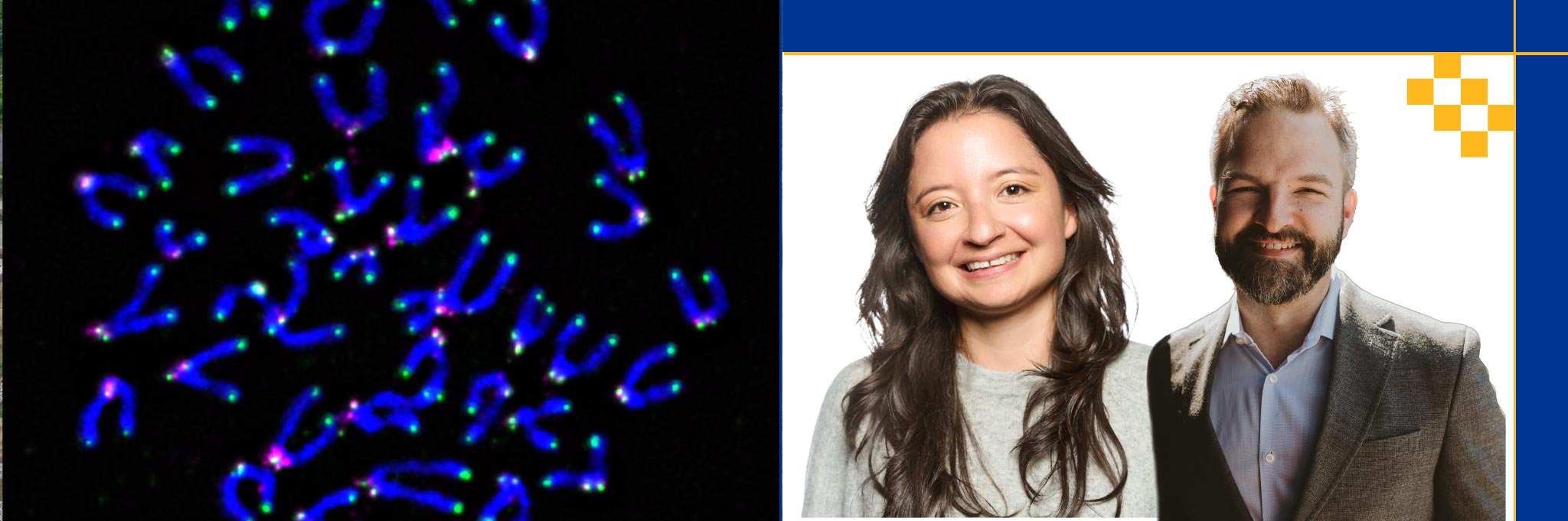
Rivadeneira and senior author Greg Delgoffe, a professor in the Pitt Department of Immunology and UPMC Hillman, did not originally plan to investigate telomeres. Their initial focus was on how mitochondrial damage influences T cell performance. A collaboration with Patricia Opresko, professor in the Pitt Department of Pharmacology and Chemical Biology, and the late Marcel Bruchez, professor of biological sciences and chemistry at Carnegie Mellon University, expanded the study to include telomeric damage.
To explore this, the team engineered mice with a genetic system that produces highly localized oxidative damage at either telomeres or mitochondria when exposed to far-red light.
“What we found was remarkable,” said Delgoffe. “Whether we damaged the mitochondria or the telomeres, we got the same result: dysfunctional T cells. There is crosstalk between the engine of the cell and the brains of the cell, the mitochondria, and the nucleus. This is something we didn’t necessarily appreciate, at least in the immune system.”
“When you damage the mitochondria, one of the first thing that gets damaged is the telomeres,” Rivadeneira added. “And, likewise, when you damage the telomeres, they talk back to the mitochondria to initiate a program that tells the cell to shut down and become exhausted.”
Antioxidant therapy to restore function
Because ROS — highly reactive oxygen molecules that cause cellular damage — were responsible for telomeric damage, Delgoffe and Rivadeneira hypothesized that ROS-neutralizing antioxidants could protect or restore T cell function.
To neutralize ROS specifically at telomeres, they took mouse T cells and tethered an antioxidant protein to another protein that resides at telomeres. When they infused these T cells into mice with an aggressive form of melanoma, the animals had much better survival and smaller tumors than those given regular T cells.
Potential for CAR-T therapy
According to the researchers, this antioxidant approach could be applied to CAR-T therapy, which involves taking a patient’s T cells and genetically engineering them to better recognize cancer cells before reinfusing them.
“This research is highly translatable because this approach could easily be incorporated into standard CAR-T protocol,” said Delgoffe. “While you’re genetically engineering T cells to improve cancer-fighting capability, you could also make them bulletproof against oxidative damage.”
Now, the researchers are working to develop a similar telomere-specific antioxidant approach for modifying human T cells, which they eventually hope to test in clinical trials.
In her newly launched lab, Rivadeneira also plans to investigate more broadly how telomere health influences the immune system and cancer outcomes. One area of interest is understanding how chemotherapy alters T cell function by damaging telomeres and whether this could influence whether patients respond to immunotherapy.
Reference: “Oxidative-stress-induced telomere instability drives T cell dysfunction in cancer” by Dayana B. Rivadeneira, Sanjana Thosar, Kevin Quann, William G. Gunn, Victoria G. Dean, Bingxian Xie, Angelina Parise, Andrew C. McGovern, Kellie Spahr, Konstantinos Lontos, Ryan P. Barnes, Marcel P. Bruchez, Patricia L. Opresko and Greg M. Delgoffe, 9 September 2025, Immunity.
DOI: 10.1016/j.immuni.2025.08.008
Funding: NIH/National Institutes of Health, Cancer Research Institute, Mark Foundation For Cancer Research
Never miss a breakthrough: Join the SciTechDaily newsletter.
Follow us on Google and Google News.