
Scientists have developed a new blood test that could spot Alzheimer’s earlier by detecting hidden changes in how proteins fold in the bloodstream.
Alzheimer’s disease affects an estimated 7.2 million Americans age 65 and older, according to the Alzheimer’s Association. Current diagnostic approaches often focus on measuring the levels of two proteins—amyloid beta (Aβ) and phosphorylated tau (p-tau)—in blood or spinal fluid. However, these markers may not fully reflect the earliest biological changes that occur as the disease develops.
Researchers at Scripps Research have now created a blood-based method that focuses on the shape of proteins in the bloodstream rather than simply measuring how much of them is present. Their findings, published in Nature Aging on February 27, 2026, show that structural differences in three plasma proteins are closely linked with Alzheimer’s status. These differences allowed scientists to distinguish cognitively normal individuals from those with Alzheimer’s and mild cognitive impairment (MCI) with high accuracy. The approach could eventually help doctors identify the disease earlier and begin treatment sooner.
“Many neurodegenerative diseases are driven by changes in protein structure,” says senior author John Yates, a professor at Scripps Research. “The question was, are there structural changes in specific proteins that might be useful as predictive markers?”
Protein Folding and the Breakdown of Proteostasis
Alzheimer’s disease has traditionally been associated with the buildup of amyloid plaques and tau tangles in the brain. However, scientists increasingly believe that the disease reflects a broader failure in proteostasis, the system responsible for ensuring proteins fold correctly and for clearing out damaged ones.
As people age, this quality control system gradually weakens. Proteins then become more vulnerable to folding errors as they are produced and maintained. Based on this idea, the researchers proposed that if proteostasis is disrupted in the brain, similar structural changes might also be detectable in proteins circulating in the bloodstream.
Studying Structural Changes in Blood Proteins
To investigate whether blood protein structures could act as markers of disease, the research team analyzed plasma samples from 520 individuals. The participants included cognitively normal adults, people with mild cognitive impairment, and patients diagnosed with Alzheimer’s.
Using mass spectrometry, the scientists examined whether specific sites within proteins were more exposed or buried, which signals a structural change. Machine learning algorithms were then used to identify patterns linked to different stages of the disease.
Across all participant groups, a clear pattern emerged. As Alzheimer’s progressed, certain proteins in the blood became less structurally “open.” These structural shifts proved to be a stronger indicator of disease stage than simply measuring how much of the proteins was present.
Three Key Blood Proteins Linked to Alzheimer’s
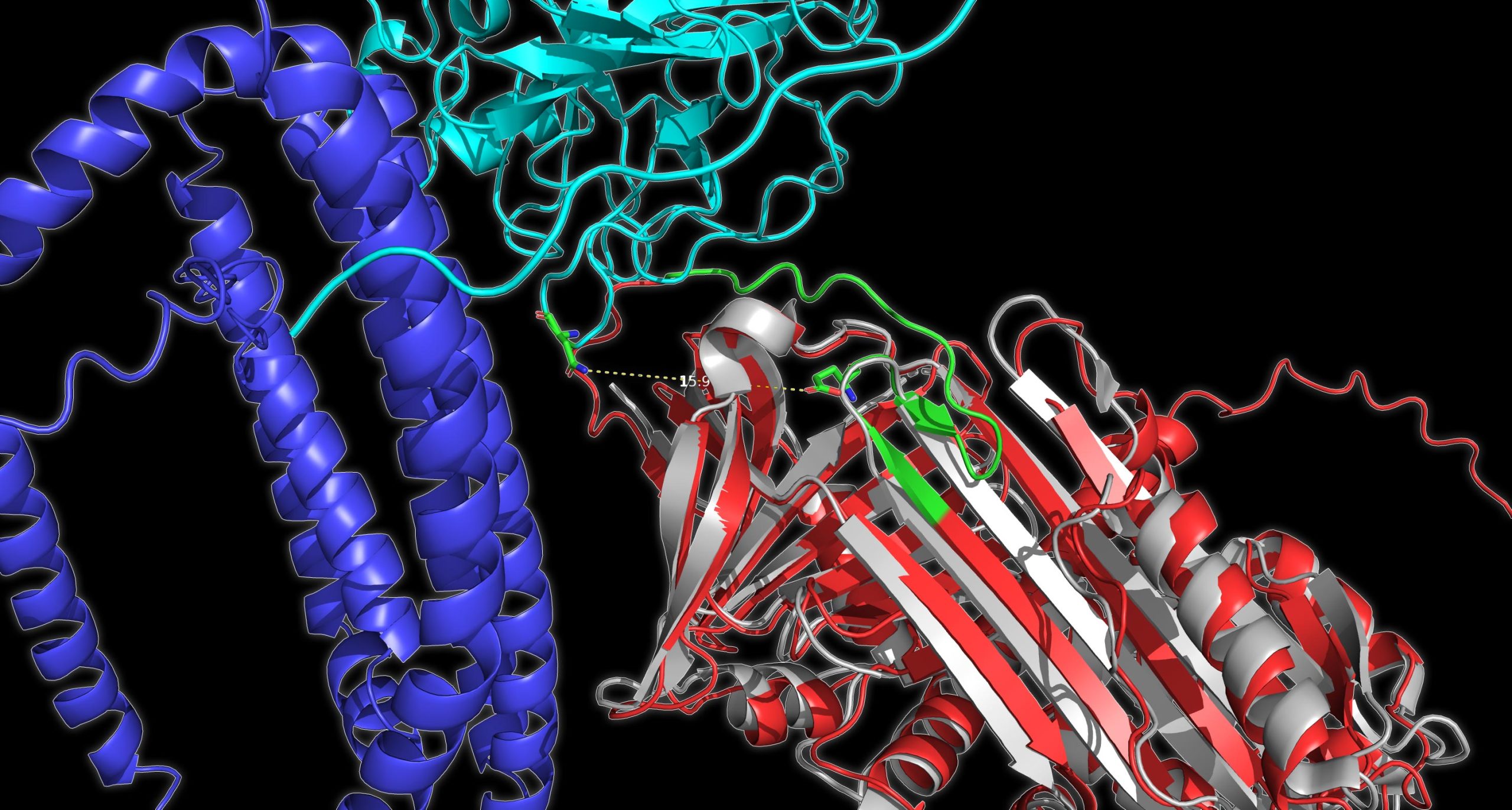
Among hundreds of proteins examined, three stood out as particularly informative. These were C1QA, which plays a role in immune signaling; clusterin, which helps manage protein folding and amyloid removal; and apolipoprotein B, a protein involved in transporting fats in the bloodstream and supporting blood vessel health.
“The correlation was amazing,” says co-author Casimir Bamberger, a senior scientist at Scripps Research. “It was very surprising to find three lysine sites on three different proteins that correlate so highly with disease state.”
Changes at specific locations within these proteins allowed the researchers to classify individuals as cognitively normal, MCI or Alzheimer’s with about 83% overall accuracy. In direct comparisons, such as distinguishing healthy individuals from those with MCI, accuracy exceeded 93%.
Tracking Alzheimer’s Progression Over Time
The three-protein model remained reliable when tested in separate participant groups. It also continued to perform well when researchers analyzed follow-up blood samples collected months later.
When the same individuals were tested again after several months, the protein panel correctly identified disease status about 86% of the time and reflected shifts in diagnostic classification over time. The structural score also showed a strong relationship with cognitive test performance and a moderate association with MRI measurements of brain shrinkage.
Together, these findings suggest that analyzing protein structure in blood could complement existing amyloid and tau tests. By focusing on structural changes tied to the underlying biology of the disease, the method may help researchers better distinguish disease stages, monitor progression, and evaluate treatment responses.
Future Potential for Alzheimer’s and Other Diseases
“Detecting markers of Alzheimer’s early is absolutely critical to developing effective therapeutics,” says Yates. “If treatment can start before significant damage has been done, it may be possible to better preserve long-term memory.”
Before the new blood test can be used clinically, larger studies with longer follow-up periods will be needed to confirm the results. The researchers are also investigating whether the same structural profiling technique could be applied to other conditions, including Parkinson’s disease and cancer.
Reference: “Structural signature of plasma proteins classifies the status of Alzheimer’s disease” by Ahrum Son, Hyunsoo Kim, Jolene K. Diedrich, Casimir Bamberger, Heather M. Wilkins, Jeffrey M. Burns, Jill K. Morris, Robert A. Rissman, Russell H. Swerdlow and John R. Yates III, 27 February 2026, Nature Aging.
DOI: 10.1038/s43587-026-01078-2
In addition to Yates and Bamberger, authors of the study “Structural signature of plasma proteins classifies the status of Alzheimer’s disease,” include Ahrum Son, Hyunsoo Kim and Jolene K. Diedrich of Scripps Research; Heather M. Wilkins, Jeffrey M. Burns, Jill K. Morris and Russell H. Swerdlow of the University of Kansas Medical Center; and Robert A. Rissman of the University of California San Diego.
Support for this study was provided by the National Institutes of Health (grants RF1AG061846-01, 5R01AG075862, P30AG072973, and P30-AG066530).
Never miss a breakthrough: Join the SciTechDaily newsletter.
Follow us on Google and Google News.