
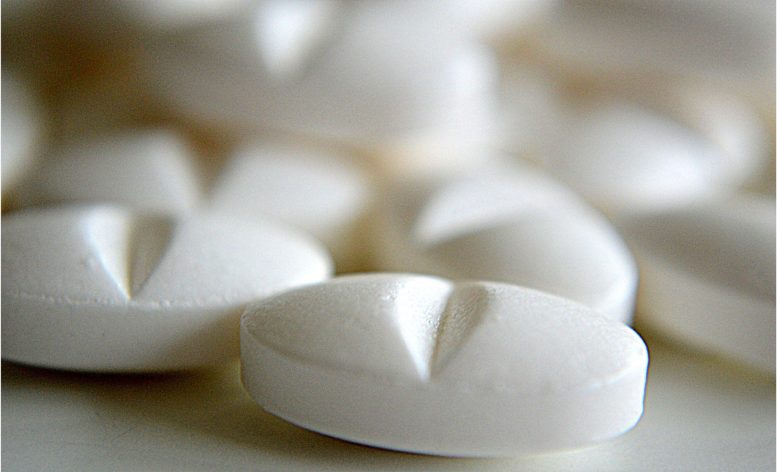
A study conducted by OHSU and other research institutions nationwide has yielded promising results for a new treatment of alcohol use disorder.
A team of researchers from Oregon Health & Science University and various institutions nationwide have discovered a medication, commonly used for treating a skin condition, as a highly promising treatment for alcohol use disorder.
The study was recently published in the Journal of Clinical Investigation.
The individuals who were treated with apremilast, on average, showed a decrease in their daily alcohol consumption by over 50 percent, reducing their intake from five drinks per day to two.
“I’ve never seen anything like that before,” said co-senior author Angela Ozburn, Ph.D., associate professor of behavioral neuroscience in the OHSU School of Medicine and a research biologist with the Portland VA Health Care System.
The lead author is Kolter Grigsby, Ph.D., a postdoctoral fellow in the Ozburn laboratory at OHSU.
Beginning in 2015, Ozburn and collaborators searched a genetic database looking for compounds likely to counteract the expression of genes known to be linked to heavy alcohol use. Apremilast, an FDA-approved anti-inflammatory medication used to treat psoriasis and psoriatic arthritis, appeared to be a promising candidate.
They then tested it in two unique animal models that have a genetic of risk for excessive drinking, as well as in other strains of mice at laboratories across the country. In each case, apremilast reduced drinking among a variety of models predisposed to mild to heavy alcohol use. They found that apremilast triggered an increase in activity in the nucleus accumbens, the region of the brain involved in controlling alcohol intake.
Clinical Study Results: A 50% Reduction in Alcohol Consumption
Researchers at the Scripps Research Institute in La Jolla, California, then tested apremilast in people.
The Scripps team conducted a double-blind, placebo-controlled clinical proof-of-concept study involving 51 people who were assessed over 11 days of treatment.
“Apremilast’s large effect size on reducing drinking, combined with its good tolerability in our participants, suggests it is an excellent candidate for further evaluation as a novel treatment for people with alcohol use disorder,” said co-senior author Barbara Mason, Ph.D., Pearson Family professor in the Department of Molecular Medicine at Scripps.
The clinical study involved people with alcohol use disorder who weren’t seeking any form of treatment, and Mason predicts that apremilast may be even more effective among people who are motivated to reduce their alcohol consumption.
“It’s imperative for more clinical trials to be done on people seeking treatment,” Ozburn said. “In this study, we saw that apremilast worked in mice. It worked in different labs, and it worked in people. This is incredibly promising for the treatment of addiction in general.”
An estimated 95,000 people in the United States die every year from alcohol-related deaths, according to the National Institute on Alcohol Abuse and Alcoholism.
Currently, there are three medications approved for alcohol use disorder in the United States: Antabuse, which produces an acute sensitivity akin to a hangover when alcohol is consumed; acamprosate, a medication thought to stabilize chemical signaling in the brain that is associated with relapse; and naltrexone, a medication that blocks the euphoric effects of both alcohol and opioids.
Reference: “Pre-clinical and clinical evidence for suppression of alcohol intake by apremilast” by Kolter B. Grigsby, Regina A. Mangieri, Amanda J. Roberts, Marcelo F. Lopez, Evan J. Firsick, Kayla G. Townsley, Alan Beneze, Jessica Bess, Toby K. Eisenstein, Joseph J. Meissler, John M. Light, Jenny Miller, Susan Quello, Farhad Shadan, Michael H. Skinner, Heather C. Aziz, Pamela Metten, Richard A. Morissett, John C. Crabbe, Marisa Roberto, Howard C. Becker, Barbara J. Mason and Angela R. Ozburn, 19 January 2023, Journal of Clinical Investigation.
DOI: 10.1172/JCI159103
The study was funded by the National Institutes of Health, the U.S. Department of Veterans Affairs, and the John R. Andrews Family.
Never miss a breakthrough: Join the SciTechDaily newsletter.
Follow us on Google and Google News.
1 Comment
“We are like men who have lost their legs; they never grow new ones. Neither does there appear to be any kind of treatment which will make alcoholics of our kind like other men. We have tried every imaginable remedy. In some instances there has been brief recovery, followed always by a still worse relapse. Physicians who are familiar with alcoholism agree there is no such thing a making a normal drinker out of an alcoholic. Science may one day accomplish this, but it hasn’t done so yet.”
AA Big Book…so good luck with that.