
The jagged terrain of Greenland’s mountains is protecting some of the island’s outlet glaciers from warm coastal waters, according to a team of researchers that included scientists from The University of Texas at Austin and NASA.
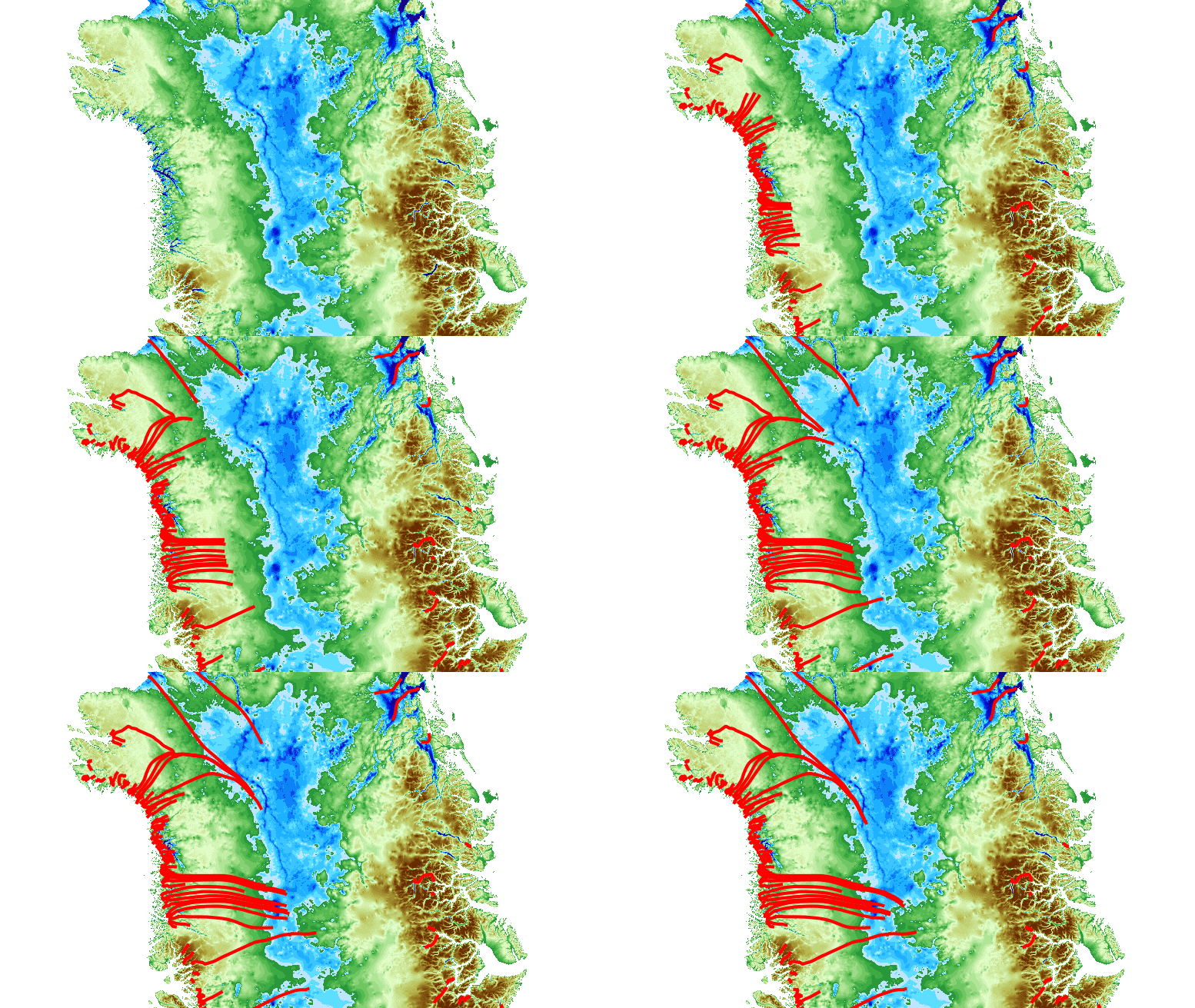
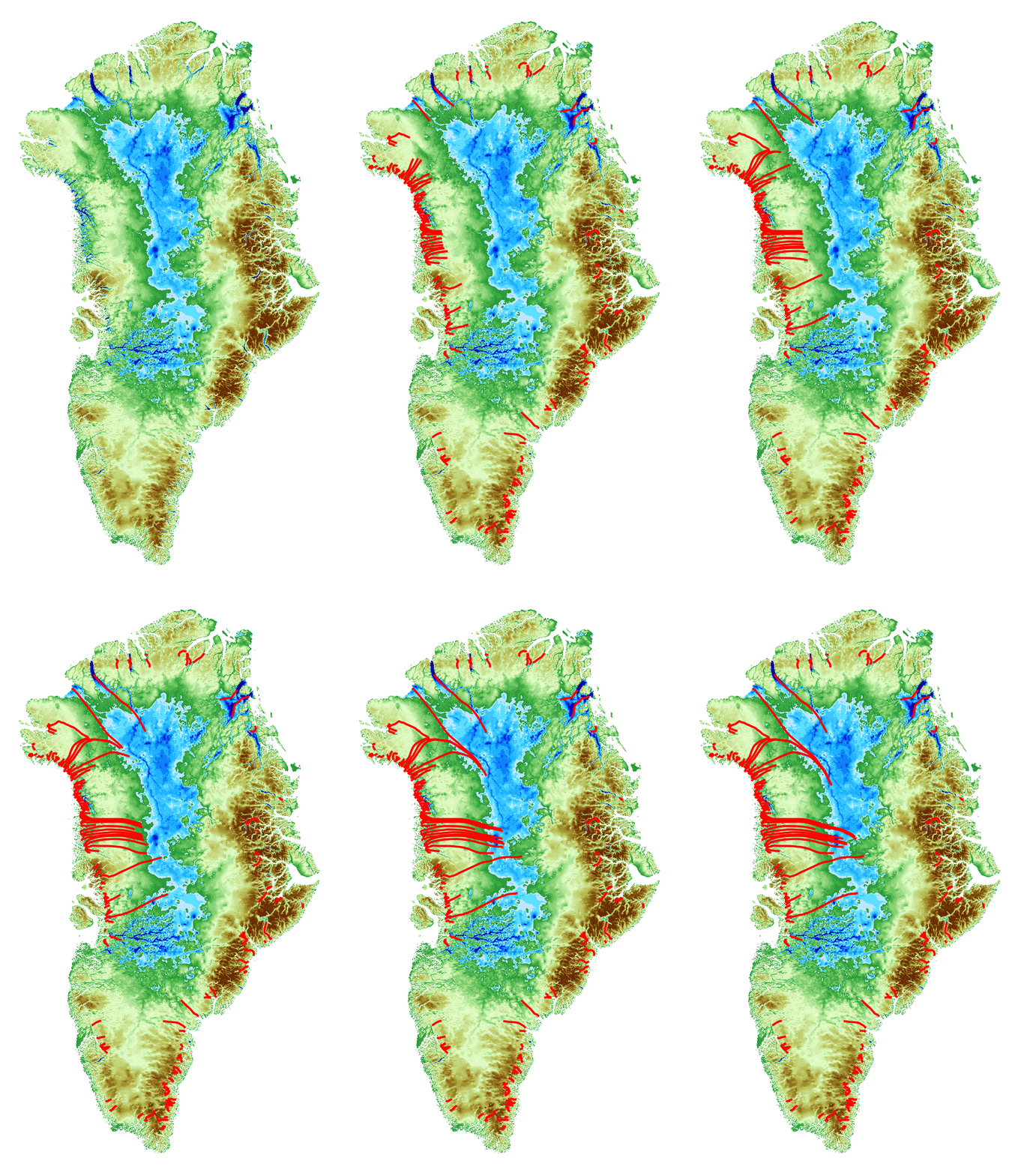
Outlet glaciers protrude from the ice sheet into the sea, where surging ocean heat can speed up the loss of ice, making the glaciers thinner and raising sea levels. The scientists found that steep slopes in the bedrock under the ice form stabilizing areas the researchers termed “knickpoints” that prevent coastal thinning from reaching further inland.
The findings were published on December 11, 2020, in the journal Geophysical Research Letters.
“Thinning in glaciers originates at the edge of the ice, and makes its way inland,” said lead author Denis Felikson, a NASA research scientist. “When the thinning reaches a knickpoint that is steep enough, it’s halted.”
However, in regions where the flat bedrock offers no such protection and knickpoints are absent, runaway thinning can reach far into the ice sheet and eat away at previously unaffected ice, and contribute to sea level rise.
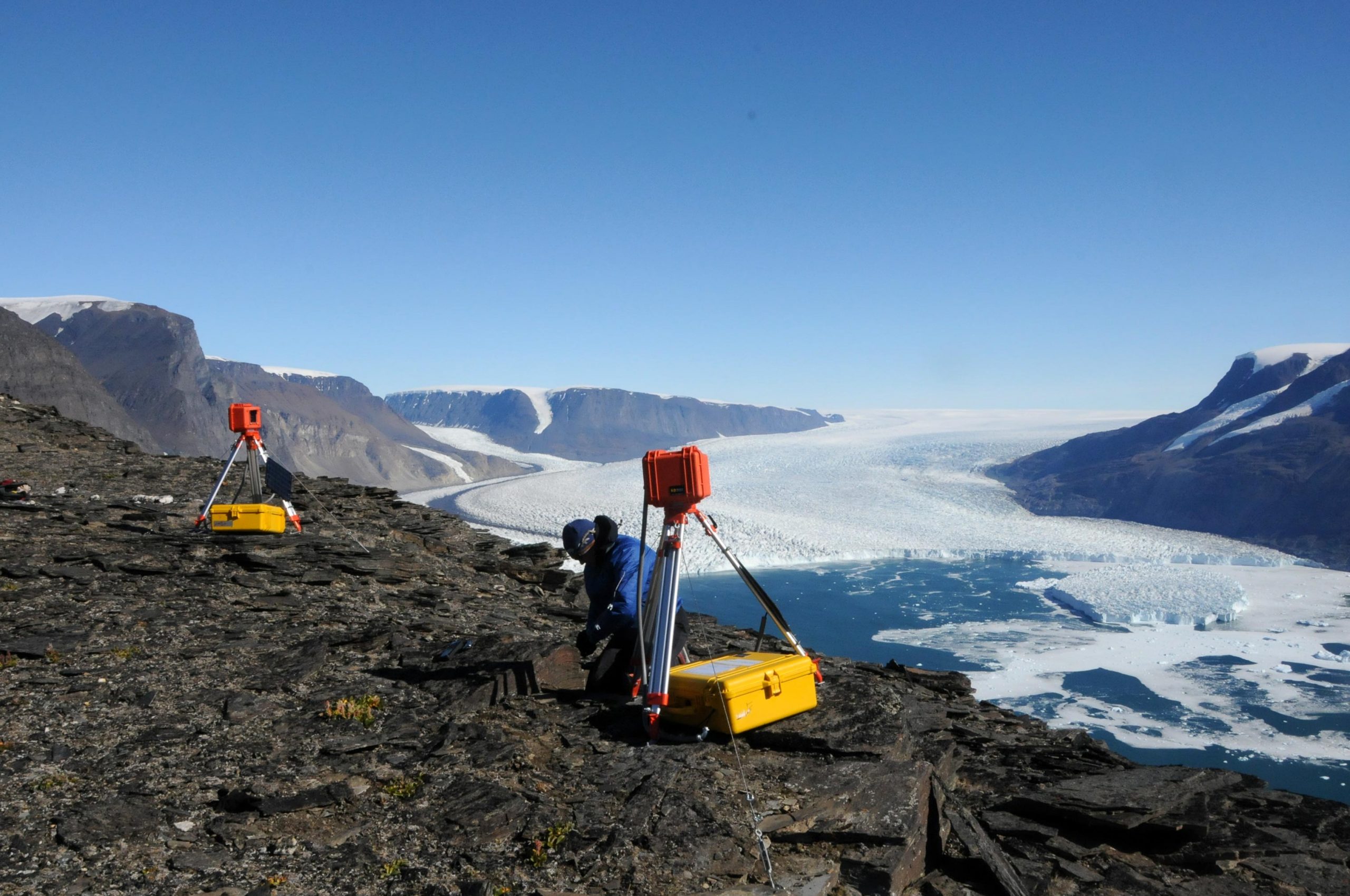
Coauthor Ginny Catania, a professor of glaciology at the UT Jackson School of Geosciences, said that most glaciers are thinning as scientists expect in a warming climate, but not at the same rates or amounts. The variability makes it more difficult to predict how quickly sea levels will rise as the planet gets hotter.
“Some glaciers are thinning right next to others that are thickening,” she said. “Until now we didn’t know how to explain such variability. Denis’ research has provided a framework for that understanding, and it’s very likely that all of the variability we observe in outlet glaciers is linked to variability in the bed topography between glaciers.”
The researchers use the term knickpoints to describe steep slopes in the bedrock because of their similarities to river knickpoints–places that often form waterfalls or rapids. Like a waterfall, glaciers pour over the knickpoints, creating a physical barrier that prevents changes happening downstream near the coast from reaching further upstream.
Greenland’s ice sheet covers an area twice the size of Texas. The barrier effect of knickpoints is important because warmer ocean currents are one of the principal reasons Greenland’s glaciers are losing mass more quickly than they were 20 years ago.
The study gives scientists a better understanding of how the loss of ice will play out as the world gets hotter and can also focus scientific resources on learning more about the glaciers most likely to contribute to sea level rise.
Felikson began the research while earning a Ph.D. at the Jackson School working with Catania and coauthor Tim Bartholomaus (now at the University of Idaho) at the University of Texas Institute for Geophysics (UTIG). By comparing the start-stop motion of glacial creep to congested traffic, the UTIG group had shown that a glacier’s shape controls the spread of thinning in a 2017 Nature Geoscience paper.
The current paper builds on that research but extends the analysis from 16 to 141 (the majority) of Greenland’s outlet glaciers, and in doing so, revealed the armoring effect of glacial knickpoints.
The research shows that glacial knickpoints are surprisingly prevalent. Although that might be good news, the research also revealed vulnerability in northwest Greenland, an overlooked region of the ice sheet.
“The glaciers in this region could be important over the next 100 years because the relatively flat bedrock beneath them means they can transfer thinning much further into the interior of the ice sheet than some of the larger glaciers in mountainous topography,” Felikson said.
Catania said this means that sea levels will rise regardless.
“You’re still going to drain the ice sheet you’re just going to do so through a different area than we thought,” she said.
The research team agreed that investigations of the bedrock near the coast is urgently required to learn how effective knickpoints are at holding back coastal warming, as is investigation of unprotected glaciers. Catania and Felikson have already proposed an early warning system that will use machine learning to watch for instability in glaciers identified by the knickpoint analysis.
Reference: “Steep glacier bed knickpoints mitigate inland thinning in Greenland” by Denis Felikson, Ginny Catania, Timothy C. Bartholomaus, Mathieu Morlighem and Brice P. Y. Noël, 11 December 2020, Geophysical Research Letters.
DOI: 10.1029/2020GL090112
Felikson is a research scientist at Universities Space Research Association and the NASA Goddard Space Flight Center. UTIG is a unit of the Jackson School. The research was funded by a NASA grant and the Gale White Fellowship at UTIG.
Never miss a breakthrough: Join the SciTechDaily newsletter.
Follow us on Google and Google News.
3 Comments
Another waste of time and money. Stop pretending you know something. And….could actually do something about it. Send these eager beavers to Africa and let them dig some wells and build some schools. Then you can act like you accomplished something.
The bedrock topography and type of rock are extremely important to the forward motion of glaciers. Trying to extrapolate into the future, based on the behavior of a glacier terminus that abuts the ocean, is fraught with problems. Something that the researchers apparently overlooked is that the ability of warming ocean water to melt the outlet glaciers will vary inversely with the length, and directly with the width and depth of the ice channel. That is, the length of the red lines in the illustration indicate that mixing and replenishment of water will be less effective as the lines increase in length. The presence of any underwater moraines or transverse bedrock ridges will further impede warm ocean water from making its way upstream. This is a good start, but still needs a lot of work.
It isn’t just the slope or rate of change of the slope that impacts the loss of ice in the ablation zone. It should be obvious that ‘warm’ ocean water cannot melt the snout of the glacier if the the water isn’t in contact with the ice. That is to say, the elevation of the ice is important; ice whose base is above sea level should be immune to melting at the base of the ice. Judging from the animation, assuming blue represents sea level, it won’t take very much retreat of the outlet glaciers before they are immune from melting from water. Also, the adiabatic lapse rate insures that it will be colder at higher elevations, also impeding the rate of melting. Basically, the current melt rates are not reliable for predicting future melt rates, which will almost certainly slow down.