
New research reveals how viral infections in queen bees disturb colony stability and pinpoints a specific pheromone that may help preserve unity and productivity within hives.
It may sound like the plot of a medieval drama: a once-powerful ruler, weakened by illness, is overthrown by her own followers. In honey bee colonies, however, such dramatic power shifts are real—and they happen frequently, carrying both benefits and risks for the bees and the ecosystems that rely on them.
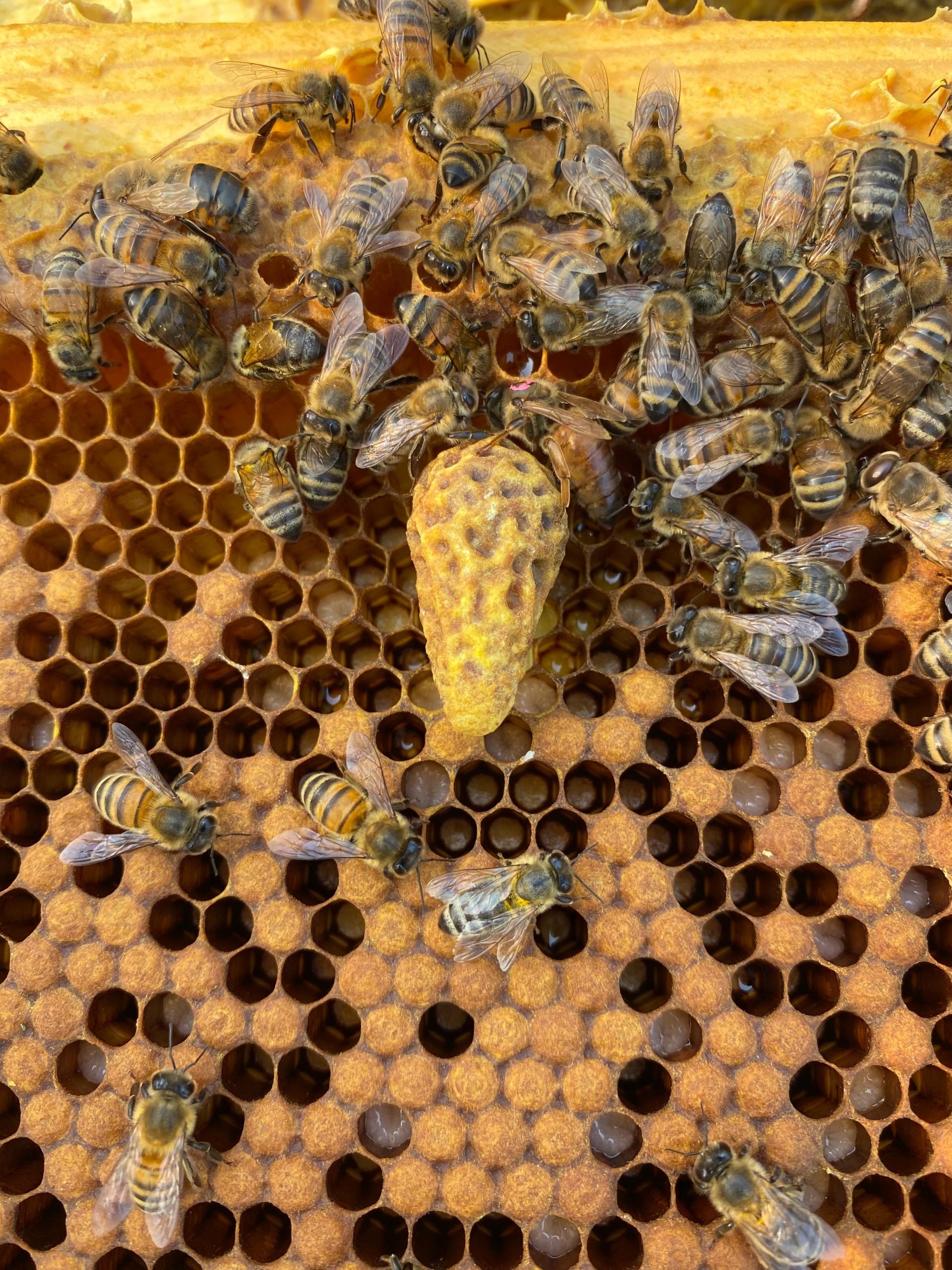
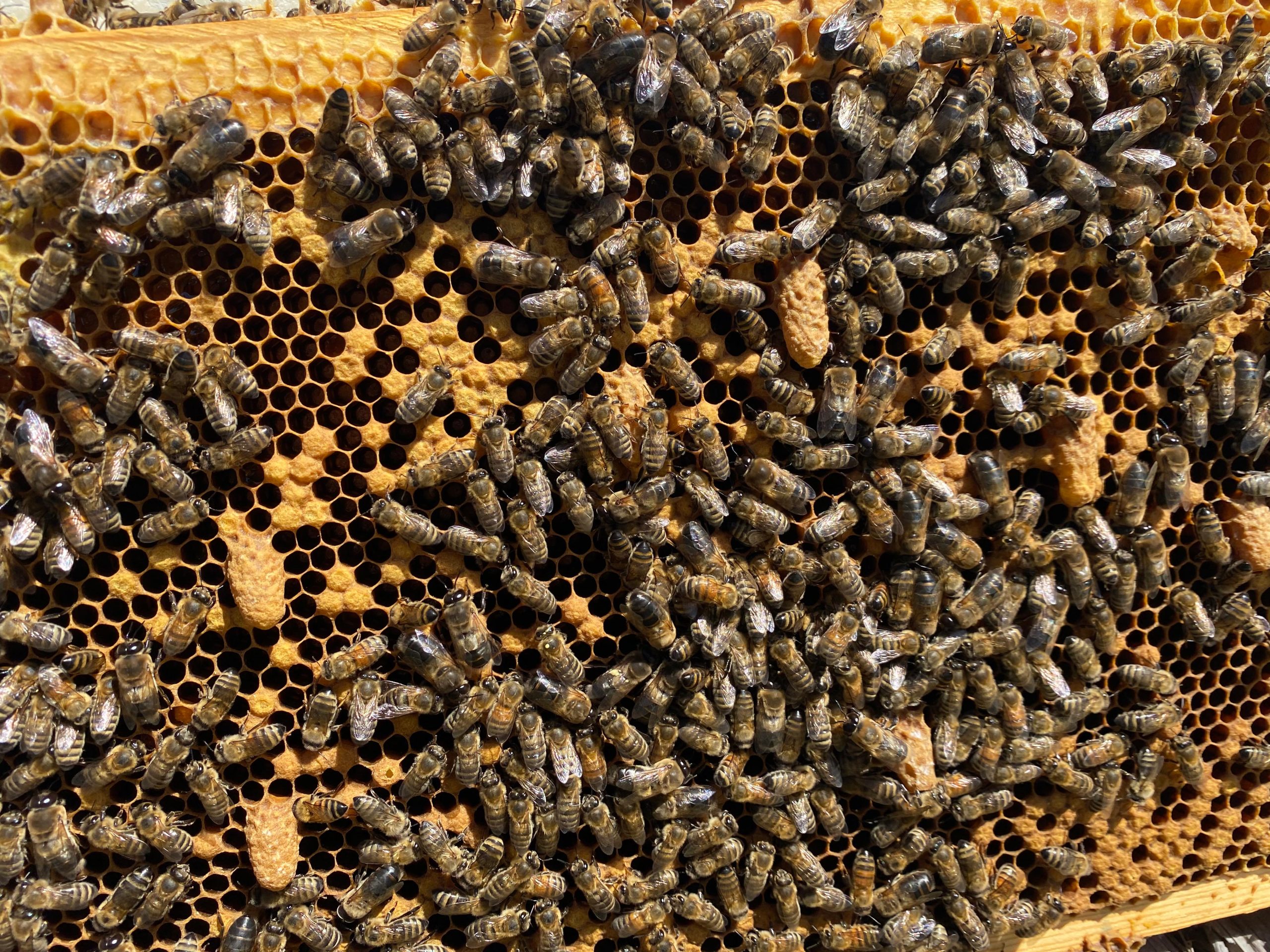
The process, known as supersedure, occurs when the thousands of worker bees in a colony detect that their queen is no longer laying enough eggs. In response, they work together to replace her with a younger, healthier queen. While this adaptation helps wild colonies survive, it can disrupt managed hives, creating pauses in egg-laying, smaller colony populations, and ultimately lower honey and pollination yields.
Researchers at the University of British Columbia have now uncovered new insights into what triggers these coordinated uprisings and how worker bees organize them with such precision.
How viral infections weaken queens
In a recent study published in PNAS, the research team discovered that common viral infections cause a queen’s ovaries to shrink, reducing her ability to lay eggs and to produce methyl oleate, a pheromone that normally maintains worker loyalty. When levels of this pheromone drop, the workers can detect the queen’s decline and begin preparing a replacement.
“A healthy queen can lay as many as 850 to 3,200 eggs per day, which is more than her whole body weight,” said senior author Dr. Leonard Foster, a professor of biochemistry and molecular biology at UBC’s Faculty of Medicine and Michael Smith Laboratories. “But in our experiments, virus-infected queens laid fewer eggs and produced less methyl oleate. That pheromone reduction seems to be the signal to workers that a queen is no longer fit to continue.”
Bees pollinate about one-third of the world’s crops, making them essential to healthy food systems, food security, and the health of people and communities worldwide.
Impacts on beekeeping and food systems
Beekeepers have been reporting problems with queen failure and premature supersedure for many years, with recent surveys identifying “poor queens” as the most frequently reported cause of overwintering losses.
The research highlights how viral infections are a driving factor behind these challenges, disrupting the delicate balance of chemical signals that maintain order in a hive.
Importantly, the findings also point to a practical way for beekeepers to intervene and manage supersedure. In proof-of-concept field trials, colonies given synthetic pheromone blends that included methyl oleate were much less likely to rear new queens compared to colonies that received blends without it.

“That could be a big deal for beekeepers,” said Dr. Foster. “Supersedure can be disruptive and costly, but supplementing colonies with methyl oleate could help stabilize hives during periods when continuous productivity is most important.”
The findings open the door to new management strategies for commercial beekeepers dealing with viral outbreaks, especially during periods of peak pollination or honey production to prevent untimely queen loss.
The hidden threat of varroa mites
“Our research really emphasizes how virus infections in queens can be a major problem for beekeepers,” said first author Dr. Alison McAfee, a research associate at UBC’s Michael Smith Laboratories and North Carolina State University. “Previous studies showed that failing queens were heavily infected with viruses, and now we know that those infections can lead to supersedure, which is risky for the colony and expensive for beekeepers to manage.”

The research also highlights the role of varroa mites — parasitic pests that can spread the viruses linked to queen failure — underscoring the importance of keeping colonies healthy and parasite-free.
Queen infections are so far an underappreciated problem, said Dr. McAfee, who hopes that this research will change that.
“Keeping the queen healthy is one more reason why it is so critical to think ahead and keep varroa levels under control,” Dr. McAfee added. “There is currently no treatment for viruses in honey bee colonies, but now that we better understand their impact, we can change the way we manage varroa to give the queen a better chance.”
Reference: “Elevated virus infection of honey bee queens reduces methyl oleate production and destabilizes colony-level social structure” by Alison McAfee, Abigail Chapman, Armando Alcazar Magaña, Katie E. Marshall, Shelley E. Hoover, David R. Tarpy and Leonard J. Foster, 14 October 2025, Proceedings of the National Academy of Sciences.
DOI: 10.1073/pnas.2518975122
Never miss a breakthrough: Join the SciTechDaily newsletter.
Follow us on Google and Google News.
8 Comments
Queen Assassins are Real.
Hey, if Momma is gonna let her shiftless male sons lay around, eat all the honey, and not even mate to produce new workers, she’s gotta go. That Queen is history. Don’t blame the assassins.
Doctor Nine, Wow. Male bees are out collecting, building, repairing, and so much more while queen bees rule is to keep the bees together and to create more. While, yes the queen is getting sick, that is not on her.
Nope, all the worker bees are female (gatherers, guards, nursery and hive repairers)
The males (drones) have no direct role in the hive. They exist to spread the hive genetics to other hive’s queen bees abd die in the process of their sperm collection
For how long do you wait to harvest in a year
Let nature be natural
I am a beekeeper so this is interesting and my question pertinent to my colonies success. If the reduction in methyl oleate occurs at the same time as reduced egg productivity on the part of the queen, how does keeping a weak queen in the colony benefit colony health? I would think that the reduced egg laying would result in fewer bees in the colony and therefore fewer forager bees leading the reduced nectar/pollen collection.
That is a very good point, but the way I’m interpreting it is, as you know, bees collect and produce honey seasonally and for the hive to replace the queen during the collection and production season is disruptive, lowering production. So, if you can keep the sick queen temporarily then you can time the queens replacement during the “off-season.” Of course, since I’m not a bee keeper myself, it is possible I’m wrong, but I feel confident in my interpretation. I hope someone will of course correct me if I’m wrong because I find bees and bee behavior to be fascinating.