

A new study conducted by the University of British Columbia reveals a safe path to overcoming food allergies for older children and others who can’t risk consuming allergens orally to build up their resistance.
It’s called sublingual immunotherapy (SLIT), and it involves placing smaller amounts of food allergens under the tongue.
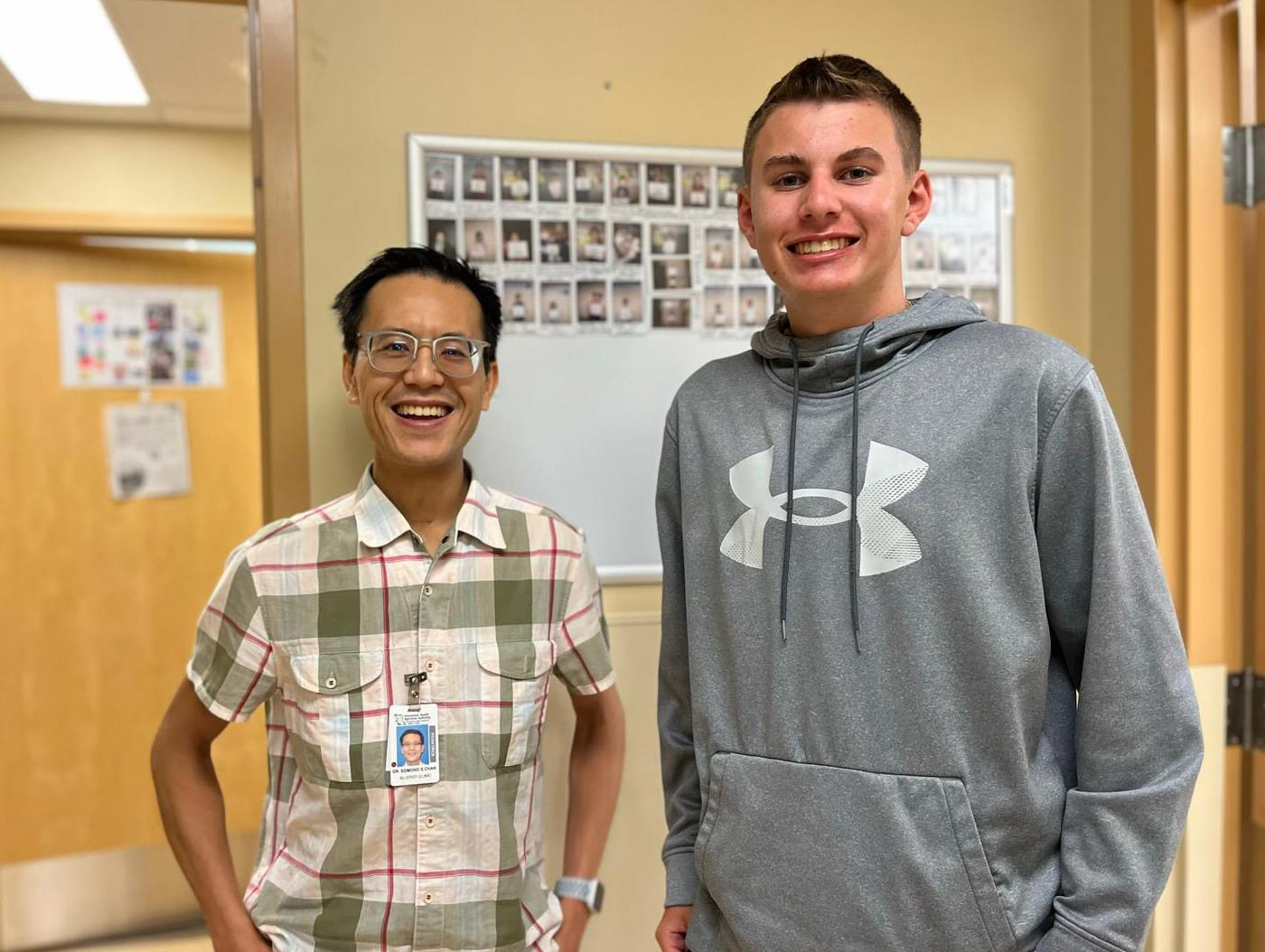
A study conducted by UBC clinical professor and pediatric allergist Dr. Edmond Chan and his team at BC Children’s Hospital Research Institute found SLIT to be as safe and effective for high-risk older children and adolescents as oral immunotherapy is for preschoolers.
“Our work confirms the safety and effectiveness of SLIT for older children and adolescents with multiple food allergies at higher risk of severe reaction,” said Dr. Chan. “These are patients for whom oral immunotherapy would typically be denied because it’s felt to be too risky, so this could be the best approach for that population.”
Comparison with Oral Immunotherapy
Previously published research from Dr. Chan’s team has shown that preschool oral immunotherapy is safe and effective in the real world. The protocol involves a “build-up phase” of several months, when patients visit a clinic every two weeks to ingest a higher dose of an allergen under medical supervision before continuing the same daily dose between visits. When they reach a certain dose—usually around 300 mg of protein —they enter a “maintenance phase” during which they take that target daily dose at home. After a year of maintenance doses, approximately four out of five patients are able to pass an oral challenge test in which they tolerate a much higher dose of 4,000 mg of protein.
However, the build-up phase is risky for older children and those with a history of severe reactions. Dr. Chan’s group has been looking for a safer way to get this at-risk group of patients to the maintenance phase.
They recruited about 180 such patients between the ages of four and 18, most with multiple food allergies. The SLIT protocol (started when COVID-19 pandemic restrictions were in place) required patients to have virtually supervised appointments 3-5 times over several months to build up to a small dose—in most cases, just 2 mg of protein—which is absorbed through the membranes under the tongue rather than swallowed and ingested.
The patients’ caregivers learned how to mix and administer these doses at home using novel recipes based on products you can buy at the grocery store, developed with the team’s research dietitian. A wide variety of allergens were treated, including peanuts, other legumes, tree nuts, sesame, other seeds, eggs, cow’s milk, fish, wheat, shrimp, and other allergens. Patients took these doses daily for 1-2 years.
“It takes up to twice as long as oral immunotherapy, but we wouldn’t have had it any other way, because we needed the superior safety of SLIT for these older kids that are felt to be more severe,” said Dr. Chan.
Results and Advantages of SLIT
While most patients had mild symptoms during the build-up phase, none had severe reactions during either build-up or maintenance. Seventy percent of those tested at the end of the protocol could tolerate 300 mg of their allergen—a success rate nearly as high as that for oral immunotherapy.
The results were encouraging for a therapy that any family can undertake at home with guidance from professionals.
“Besides safety considerations in older children, allergists are often quite burdened by the oral immunotherapy build-up phase, where a patient may require 11 or more visits to the clinic. They just don’t feel they have the capacity to offer that many visits in their office,” said Dr. Chan. “In our clinic, we are starting to do more home-based approaches because the demand for medical appointments that would allow supervision far outstrips the supply. We are trying to develop an approach, based on data, that matches a patient’s risk level with the appropriate amount of supervision. Our SLIT data suggests that home-based SLIT build-up is safe.”
Ultimately, the trial highlights an alternative that allergists should now consider for patients who cannot safely undertake oral immunotherapy. The trade-off for greater safety is simply a longer timeline, but it comes with the benefit of keeping clinics free for those who need them most.
Reference: “Safety and Effectiveness of bypassing oral immunotherapy buildup with an initial phase of sublingual immunotherapy for higher-risk food allergy” by Lianne Soller, Brock A. Williams, Raymond Mak, Tiffany Wong, Stephanie C. Erdle, Alanna Chomyn, Brittany Tetreault, Kelly Morrison, Lisa Gaudet and Edmond S. Chan, 27 February 2024, The Journal of Allergy and Clinical Immunology: In Practice.
DOI: 10.1016/j.jaip.2024.02.024
The study was funded by the BC Children’s Hospital Foundation.
Never miss a breakthrough: Join the SciTechDaily newsletter.
Follow us on Google and Google News.