

A neural pathway suppresses appetite when experiencing nausea.
Feeling full, nauseous, or anxious can all contribute to a decrease in appetite. Postponing meals may be the body’s natural way to avoid additional harm and allow for recovery. Scientists at the Max Planck Institute for Biological Intelligence have discovered a specific brain pathway that stops mice from eating when they experience nausea.
The decisive role is played by special nerve cells in the amygdala – a brain region involved when emotions run high. The cells are activated during nausea and elicit appetite-suppressing signals. The findings highlight the complex regulation of eating behavior, as the loss of appetite during nausea is controlled by different circuits than during satiety.
An upcoming exam, a boat trip on the high seas, or the next germ at the daycare center all have one thing in common: they can really upset our stomach. Stress, motion sickness, or certain infections can make us feel sick. It seems logical that we don’t eat in these circumstances and wait for the situation to improve. As a result, nausea and decreased appetite usually go hand in hand. Or have you ever felt sick and really wanted to eat at the same time?
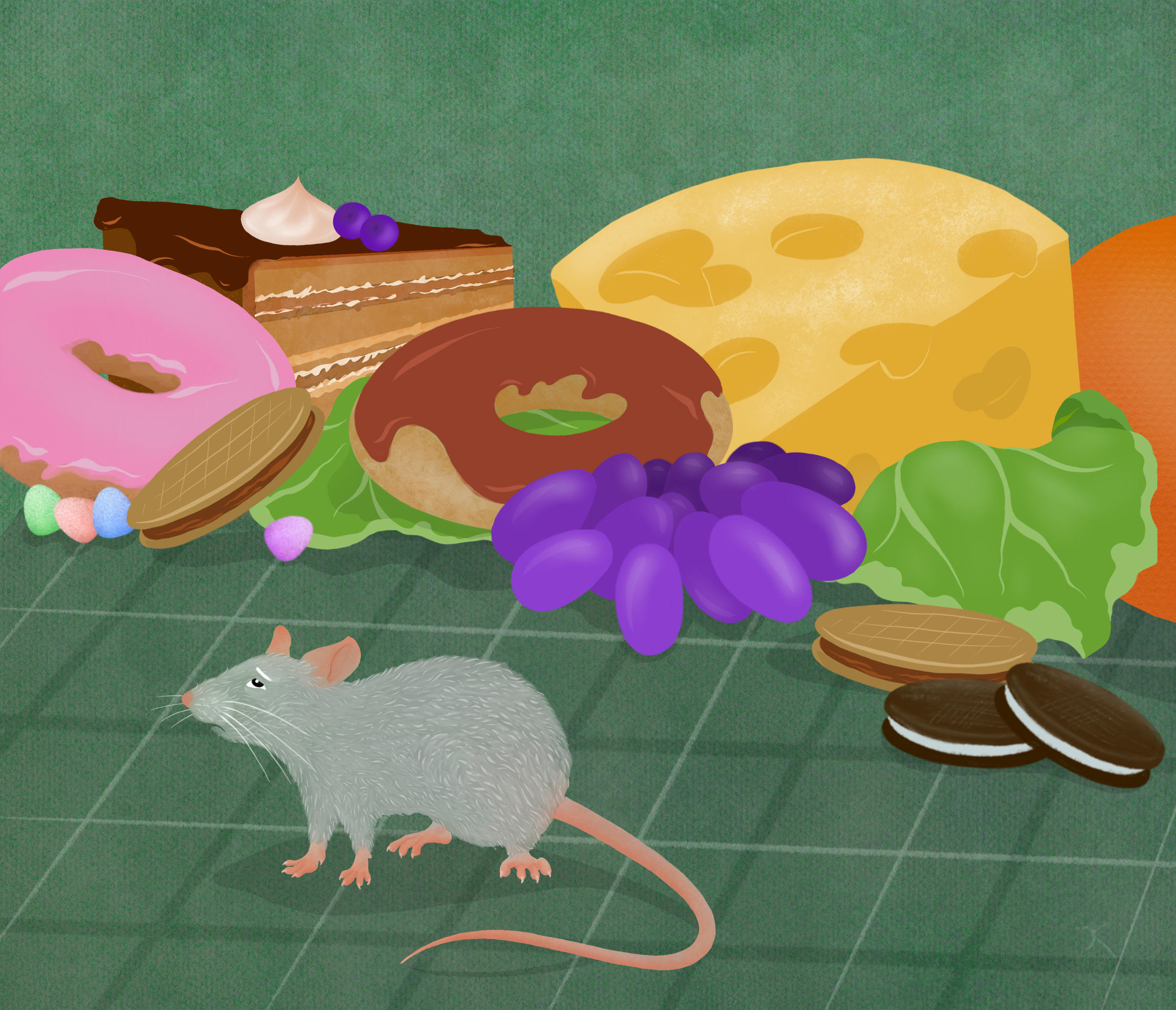
What seems logical is a healthy defense mechanism of our body – but it has to be activated first. Clearly, the brain plays a central role in this: it is the control center for the body’s energy balance and regulates eating behavior.
So how does the brain prevent us from eating when we feel sick? Researchers in Rüdiger Klein’s department have gained new insights into this topic in mice. They focused on the amygdala, a brain region that regulates emotions, also those related to eating. It contains neurons that promote eating and those that inhibit appetite. For example, a known inhibitory cell type is activated when we are full, but how this works in the case of nausea is not well understood.
Nausea activates nerve cells
Wenyu Ding, first author of the new study, now discovered another cell group in the amygdala that has a negative influence on appetite. Unlike the previously known cell type, these cells are not activated by satiety, but when feeling nauseous.
When the researchers artificially switched on the cells, even hungry mice stopped eating. Conversely, switching the cells off resulted in the mice eating, even when feeling sick.

To better understand how this cell type exerts its appetite-suppressing function, the researchers analyzed the underlying circuit: where do the cells get their information from and to which cells and brain areas do they send their projections?
The following picture emerged: When a mouse feels sick, this information reaches the brain and eventually the amygdala. There, the new cell type is activated and sends its inhibitory signals to distant brain regions, including the so-called parabrachial nucleus, a brain stem region that receives a lot of information about the internal state of the body.
This stands in contrast to the circuit of the previously known cell type, which mainly interacts with neighboring cells within the amygdala. It becomes clear that the loss of appetite during satiety is not the same as the loss of appetite during nausea. In the brain, different cells and circuits are responsible for this – a complicated matter and perhaps a small consolation the next time we feel sick.
Most importantly, the new study provides important insights into how the brain and the amygdala in particular regulate eating behavior. This is the prerequisite for a better understanding of the many diseases associated with dysregulated eating behavior in humans.
Reference: “Nausea-induced suppression of feeding is mediated by central amygdala Dlk1-expressing neurons” by Wenyu Ding, Helena Weltzien, Christian Peters and Rüdiger Klein, 27 March 2024, Cell Reports.
DOI: 10.1016/j.celrep.2024.113990
Never miss a breakthrough: Join the SciTechDaily newsletter.
Follow us on Google and Google News.