
Close Menu
    Facebook X (Twitter) Instagram
    SciTechDaily
    • Biology
    • Chemistry
    • Earth
    • Health
    • Physics
    • Science
    • Space
    • Technology
    Facebook X (Twitter) Pinterest YouTube RSS
    SciTechDaily
    Home»Space»Scientists May Detect Signs of Extraterrestrial Life in the Next 5 to 10 Years With New Telescope
    Space

    Scientists May Detect Signs of Extraterrestrial Life in the Next 5 to 10 Years With New Telescope

    By American Physical SocietyApril 18, 2021No Comments2 Mins Read
    Facebook Twitter Pinterest Telegram LinkedIn WhatsApp Email Reddit
    Share
    Facebook Twitter LinkedIn Pinterest Telegram Email Reddit
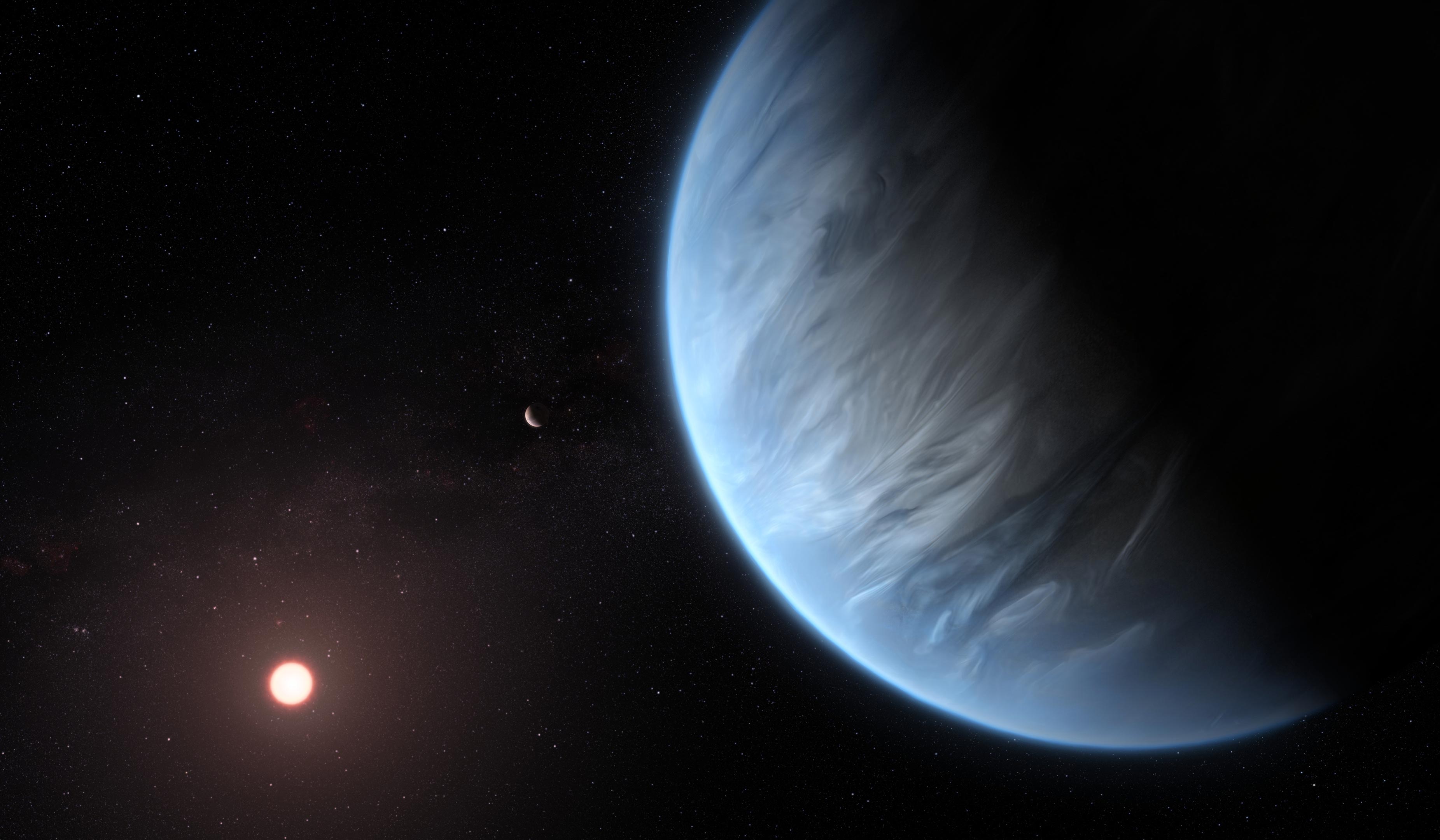
    Artist Impression Planet K2-18b
    An artistic impression of one of the exoplanets in the study, K2-18b. The image shows the planet, its host star, and an accompanying planet in this system. K2-18b is now the only gas dwarf exoplanet known to host both water and temperatures that could support life. Credit: ESA/Hubble, M. Kornmesser

    Telescope launching this autumn could spot biosignatures on other planets within three days.

    Research shows that a new telescope could detect a potential signature of life on other planets in as little as 60 hours.

    “What really surprised me about the results is that we may realistically find signs of life on other planets in the next 5 to 10 years,” said Caprice Phillips, a graduate student at The Ohio State University, who shared preliminary findings today at a press conference during the 2021 APS April Meeting.

    Gas dwarf planets have the potential to foster life. But because none of these super-Earths or mini-Neptunes exist within our solar system, scientists struggle to determine whether their atmospheres contain ammonia and other potential signs of living things.

    Phillips calculated that when the James Webb Space Telescope launches this October, it could feasibly detect ammonia around six gas dwarf planets after just a few orbits.

    She and her team modeled how JWST instruments would respond to varying clouds and atmospheric conditions, then produced a ranked list of where the telescope should search for life.

    “Humankind has contemplated the questions, ‘Are we alone? What is life? Is life elsewhere similar to us?'” said Phillips. “My research suggests that for the first time, we have the scientific knowledge and technological capabilities to realistically begin to find the answers to these questions.”

    Never miss a breakthrough: Join the SciTechDaily newsletter.
    Follow us on Google and Google News.

    American Physical Society Astrobiology Astronomy Popular
    Share. Facebook Twitter Pinterest LinkedIn Email Reddit

    Related Articles

    Scientists Say This Hellish “Day-Night” Planet May Support Life

    “Project Hail Mary” – These 45 Exoplanets Could Be Home to Alien Life, Scientists Say

    Habitable Zones Near Red Dwarf Stars Smaller than Previously Thought

    Scientists Discover Evidence of Water in Martian Meteorite

    Searching for Life on Earth-Like Planets May Be a Mistake, Need to Consider Superhabitable Planets

    Planets Orbiting Cooler Stars May Be More Likely to Remain Ice Free

    The Possibility of Life on Extrasolar Moons

    “Habitable Zone” Might Help Extreme Life Forms Survive on Exoplanets

    Astronomers Obtain Precise Measurements of the Two Kepler-16 Stars

    Leave A Reply Cancel Reply

    • Facebook
    • Twitter
    • Pinterest
    • YouTube

    Don't Miss a Discovery

    Subscribe for the Latest in Science & Tech!

    Trending News

    Monster Storms on Jupiter Unleash Lightning Beyond Anything on Earth

    Scientists Create “Liquid Gears” That Spin Without Touching

    The Simple Habit That Could Help Prevent Cancer

    Millions Take These IBS Drugs, But a New Study Finds Serious Risks

    Scientists Unlock Hidden Secrets of 2,300-Year-Old Mummies Using Cutting-Edge CT Scanner

    Bread Might Be Making You Gain Weight Even Without Eating More Calories

    Scientists Discover Massive Magma Reservoir Beneath Tuscany

    Europe’s Most Active Volcano Just Got Stranger – Here’s Why Scientists Are Rethinking It

    Follow SciTechDaily
    • Facebook
    • Twitter
    • YouTube
    • Pinterest
    • Newsletter
    • RSS
    SciTech News
    • Biology News
    • Chemistry News
    • Earth News
    • Health News
    • Physics News
    • Science News
    • Space News
    • Technology News
    Recent Posts
    • Scientists Discover a Surprising Reason Intermittent Fasting Extends Life
    • Scientists Discover a New Meteor Shower From a Mysterious Crumbling Asteroid
    • This Simple Fruit Wash Could Make Produce Safer and Last Days Longer
    • These Tiny Robots 50x Smaller Than a Hair Can Hunt and Move Bacteria
    • Simple Blood Test May Predict Alzheimer’s Years Before Brain Scans Show Signs
    Copyright © 1998 - 2026 SciTechDaily. All Rights Reserved.
    • Science News
    • About
    • Contact
    • Editorial Board
    • Privacy Policy
    • Terms of Use

    Type above and press Enter to search. Press Esc to cancel.