

NbRe may be a long-sought triplet superconductor, offering zero-resistance spin transport and major advances in quantum computing.
Physicists have searched for decades for materials known as triplet superconductors because of their potential to enable extremely energy-efficient technologies. These materials are widely regarded as one of the most important missing pieces in advanced solid-state physics.
“A triplet superconductor is high on the wish list of many physicists working in the field of solid-state physics,” said Professor Jacob Linder.
Linder is based at the Norwegian University of Science and Technology’s (NTNU) Department of Physics, where he works at QuSpin—a research center that brings together some of the university’s leading experts in quantum materials.
“Materials that are triplet superconductors are a kind of ‘holy grail’ in quantum technology, and more specifically, quantum computing,” explained Linder.
Global Hunt for a Breakthrough in Quantum Materials
Researchers around the world are racing to find clear evidence of such a material. Linder and his collaborators believe they may now be close.
“We think we may have observed a triplet superconductor,” said Professor Linder.

Linder studies quantum materials and explores how they can be applied in spintronics and other forms of quantum technology
Spintronics focuses on a property of electrons known as spin. Unlike conventional electronics, which rely on electric charge to carry information, spintronics uses spin to transmit signals in new ways. Spin also plays a central role in quantum technology, particularly when paired with superconductors. However, current systems often struggle with instability.
“One of the major challenges in quantum technology today is finding a way to perform computer operations with sufficient accuracy,” explained Linder.
Triplet superconductors could help address this problem.
Working with experimental researchers in Italy, Linder coauthored a study published in Physical Review Letters. The paper was selected as one of the editor’s recommendations, highlighting its significance.
From Singlet to Triplet: Why Spin Changes Everything
“Triplet superconductors make a number of unusual physical phenomena possible. These phenomena have important applications in quantum technology and spintronics,” said Linder.
Standard superconductors can carry electricity (electrons) with no measurable resistance, making them highly useful. Even so, they have limitations.
- Most known superconductors are classified as ‘singlet superconductors,’ meaning the paired particles responsible for superconductivity do not carry spin.
- In contrast, triplet superconductors involve paired particles that do have spin.
Zero-Resistance Spin Currents: What Triplet Superconductivity Enables
So what difference does that make?
“The fact that triplet superconductors have spin has an important consequence. We can now transport not only electrical currents but also spin currents with absolutely zero resistance,” explained Linder.
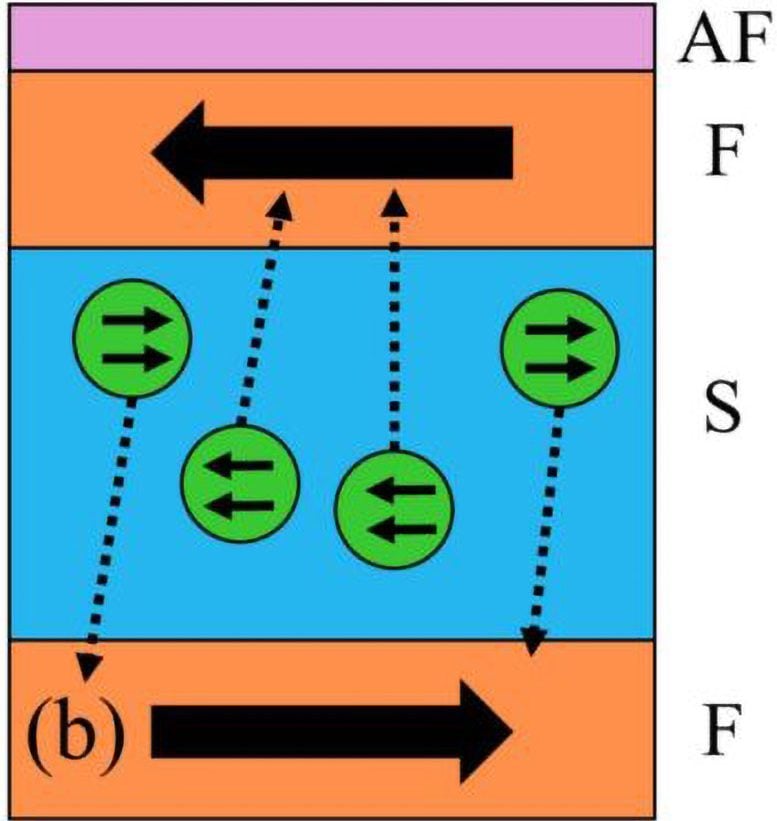
In practical terms, that could allow extremely fast computers to operate while consuming almost no electricity.
If a true triplet superconductor is confirmed, it would open the door to transmitting information through spin without losing energy along the way.
NbRe Alloy Identified as a Promising Candidate
“In our published article, we demonstrate that the material NbRe exhibits properties consistent with triplet superconductivity,” said Linder.
NbRe is a niobium–rhenium alloy, and both metals are rare.
“It is still too early to conclude once and for all whether the material is a triplet superconductor. Among other things, the finding must be verified by other experimental groups. It is also necessary to carry out further triplet superconductivity tests,” explained Linder.
Unusual Behavior and Hope for Confirmation
Despite the need for additional confirmation, he remains optimistic.
“Our experimental research demonstrates that the material behaves completely differently from what we would expect for a conventional singlet superconductor,” added Linder.
He also pointed to another advantage.
“Another advantage of this material is that it superconducts at a relatively high temperature,” said Linder, while noting that his definition of “high temperature” differs from everyday usage.
In this case, ‘high temperature’ refers to 7 Kelvin (K), just above absolute zero at -273.15 degrees Celsius. Although that is still extremely cold, it is significantly warmer than many other triplet superconductor candidates, which require temperatures around 1K. By comparison, 7K is far more practical to achieve in laboratory settings.
Taken together, the results suggest that the NTNU team may be on the verge of an important breakthrough.
Reference: “Unveiling Intrinsic Triplet Superconductivity in Noncentrosymmetric NbRe through Inverse Spin-Valve Effects” by F. Colangelo, M. Modestino, F. Avitabile, A. Galluzzi, Z. Makhdoumi Kakhaki, Abhishek Kumar, J. Linder, M. Polichetti, C. Attanasio and C. Cirillo, 25 November 2025, Physical Review Letters.
DOI: 10.1103/q1nb-cvh6
Never miss a breakthrough: Join the SciTechDaily newsletter.
Follow us on Google and Google News.
5 Comments
Sirs I want to work with qwantum computer in Norwegian science and technology Institute.I want to come there.I have master degree in physics please send me offer letter.l am 56 year old govt physics teacher in India.
Spintronics focuses on a property of electrons known as spin.
VERY GOOD!
Please ask researchers to think deeply:
Why do electrons spin? Can it do not spin?
That’s all well and good, but…
Chiral Phonon Orbital Angular Momentum Transfer
Institution: University of Utah / North Carolina State University
Journal: Nature Physics, January 2026
First experimental demonstration that chiral phonons can transfer orbital angular momentum directly to electrons in a non-magnetic material (α-quartz) without external magnetic fields, batteries, or voltage. The researchers coined the resulting phenomenon the “orbital Seebeck effect,” generated solely by the material’s chirality and a temperature gradient. The method operates at room temperature using abundant materials including quartz, tellurium, selenium, and hybrid organic/inorganic perovskites. Note: while α-quartz has a fixed chirality determined at formation, the orbital Seebeck mechanism applies to any material exhibiting lattice chirality—including chirality that has been dynamically induced.
This discovery establishes that chiral geometry alone can generate and control OAM states in electrons at room temperature, eliminating the primary obstacle to non-cryogenic quantum systems.
Just wanted to say thank you it’s so good to see people actually giving real comments that are thoughtful and helpful
Will this lead to the possibility of time travel and self healing ripped clothing.