
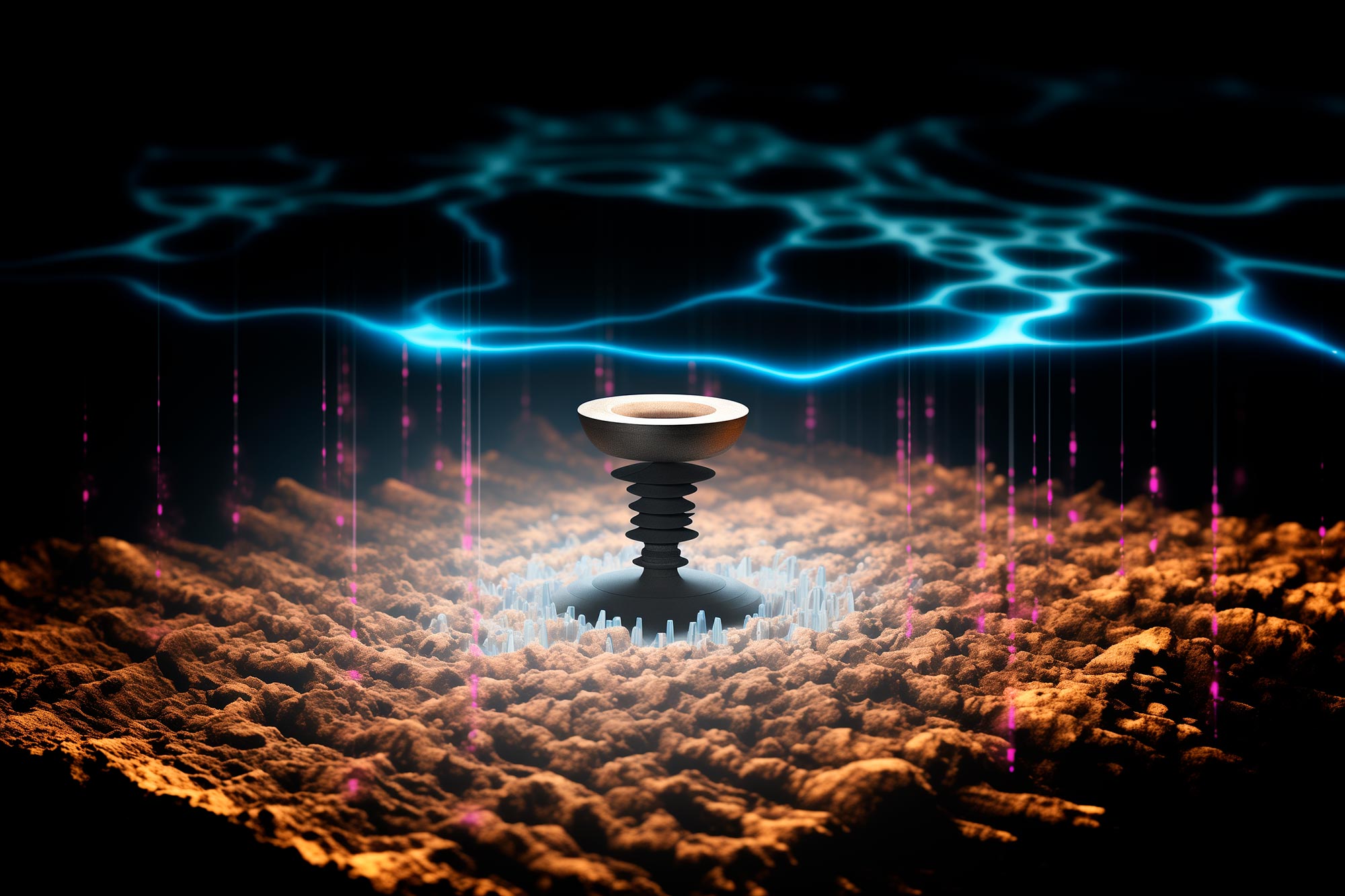
Fabrication method could facilitate materials discovery.
- Harvard team led by Philip Kim innovates in high-temperature superconductors using cuprates.
- Developed the world’s first superconducting diode, advancing quantum computing.
- Demonstrated directional supercurrent and control over quantum states in BSCCO.
Superconductors have intrigued physicists for decades. But these materials, which allow the perfect, lossless flow of electrons, usually only exhibit this quantum-mechanical peculiarity at temperatures so low – a few degrees above absolute zero – as to render them impractical.
A research team led by Harvard Professor of Physics and Applied Physics Philip Kim has demonstrated a new strategy for making and manipulating a widely studied class of higher-temperature superconductors, called cuprates, clearing a path to engineering new, unusual forms of superconductivity in previously unattainable materials.
Using a uniquely low-temperature device fabrication method, Kim and his team report in the journal Science a promising candidate for the world’s first high-temperature, superconducting diode – essentially, a switch that makes current flow in one direction – made out of thin cuprate crystals. Such a device could theoretically fuel fledging industries like quantum computing, which rely on fleeting mechanical phenomena that are difficult to sustain.
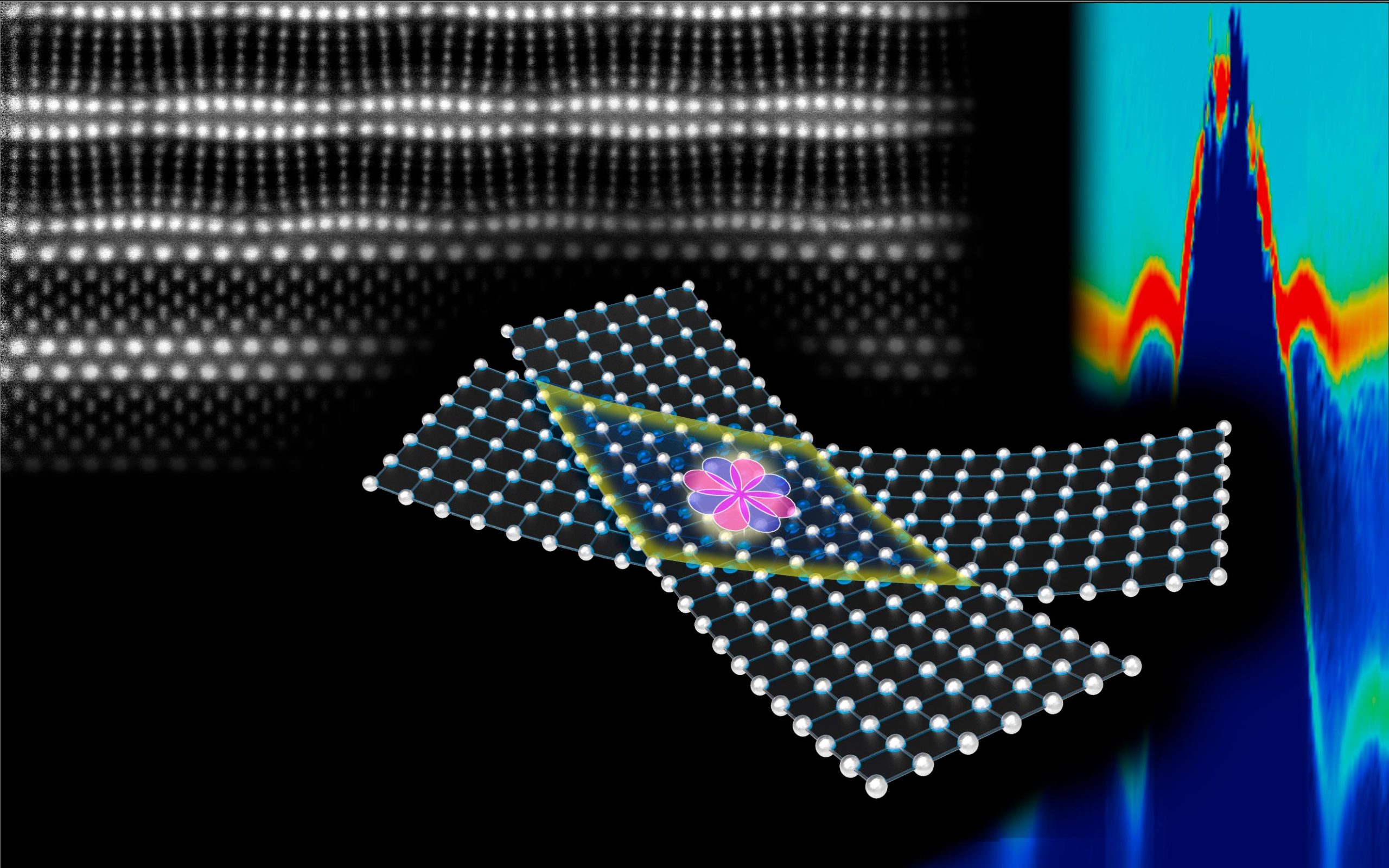
“High-temperature superconducting diodes are, in fact, possible, without application of magnetic fields, and open new doors of inquiry toward exotic materials study,” Kim said.
Cuprates are copper oxides that, decades ago, upended the physics world by showing they become superconducting at much higher temperatures than theorists had thought possible, “higher” being a relative term (the current record for a cuprate superconductor is -225 Fahrenheit). But handling these materials without destroying their superconducting phases is extremely complex due to their intricate electronic and structural features.
The team’s experiments were led by S. Y. Frank Zhao, a former student in the Griffin Graduate School of Arts and Sciences and now a postdoctoral researcher at MIT. Using an air-free, cryogenic crystal manipulation method in ultrapure argon, Zhao engineered a clean interface between two extremely thin layers of the cuprate bismuth strontium calcium copper oxide, nicknamed BSCCO (“bisco”). BSCCO is considered a “high-temperature” superconductor because it starts superconducting at about -288 Fahrenheit – very cold by practical standards, but astonishingly high among superconductors, which typically must be cooled to about -400.
Zhao first split the BSCCO into two layers, each one-thousandth the width of a human hair. Then, at -130, he stacked the two layers at a 45-degree twist, like an ice cream sandwich with askew wafers, retaining superconductivity at the fragile interface.
The team discovered that the maximum supercurrent that can pass without resistance through the interface is different depending on the current’s direction. Crucially, the team also demonstrated electronic control over the interfacial quantum state by reversing this polarity. This control was what effectively allowed them to make a switchable, high-temperature superconducting diode – a demonstration of foundational physics that could one day be incorporated into a piece of computing technology, such as a quantum bit.
“This is a starting point in investigating topological phases, featuring quantum states protected from imperfections,” Zhao said.
Reference: “Time-reversal symmetry breaking superconductivity between twisted cuprate superconductors” by S. Y. Frank Zhao, Xiaomeng Cui, Pavel A. Volkov, Hyobin Yoo, Sangmin Lee, Jules A. Gardener, Austin J. Akey, Rebecca Engelke, Yuval Ronen, Ruidan Zhong, Genda Gu, Stephan Plugge, Tarun Tummuru, Miyoung Kim, Marcel Franz, Jedediah H. Pixley, Nicola Poccia and Philip Kim, 7 December 2023, Science.
DOI: 10.1126/science.abl8371
The Harvard team worked with colleagues Marcel Franz at University of British Columbia and Jed Pixley at Rutgers University, whose teams previously performed theoretical calculations that accurately predicted the behavior of the cuprate superconductor in a wide range of twist angles. Reconciling the experimental observations also required new theory developments, performed by University of Connecticut’s Pavel A. Volkov.
The research was supported, in part, by the National Science Foundation, the Department of Defense, and the Department of Energy.
Never miss a breakthrough: Join the SciTechDaily newsletter.
Follow us on Google and Google News.
3 Comments
Would you mind using SI units? I have no idea what -288F is and had to google it. Maybe saying “95 Kelvin (-288 degrees Farenheit)” would be the best option.
I have the patent on really real conductors turned into the highest ability super conductive material and that material is already in production and in products produced today. A linear accelerator tool (Ours is 1/4 mile long puts molecular construction in line(Of Course) and the geometry is cylindrical tubelets with concave and convex ends and each geo print has a transducer produced sub tone and we use 40 transducers and they allow the metalloid to set with all geometry production on (of course) until set. We use the machinery to also do super crystals for the different uses we apply that make perfect diodes when struck to super linear crystalline print with ZERO back flow and our new computer chip developed with sub tone print conduits is spectacular. Spinners for power plants with 5 inch super copper super conductors gets more than 1/3 more amperes per size than any other and runs really cool,of course at only 220 degrees fahrenheit.
Sticking to SI probably best. All scientists/engineers/.scholars should be able to visualize and/or traverse 220F; -220F; 240R; 240K; -100C; 100C in a flash like poker hand. Btu/KJ also adds (another) layer of complexity however (simply) another engineer/scientist poker hand.
The biggie is the SCIENCE of (warm/hot) 2000K superconductivty for example (FOOD FOR REAL SCIENTISTS/ENGINEERS). Good luck. (I got it serendipitously)!!