
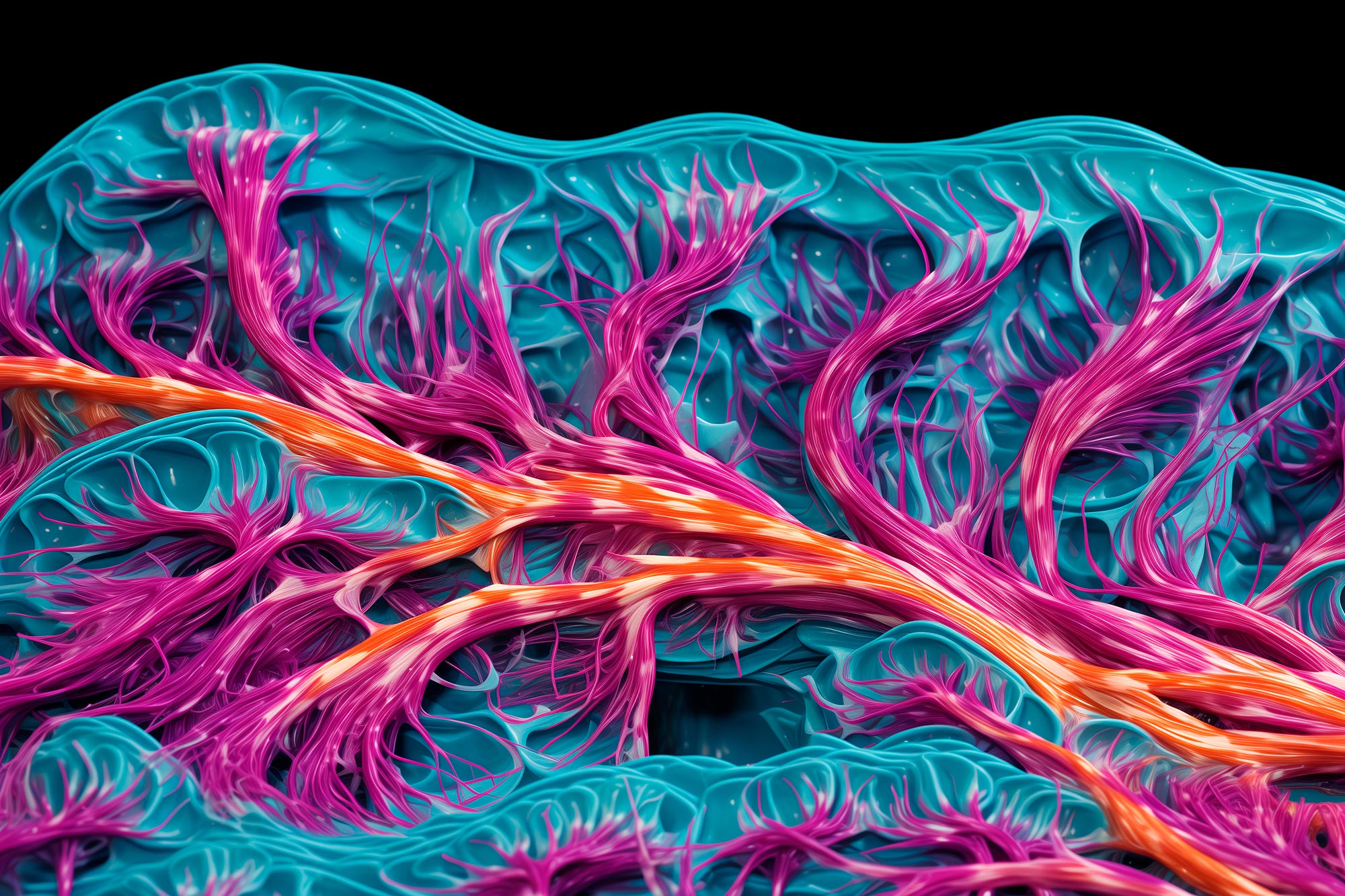
Scientists have developed a groundbreaking two-dimensional model to study neuromuscular diseases, enabling efficient drug testing and enhanced understanding of diseases like spinal muscular atrophy and amyotrophic lateral sclerosis.
Researchers have so far identified around 800 different neuromuscular diseases. These conditions are caused by problems in the way muscle cells, motor neurons, and peripheral cells interact. These disorders, including amyotrophic lateral sclerosis and spinal muscular atrophy, lead to muscle weakness, paralysis, and in some cases death.
“These diseases are highly complex, and the causes of the dysfunction can vary widely,” says Dr. Mina Gouti, head of the Stem Cell Modeling of Development and Disease Lab at the Max Delbrück Center. The problem might lie with the neurons, the muscle cells or the connections between the two. “To better understand the causes and find effective therapies, we need human-specific cell culture models where we can study how motor neurons in the spinal cord interact with the muscle cells.”
Innovative Research Using Organoids
The researchers working with Gouti had already developed a three-dimensional neuromuscular organoid (NMO) system. “One of our goals is to use our cultures for large-scale drug testing,” says Gouti. “The three-dimensional organoids are very large and can’t be grown for a long time in the 96 well culture dish that we use to perform high-throughput drug screening studies.”
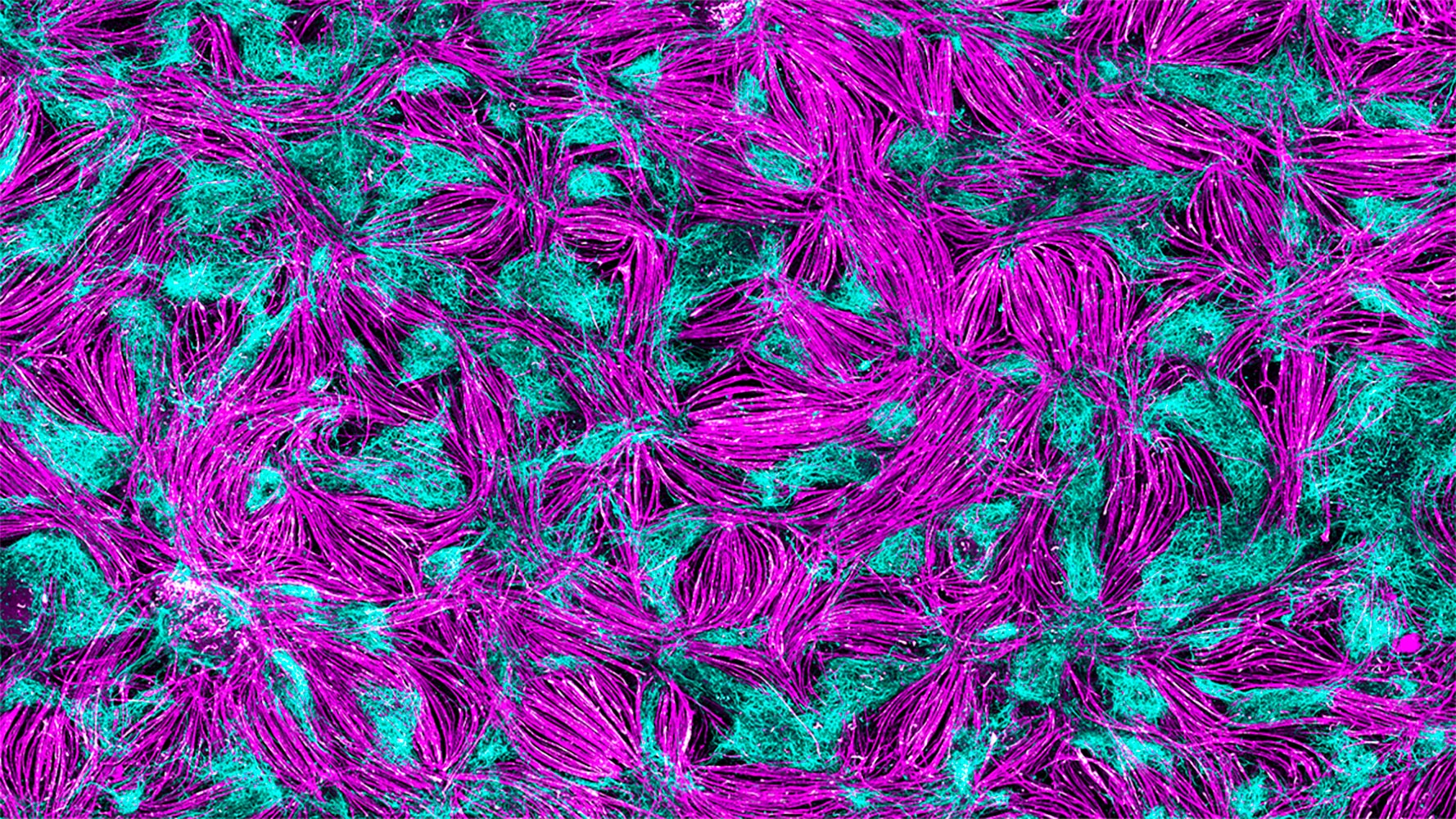
For this type of screening, an international team led by Gouti has now developed a self-organizing neuromuscular junction model using pluripotent stem cells. The model contains neurons, muscle cells, and the chemical synapse named neuromuscular junction that is needed for the two types of cells to interact. The researchers have now published their findings in the journal Nature Communications.
“The 2D self-organizing neuromuscular junction model will allow us to perform high throughput drug screening for different neuromuscular diseases and then study the most promising candidates in patient-specific organoids,” says Gouti.
Developing the 2D Neuromuscular Model
To establish the 2D self-organizing neuromuscular junction model, the researchers first had to understand how motor neurons and muscle cells develop in the embryo. Minas’ team does not conduct embryonic research themselves but utilizes various human stem cell lines, which are allowed for research purposes under strict guidelines, as well as an induced pluripotent stem cell line (iPSC).
“We tested a number of hypotheses. We found that the types of cells we needed for functional neuromuscular connections originated from neuromesodermal progenitor cells,” says Alessia Urzi, a doctoral student and lead author of the paper.
Urzi found the right combination of signaling molecules that cause human stem cells to mature into functional motor neurons and muscle cells with the necessary connections between the two. “It was exciting to see the muscle cells contracting under the microscope,” says Urzi. “That was a clear sign we were on the right track.”
Another observation was that, once differentiated, the cells organized themselves into areas with muscle cells and nerve cells, rather like a mosaic.
Optogenetic Advances in Neuromuscular Research
The muscle cells grown in the culture dish contract spontaneously as a result of their connection to the neurons – but they do so without any meaningful rhythm. Urzi and Gouti wanted to fix that. Working with researchers at Charité – Universitätsmedizin Berlin, they used optogenetics to activate the motor neurons. Activated by a flash of light, the neurons fire and cause the muscle cells to contract in sync, moving them closer to mimicking the physiological situation in an organism.
Modeling and Testing Spinal Muscular Atrophy
To test the validity of the model, Urzi used human iPSCs from patients with Spinal muscular atrophy, a severe neuromuscular disease that affects children in the first year of their life. The neuromuscular cultures generated from the patient-specific induced pluripotent stem cells showed severe problems with the contraction of the muscle resembling the patient’s pathology.
For Gouti, the 2D and 3D cultures are key tools for researching neuromuscular diseases in greater detail and to test more efficient and individualized treatment options. As a next step, Gouti and her team want to perform high throughput drug screening to identify novel treatments for patients with spinal muscular atrophy and amyotrophic lateral sclerosis. “We want to start by seeing if we can achieve more successful outcomes using new combinations of drugs to improve the life of patients with complex neuromuscular diseases,” says Gouti.
Reference: “Efficient generation of a self-organizing neuromuscular junction model from human pluripotent stem cells” by Alessia Urzi, Ines Lahmann, Lan Vi N. Nguyen, Benjamin R. Rost, Angélica García-Pérez, Noemie Lelievre, Megan E. Merritt-Garza, Han C. Phan, Gary J. Bassell, Wilfried Rossoll, Sebastian Diecke, Severine Kunz, Dietmar Schmitz and Mina Gouti, 19 December 2023, Nature Communications.
DOI: 10.1038/s41467-023-43781-3
Never miss a breakthrough: Join the SciTechDaily newsletter.
Follow us on Google and Google News.