
Close Menu
    Facebook X (Twitter) Instagram
    SciTechDaily
    • Biology
    • Chemistry
    • Earth
    • Health
    • Physics
    • Science
    • Space
    • Technology
    Facebook X (Twitter) Pinterest YouTube RSS
    SciTechDaily
    Home»Science»Scientists Reveal the Structure of the Typhoid Toxin
    Science

    Scientists Reveal the Structure of the Typhoid Toxin

    By Bill Hathaway, Yale UniversityJuly 11, 2013No Comments3 Mins Read
    Facebook Twitter Pinterest Telegram LinkedIn WhatsApp Email Reddit
    Share
    Facebook Twitter LinkedIn Pinterest Telegram Email Reddit
    Researchers Reveal Typhoids Lethal Secret
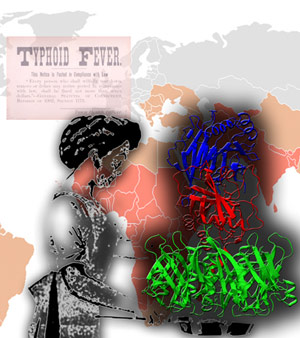
    Yale scientists offer an explanation of how Typhoid fever still kills hundreds of thousands of people every year and suggest the basis of a future vaccine. Credit: Yale University News

    In a newly published study, Yale scientists offer an explanation of how Typhoid fever still kills hundreds of thousands of people every year and suggest the basis of a future vaccine.

    Typhoid fever is one of the oldest documented diseases known to have afflicted mankind but what makes it so lethal has remained a mystery for centuries. In a study appearing online July 10 in the journal Nature, Yale researchers offer an explanation of how the devastating disease marked by delirium and stupor still kills 200,000 people every year — and also suggests the basis of a future vaccine.

    The culprit appears to be a powerful toxin possessed by Salmonella typhi, the bacterium that causes typhoid fever. Yale scientists for the first time describe the structure of the typhoid toxin and show that it causes disease in mice. The toxin helps explain why typhoid fever has such different symptoms than an infection by its close genetic cousin Salmonella, the common cause of food poisoning.

    “What makes this so exciting for us is that vaccines and therapeutics that target toxins have an excellent track record of success,” said Jorge Galan, the Lucille P. Markey Professor of Microbial Pathogenesis and senior author of the paper.

    Typhoid fever is believed to have killed Athenian leader Pericles and a third of the population of the Greek city in 430 B.C. during the Peloponnesian War and has perplexed doctors ever since. Untreated, it kills up to 20 percent of those it infects, however many of those who survive remain carriers for life but show no symptoms. This fact explains why fever, illness and death followed from job to job the notorious carrier Mary Mallon, best known as Typhoid Mary. A cook for wealthy New England families, she is believed to have unwittingly infected several dozen people in the early 20th century.

    Although the cause of typhoid fever has been known for over a century, what makes Salmonella typhi so deadly has remained a mystery. Galan and his team showed that the answer to this mystery may be typhoid toxin, a lethal toxin created from the merger of two separate and powerful toxins. The atomic structure of the toxin and its receptor reported in this study, may pave the way to new life-saving therapeutics.

    Jeongmin Song and Xiang Gao of Yale are co-authors of the study.

    The research was funded by a grant from the Nationals Institute of Allergy and Infectious Diseases, part of the National Institutes of Health.

    Reference: “Structure and function of the Salmonella Typhi chimaeric A2B5 typhoid toxin” by Jeongmin Song, Xiang Gao and Jorge E. Galán, 10 July 2013, Nature.
    DOI: 10.1038/nature12377


    Never miss a breakthrough: Join the SciTechDaily newsletter.
    Follow us on Google and Google News.

    Bacteria Bacterium Disease Yale University
    Share. Facebook Twitter Pinterest LinkedIn Email Reddit

    Related Articles

    New Study Reveals How Gut Bacteria Drive Autoimmune Disease

    Yale Examines How Bacteria Might Trigger and Treat Autoimmune Disease

    Genetically Reducing AMPK Activity May Prevent Hereditary Hearing Loss

    A Promising New Treatment for Multiple Sclerosis

    Onset of Schizophrenia Linked to Elevated Neural Links

    Naturally Occurring Nanoparticles Harnessed to Target Disease

    Brain Disruption Shows That Mental Illnesses Have Biological Similarities

    Researchers Identify Mutations Responsible for USC Tumors

    Human Presence Increases Indoor Bacteria

    Leave A Reply Cancel Reply

    • Facebook
    • Twitter
    • Pinterest
    • YouTube

    Don't Miss a Discovery

    Subscribe for the Latest in Science & Tech!

    Trending News

    New Study Reveals Why Ozempic Works Better for Some People Than Others

    Climate Change Is Altering a Key Greenhouse Gas in a Way Scientists Didn’t Expect

    New Study Suggests Gravitational Waves May Have Created Dark Matter

    Scientists Discover Why the Brain Gets Stuck in Schizophrenia

    Scientists Engineer “Tumor-Eating” Bacteria That Devour Cancer From Within

    Even “Failed” Diets May Deliver Long-Term Health Gains, Study Finds

    NIH Scientists Discover Powerful New Opioid That Relieves Pain Without Dangerous Side Effects

    Collapsing Plasma May Hold the Key to Cosmic Magnetism

    Follow SciTechDaily
    • Facebook
    • Twitter
    • YouTube
    • Pinterest
    • Newsletter
    • RSS
    SciTech News
    • Biology News
    • Chemistry News
    • Earth News
    • Health News
    • Physics News
    • Science News
    • Space News
    • Technology News
    Recent Posts
    • The Surprising Reason You Might Want To Sleep Without a Pillow
    • Household Cats Could Hold the Secret to Fighting Breast Cancer
    • Scientists Say This Natural Hormone Reverses Obesity by Targeting the Brain
    • This 15,000-Year-Old Discovery Changes What We Know About Early Human Creativity
    • 35-Million-Year-Old Mystery: Strange Arachnid Discovered Preserved in Amber
    Copyright © 1998 - 2026 SciTechDaily. All Rights Reserved.
    • Science News
    • About
    • Contact
    • Editorial Board
    • Privacy Policy
    • Terms of Use

    Type above and press Enter to search. Press Esc to cancel.