
Close Menu
    Facebook X (Twitter) Instagram
    SciTechDaily
    • Biology
    • Chemistry
    • Earth
    • Health
    • Physics
    • Science
    • Space
    • Technology
    Facebook X (Twitter) Pinterest YouTube RSS
    SciTechDaily
    Home»Health»Scientists Reverse Key Signs of Gut Aging With Surprising Biological Transfer
    Health

    Scientists Reverse Key Signs of Gut Aging With Surprising Biological Transfer

    By Cincinnati Children's Hospital Medical CenterMarch 11, 2026No Comments3 Mins Read
    Facebook Twitter Pinterest Telegram LinkedIn WhatsApp Email Reddit
    Share
    Facebook Twitter LinkedIn Pinterest Telegram Email Reddit
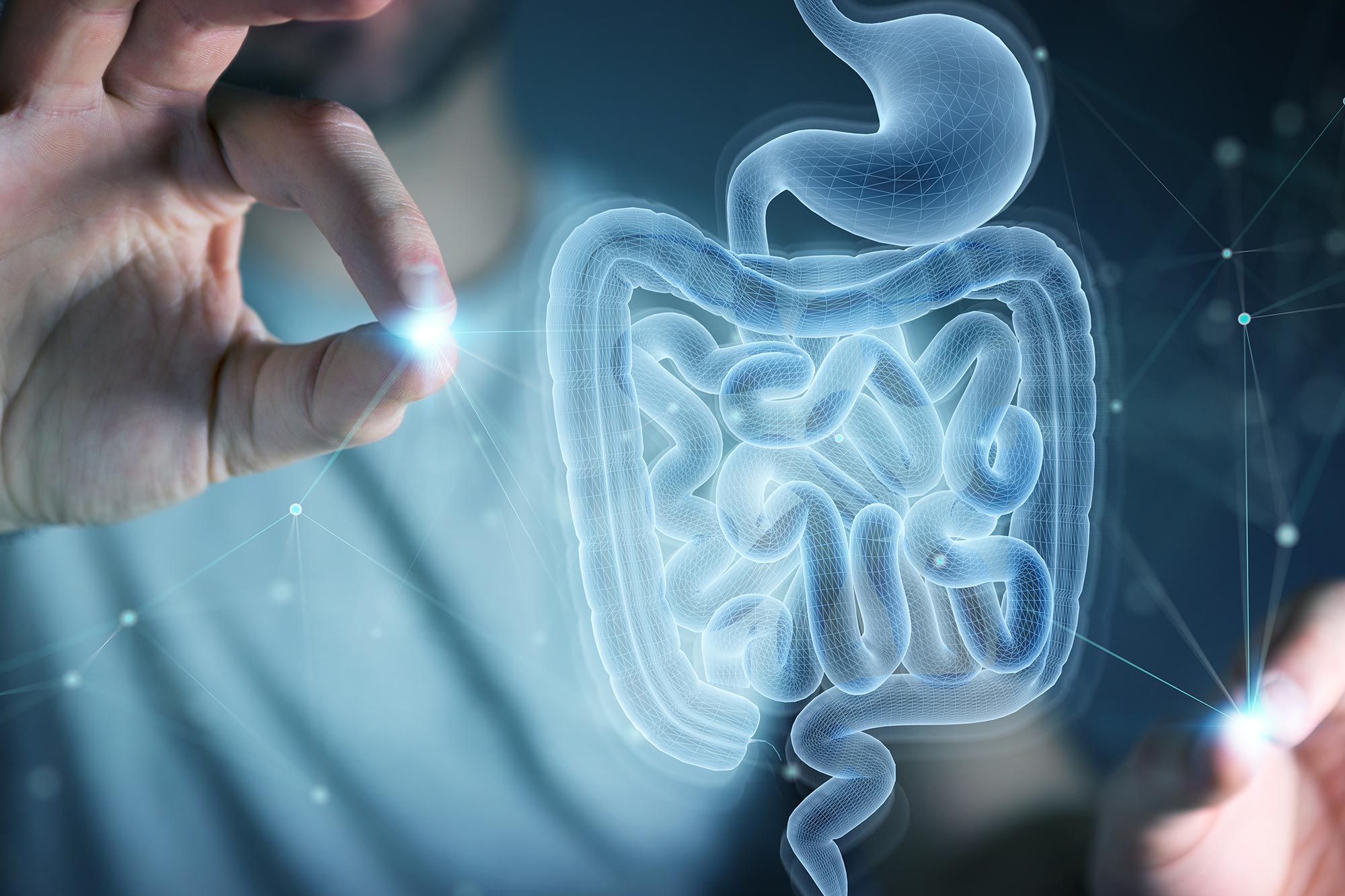
    Medical Scan Human Intestines Digestive System Hologram Technology
    Aging may affect the gut in unexpected ways, but the microbes living there could hold clues to reversing some of those effects. New research shows how younger microbial communities may help restore the regenerative abilities of aging intestinal tissue. Credit: Shutterstock

    Scientists are uncovering surprising links between aging and the microscopic communities living in the gut.

    Gut health may depend in part on the age of the microbes that live inside us. Scientists suggest that the biological “age” of the gut could be influenced by the bacteria that populate the intestines.

    A study published in Stem Cell Reports explored this idea using mice. Researchers from Cincinnati Children’s and Ulm University in Germany found that introducing microbiota from young mice into older mice stimulated intestinal stem cells responsible for producing new tissue. When these stem cells became more active, the intestines recovered more quickly after injury.

    Such damage can occur for many reasons, including surgery, radiation therapy, infections, disease, or the gradual effects of aging on the body.

    “As we age, the constant replacement of intestinal tissue slows down, making us more susceptible to gut-related conditions. Our findings show that younger microbiota can prompt older intestine to heal faster and function more like younger intestine,” says corresponding author Hartmut Geiger, PhD, director of the Institute of Molecular Medicine at Ulm University and former member of the Division of Experimental Hematology and Cancer Biology at Cincinnati Children’s.

    Although prebiotic and probiotic supplements have become increasingly popular, the researchers note that their study used carefully controlled bacterial communities that are not available in consumer products. They also emphasize that these microbes must be introduced through fecal microbiota transfer rather than through over-the-counter supplements.

    The power of young bacteria

    Experiments using mouse models revealed that aging alters the balance of commensal (or helpful) microbes in the gut. These age-related shifts reduced important biological signals that regulate intestinal stem cells located in the lining of the intestine.

    “This reduced signaling causes a decline in the regenerative potential of aged ISCs,” says co-author Yi Zheng, PhD, director, Division of Experimental Hematology and Cancer Biology at Cincinnati Children’s. “However, when older microbiota were replaced with younger microbiota, the stem cells resumed producing new intestine tissue as if the cells were younger. This further demonstrates how human health can be affected by the other life forms living inside us.”

    Zheng and Geiger have previously worked together on research aimed at rejuvenating blood stem cells. They are also co-founders of a related start-up company called Mogling Bio. According to Zheng, the new findings build on aspects of their earlier work by examining similar regenerative processes in intestinal stem cells.

    The team cautions that more research is necessary before these results can be applied to people. Future studies will need to confirm whether the same benefits occur in humans, determine safe dosing levels, and identify the most effective combinations of microbial species for fecal microbiota transfer.

    Reference: “Microbiota from young mice restore the function of aged ISCs” by Kodandaramireddy Nalapareddy, David B. Haslam, Ann-Kathrin Kissmann, Theresa Alenghat, Selina Stahl, Frank Rosenau, Yi Zheng and Hartmut Geiger, 22 January 2026, Stem Cell Reports.
    DOI: 10.1016/j.stemcr.2025.102788

    Funding sources included grants from the U.S. National Institutes of Health (R01DK104814, R01AG063967, P30DK078392, and R01AG040118) and the Baden-Württemberg Foundation in Germany.

    Never miss a breakthrough: Join the SciTechDaily newsletter.
    Follow us on Google and Google News.

    Aging Cincinnati Children's Hospital Medical Center Gut Regenerative Medicine Stem Cells
    Share. Facebook Twitter Pinterest LinkedIn Email Reddit

    Related Articles

    Scientists Discover Protein That Can Rejuvenate the Aging Immune System

    Your Gut Might Be the Key to Preventing Blood Cancer, New Research Reveals

    “Time Jump” by 30 Years: Old Skins Cells Reprogrammed To Regain Youthful Function

    Newborn Cells in the Epileptic Brain Provide a Potential Target for Anti-Seizure Medications

    Scientists Identify Factor in “Young Blood” That Helps Rejuvenate Aging Muscle

    Prematurely Aged or Overworked Stem Cells Could Be Major Factor in Chronic Lung Disease

    Safety of Stem Cell Therapy for Chronic Knee Pain Confirmed in New Study

    Stem Cell Technology Rejuvenates Old Human Cells by Wiping Their DNA Clean

    Scientists Discover Protein That Can Accelerate Recovery

    Leave A Reply Cancel Reply

    • Facebook
    • Twitter
    • Pinterest
    • YouTube

    Don't Miss a Discovery

    Subscribe for the Latest in Science & Tech!

    Trending News

    New Pill Lowers Stubborn Blood Pressure and Protects the Kidneys

    Humans May Have Hidden Regenerative Powers, New Study Suggests

    Scientists Just Solved the Mystery of Why Crabs Walk Sideways

    Doctors Are Surprised by What This Vaccine Is Doing to the Heart

    This Popular Supplement May Boost Your Brain, Not Just Your Muscles

    Scientists Say This Simple Supplement May Actually Reverse Heart Disease

    Warming Oceans Could Trigger a Dangerous Methane Surge

    This Simple Movement Could Be Secretly Cleaning Your Brain

    Follow SciTechDaily
    • Facebook
    • Twitter
    • YouTube
    • Pinterest
    • Newsletter
    • RSS
    SciTech News
    • Biology News
    • Chemistry News
    • Earth News
    • Health News
    • Physics News
    • Science News
    • Space News
    • Technology News
    Recent Posts
    • Hidden Heart Risk Found in 1 in 5 People, Study Warns
    • Scientists Say This Daily Walking Habit May Be the Secret to Keeping Weight Off After Dieting
    • New Therapy Rewires the Brain To Restore Joy in Depression Patients
    • Researchers Discover Efficient New Way To Split Hydrogen From Water for Energy
    • This Korean Skincare Ingredient Could Help Fight Deadly Superbugs
    Copyright © 1998 - 2026 SciTechDaily. All Rights Reserved.
    • Science News
    • About
    • Contact
    • Editorial Board
    • Privacy Policy
    • Terms of Use

    Type above and press Enter to search. Press Esc to cancel.