
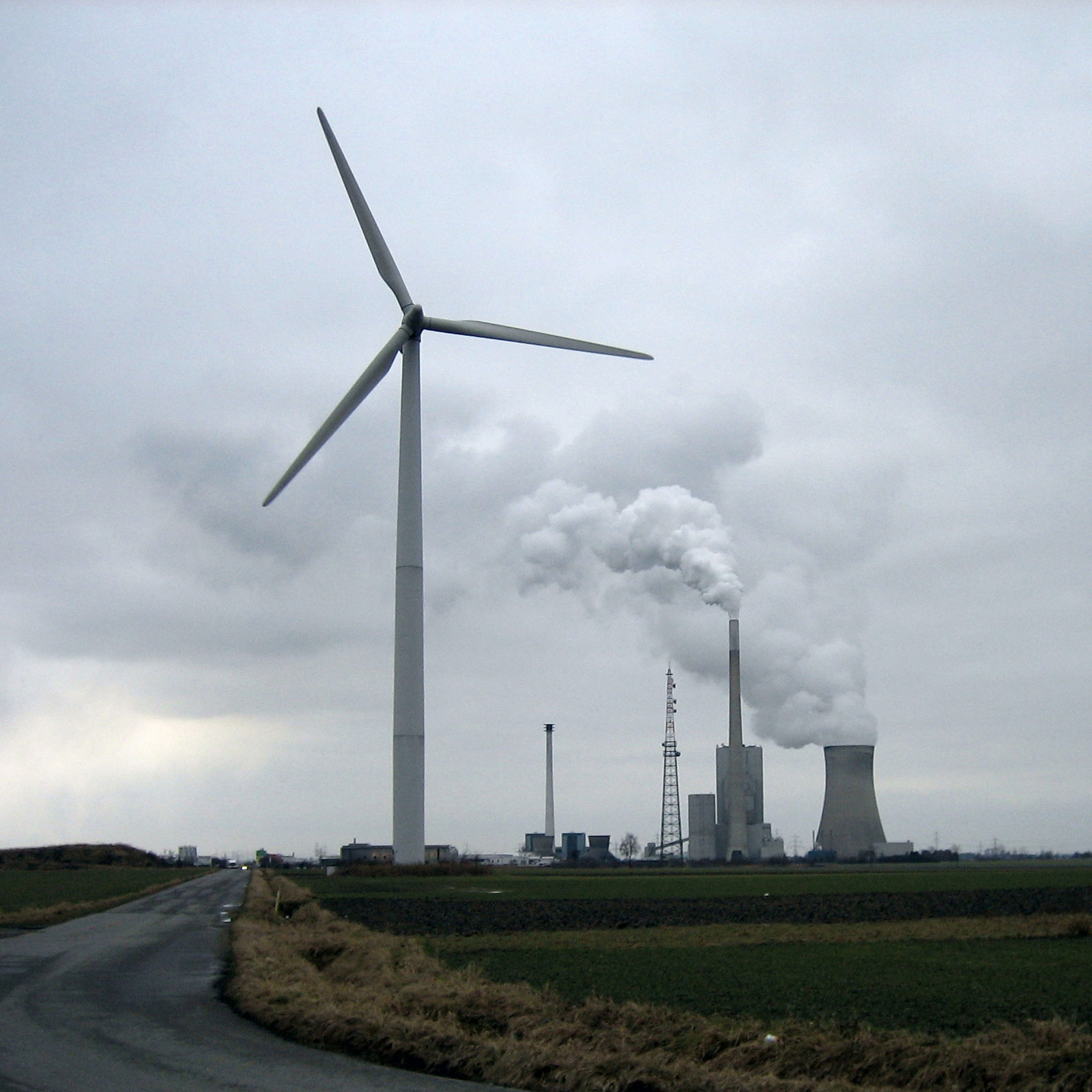
Reducing global air pollution can prevent millions of premature deaths according to an international team of scientists, led by the Max Planck Institute for Chemistry. The most significant contribution would be the rapid phasing out of fossil fuels, which is currently being discussed mainly to abate climate change. The researchers used a global atmospheric chemistry and climate model, linked to the latest estimates of health effects in order to study the combined impact of decarbonisation on public health, precipitation and the climate. The results of the study have been published in the journal Proceedings of the National Academy of Sciences of the United States of America (PNAS).
The team headed by atmospheric researcher Prof. Jos Lelieveld of the Max Planck Institute for Chemistry calculated that fossil fuel generated emissions are responsible for about 65 percent of premature deaths from human-made air pollutants worldwide. Polluted air significantly elevates the risk of cardiovascular and respiratory diseases. According to Prof. Richard Burnett of Health Canada, co-author of the study, it was recently found that the health burden of fine particulate matter is exceedingly high. Phasing out the use of fossil fuels would therefore prevent more than 3 million premature deaths annually worldwide. “If all sources of air pollution from human activities could be eliminated, that number would further rise to more than 5 million per year”, adds Prof. Andy Haines from the London School of Hygiene and Tropical Medicine, who is also a co-author of the study.
Air pollution also impacts the climate
Reduced air pollution would not only have a positive effect on human health but would also influence the climate. Although a global phase-out of fossil fuels would decisively slow down the increase in atmospheric CO2, the current level of around 400 ppm in the atmosphere would not diminish anytime soon. On the other hand, air pollution from particulate matter in the atmosphere, which reflects some of the solar radiation and cools the Earth to a certain extent, would rapidly decline. For this reason, a global phase-out of fossil fuels would even lead to a short-term global temperature increase of about 0.5 degrees Celsius.
Nevertheless, it is still possible to limit warming to 2 degrees. “The rise in temperature resulting from the removal of pollution particles from the air can be tempered by a simultaneous reduction of the greenhouse gases methane, ozone, and hydrofluorocarbons in the troposphere,” explains Prof. Ramanathan of the University of California in San Diego, who co-authored the study. Methane, ozone, and hydrofluorocarbons are much shorter-lived than carbon dioxide, but they have a particularly strong near-term impact on the climate. Their reduction would therefore have a direct cooling effect, whereas the climate impact of the longer-lived CO2 will last for centuries.
More precipitation due to less particulate matter
Less particulate matter in the atmosphere and the consequent increase in sea surface temperature, will increase evaporation from the oceans. This would result in more rainfall in several regions plagued by drought. The effect is particularly pronounced in monsoon regions and could help improve food security and access to water for people in parts of Africa, notably the Sahel, Central America, northern China and India.
The main implication of the study is that fossil fuel phase-out is a major opportunity not only to slow down climate change, but also to significantly improve the health of people from around the world. Therefore, the scientists advocate a rapid shift from fossil to renewable energies: “Clean energy sources have the potential to save many lives,” adds Lelieveld.
Reference: “Effects of fossil fuel and total anthropogenic emission removal on public health and climate” by J. Lelieveld, K. Klingmüller, A. Pozzer, R. T. Burnett, A. Haines and V. Ramanathan, 25 March 2019, PNAS.
DOI: 10.1073/pnas.1819989116
Never miss a breakthrough: Join the SciTechDaily newsletter.
Follow us on Google and Google News.