
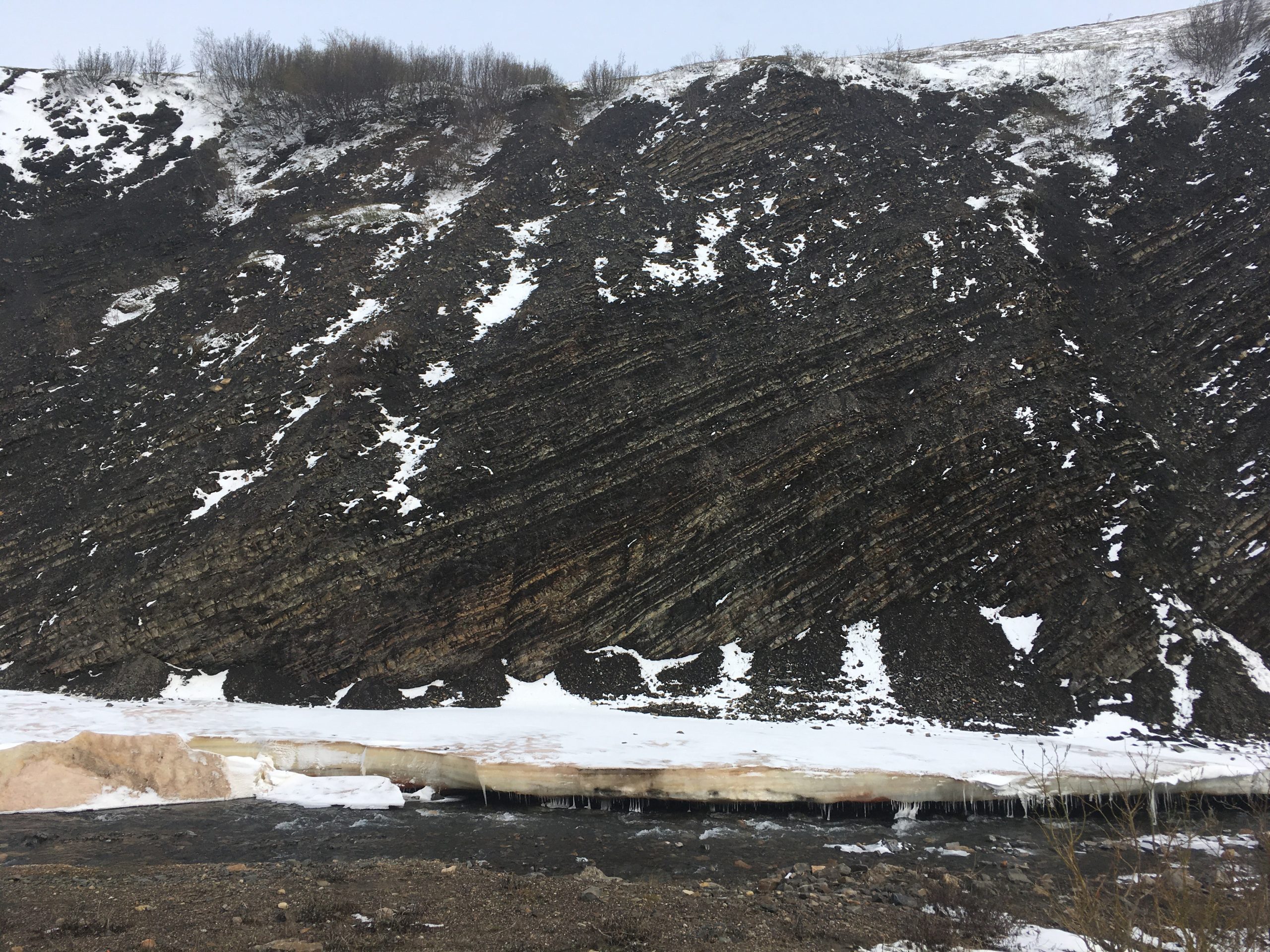
Oxford researchers found that rising Arctic temperatures will accelerate rock weathering, releasing more CO2 and contributing to climate change. Their study shows that CO2 emissions from the Mackenzie River Basin could double by 2100, highlighting the importance of including sulfide weathering in climate models.
Researchers from the University of Oxford’s Department of Earth Sciences have demonstrated that rising temperatures will accelerate rock weathering in the Canadian Arctic, creating a positive feedback loop that will result in the release of increasing amounts of CO2 into the atmosphere. The study was published in Science Advances.
For sensitive regions like the Arctic, where surface air temperatures are warming nearly four times faster than the global average, it is particularly crucial to understand the potential contribution of atmospheric CO2 from weathering. One pathway happens when certain minerals and rocks react with oxygen in the atmosphere, releasing CO2 via a series of chemical reactions. For instance, the weathering of sulfide minerals (e.g., ‘fool’s gold’) makes acid which causes CO2 to be released from other rock minerals that are found nearby. In Arctic permafrost, these minerals are being exposed as the ground thaws due to rising temperatures, which could act as a positive feedback loop to accelerate climate change.
Research in the Mackenzie River Basin
Up to now, however, it has been largely unknown how this reaction will respond to temperature change and how much extra CO2 could be released.
In this new study, researchers used records of sulfate (SO42-) concentration and temperature from 23 sites across the Mackenzie River Basin*, the largest river system in Canada, to examine the sensitivity of the weathering process to rising temperatures. Sulfate, like CO2, is a product of sulfide weathering, and can be used to trace how fast this process occurs.

The results demonstrated that across the catchment, sulfate concentrations rose rapidly with temperature. During the past 60 years (from 1960 to 2020), sulfide weathering saw an increase of 45% as temperatures increased by 2.3oC. This highlights that CO2 released by weathering could trigger a positive feedback loop that would accelerate warming in Arctic regions.
Using these past records from rivers, the researchers predicted that CO2 released from the Mackenzie River Basin could double to 3 billion kg/year by 2100 under a moderate emission scenario. This change would be equivalent to about half the total annual emissions from Canada’s domestic aviation sector for a typical year.
Lead author, Dr Ella Walsh (Department of Earth Sciences, University of Oxford at the time of the study) said: “We see dramatic increases in sulfide oxidation across the Mackenzie with even moderate warming. Until now, the temperature sensitivity of CO2 release from sulfide rocks and its main drivers were unknown over large areas and timescales.”
Sensitivity Differences in Arctic Landscapes
Not all parts of the river catchment responded in the same way. Weathering was much more sensitive to temperature in rocky mountainous areas, and those covered with permafrost. By modeling the process, the researchers revealed that sulfide weathering was accelerated further by processes that break rocks up as they freeze and shatter.
Conversely, areas covered with peatland showed lower increases in sulfide oxidation with warming, because the peat protects the bedrock from this process.
Co-author, Professor Bob Hilton (Department of Earth Sciences, University of Oxford) said: “Future warming across vast Arctic landscapes could further increase sulfide oxidation rates and affect regional carbon cycle budgets. Now that we have found this out, we are working to understand how these reactions might be slowed down, and it seems that peatland formation could help to lower the sulfide oxidation process.”
There are numerous similar environments across the Arctic where the combination of rock types, high proportions of exposed bedrock, and vast areas of permanently frozen ground create conditions where warming will result in rapid increases in sulfide weathering. As a result, it is extremely likely that this effect is not restricted to the Mackenzie River Basin.
According to the researchers, the study highlights the value of considering sulfide weathering in large-scale emission models, which are extremely useful for making predictions of climate change.
Reference: “Temperature sensitivity of the mineral permafrost feedback at the continental scale” by Ella V. Walsh, Robert G. Hilton, Suzanne E. Tank and Edwin Amos, 9 October 2024, Science Advances.
DOI: 10.1126/sciadv.adq4893
*Records were provided by Environment Canada through their National Long-term Water Quality Monitoring Programme. Sulfate concentrations were measured using ion chromatography, where liquid samples are passed through a column filled with a resin which attracts specific ions based on their charge.
Never miss a breakthrough: Join the SciTechDaily newsletter.
Follow us on Google and Google News.
3 Comments
Supercharged global warming! The rocks rapid weathering will act like a supercharger, set spinning powered by the climate change, adding more horsepower at higher efficiency reducing emissions, exhausting more CO2 by doing the opposite of what a supercharger does. The warmed subarctic climate will encourage plants to grow, pulling more CO2 out of the atmosphere, slowing the climate change engine like a rətarder (a word that trips scitechdaily’s SPAM filter). The increased mineralization of the river will cause algal blooms to lock carbon into sediment, reducing climate change like an oil filter. The increased animal and fish population consuming the plants and algae will trap carbon and be buried to become fossil fuel deposits stopping the climate change car like a confused pedestrian at a zebra crossing.
The University Of Oxford are the wrong people to make any internal combustion engine metaphors.
Oh… no…
Anyway!…
The authors are critical of the Global Circulation Models not taking sulfide weathering into account. By the same token, the authors aren’t taking into account that increased temperatures and CO2 should accelerate plant growth, which will sequester CO2. It does not look good to make the same mistake that others are accused of.