

A New, Promising Target for Treating Premature Aging
Werner Syndrome and Hutchinson Gilford Progeria Syndrome are two examples of the rare genetic disorders known as progeroid syndromes that cause signs of premature aging in children and young adults. Patients with progeroid syndromes have pathologies and symptoms that are often linked to aging, including osteoporosis, cataracts, heart disease, and type II diabetes.
This aging is characterized by the gradual loss of nuclear architecture and an underlying tissue-specific genetic program, but the causes are unclear. Scientists have discovered a potential new target for treating these syndromes by preventing nuclear architecture loss.
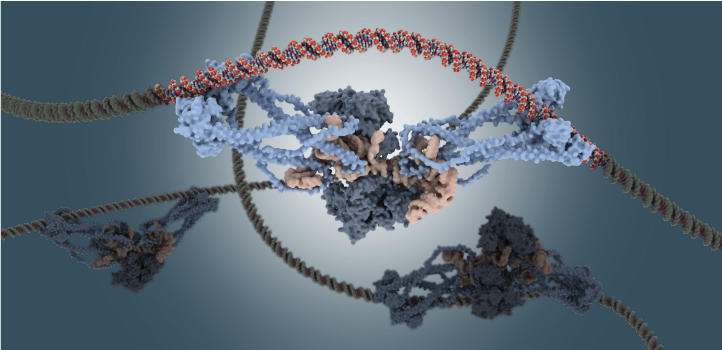
The target is known as long interspersed nuclear element-1 (L1) RNA, a family of repeat sequences that accounts for about 17-20% of the mammalian genome and whose functions are largely unknown. The closely packed DNA architecture known as heterochromatin renders these sequences inactive. There is evidence that heterochromatin depletion during normal aging is linked to their activation.
L1 RNA and the SUV39H1 Enzyme: A Key Mechanism in Premature Aging
“Based on theoretical considerations, we postulated that a molecular interaction between L1 RNA and a specific enzyme controlling heterochromatin stability could be the cause of premature aging in progeria syndromes,” says King Abdullah University of Science & Technology (KAUST) research scientist Francesco Della Valle.
Sequencing studies performed by KAUST and US teams revealed higher expression of L1 RNA in cells collected from individuals with progeroid syndromes. Further research revealed that the increased L1 RNA expression was responsible for the deactivation of an enzyme known as SUV39H1, which resulted in heterochromatin loss and changes in gene expression that promote cell aging.
Reversing Aging in Progeroid Cells Using Antisense Oligonucleotides (ASO)
The researchers were able to block L1 RNA expression and reverse the aging process in cells taken from patients with progeroid syndromes and in mice that are genetically modified to simulate premature aging. They did this using short synthetic nucleotide chains called antisense oligonucleotides (ASO) that specifically target and lead to the degradation of L1 RNA. Their L1 ASO was modified to improve its ability to enter and stay stable within cells. Blocking L1 RNA in the cells restored heterochromatin and counteracted aging-related genes. The L1 ASOs also prolonged the life span of the progeria-like mice.
Further research will need to determine whether other mechanisms, acting in parallel with SUV39H1 inhibition, might compromise heterochromatin stability in progeria syndromes.
“Among other observations, our work establishes an important rule,” says bioscientist Valerio Orlando. “Contrary to what was previously thought, aberrant expression of L1 RNA is not a consequence of the initiation of aging but a cause of it, at least in progeria. And now, for the first time, we report a specific, rather than global, target that acts as an essential factor in aging.”
“Given the similarities between Progeroid syndromes and chronological aging-associated diseases, targeting LINE-1 RNA may be an effective way to treat progeroid syndromes, as well as other age-related diseases characterized by LINE-1 aberrant expression, such as neurodegenerative, metabolic, and cardiovascular disorders, and cancer,” says Orlando. “This study opens the way to new strategies that we think might help extend human life expectancy.”
Reference: “LINE-1 RNA causes heterochromatin erosion and is a target for amelioration of senescent phenotypes in progeroid syndromes” by Francesco Della Valle, Pradeep Reddy, Mako Yamamoto, Peng Liu, Alfonso Saera-Vila, Dalila Bensaddek, Huoming Zhang, Javier Prieto Martinez, Leila Abassi, Mirko Celii, Alejandro Ocampo, Estrella Nuñez Delicado, Arianna Mangiavacchi, Riccardo Aiese Cigliano, Concepcion Rodriguez Esteban, Steve Horvath, Juan Carlos Izpisua Belmonte and Valerio Orlando, 10 August 2022, Science Translational Medicine.
DOI: 10.1126/scitranslmed.abl6057
Never miss a breakthrough: Join the SciTechDaily newsletter.
Follow us on Google and Google News.