
Close Menu
    Facebook X (Twitter) Instagram
    SciTechDaily
    • Biology
    • Chemistry
    • Earth
    • Health
    • Physics
    • Science
    • Space
    • Technology
    Facebook X (Twitter) Pinterest YouTube RSS
    SciTechDaily
    Home»Health»Scientists Target Brain Protein for Cure to Alcoholism
    Health

    Scientists Target Brain Protein for Cure to Alcoholism

    By Laurie Fickman, University of HoustonJune 5, 2018No Comments3 Mins Read
    Facebook Twitter Pinterest Telegram LinkedIn WhatsApp Email Reddit
    Share
    Facebook Twitter LinkedIn Pinterest Telegram Email Reddit
    Researchers Target Brain Protein for Alcoholism Cure
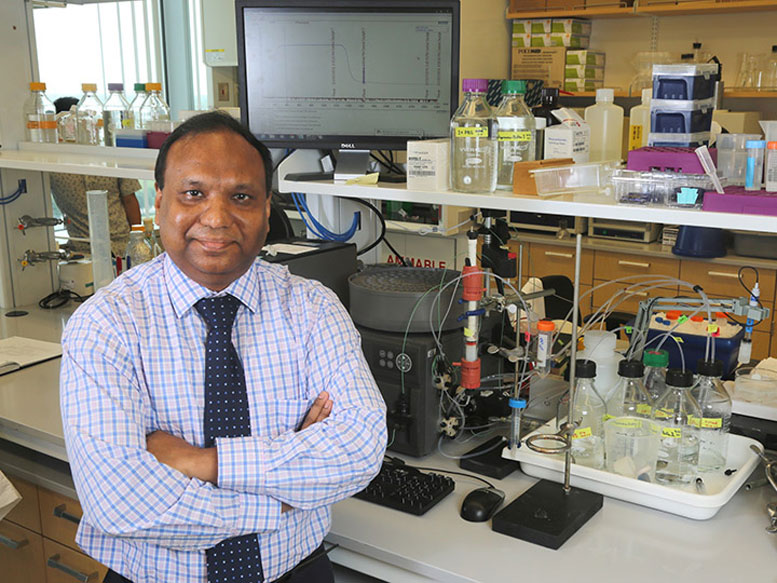
    University of Houston chemist Joydip Das is reporting a cure for alcoholism could be found in a protein inside the brain that plays a big role in developing tolerance to drinking.

    A protein in the brain that binds to alcohol could be the key to curing alcoholism, reports UH College of Pharmacy medicinal chemist Joydip Das in eNeuro, a journal of the Society for Neuroscience. The protein, called MUNC 13-1, plays a pivotal role in the development of tolerance to alcoholism according to Das.

    “Addiction to alcohol remains one of the most significant mental health problems throughout the world. A major challenge is to understand how ethanol, or alcohol, changes behavior and the brain during the descent into addiction,” Das reported. Developing tolerance is a critical step in that descent.

    “If a person becomes tolerant of one drink, he will have another and maybe another. If we could stop alcohol from binding into MUNC 13-1 it will help problem drinkers in reducing tolerance. If we can reduce tolerance we can reduce addiction,” said Das whose study focuses on binge alcohol exposure.

    The process of MUNC 13-1 binding to alcohol takes place in a brain synapse, where one nerve cell, or neuron, passes a signal to another. Specifically, the binding takes place in the presynaptic space, a much-understudied portion of the synapse mechanism.

    During binge alcohol exposure, alcohol creates widespread and long-lasting changes in neural activity, altering both presynaptic and postsynaptic activity.

    Thus far the work has been done using the Drosophila genetic model system, which offers a simple model, but various similarities. Their activating protein is called Dunc13, the equivalent to MUNC 13-1.

    “Reduction in Dunc13 produces a behavioral and physiological resistance to sedative effects of ethanol,” said Das. That makes MUNC 13-1 an important target for developing drugs. “We need to develop a pill that would inhibit alcohol binding to MUNC 13 and reduce its activity. Based on our results so far, this would likely reduce the formation of tolerance, making it harder to become addicted to alcohol,” said Das.

    Das is joined in his work by biologist Gregg Roman of the University of Mississippi and University of Houston psychologist J. Leigh Leasure.

    Reference: “Ethanol Regulates Presynaptic Activity and Sedation through Presynaptic Unc13 Proteins in Drosophila” by Shiyu Xu, Satyabrata Pany, Kevin Benny, Khadeeja Tarique, Ola al-Hatem, Kathleen Gajewski, J. Leigh Leasure, Joydip Das and Gregg Roman, 4 June 2018, ENEURO.
    DOI:10.1523/ENEURO.0125-18.2018

    Never miss a breakthrough: Join the SciTechDaily newsletter.
    Follow us on Google and Google News.

    Alcohol Disease Neuroscience University of Houston
    Share. Facebook Twitter Pinterest LinkedIn Email Reddit

    Related Articles

    Researchers Eliminate HIV from Cultured Human Cells for First Time

    Researchers Discover New Link between Processes Associated with a Parkinson’s Related Gene Defect

    Diets High in Fructose Lead to Overeating

    Galactic Cosmic Radiation Poses Significant Threat to Astronauts, Could Accelerate the Onset of Alzheimer’s

    ‘Healthy Neuroticism’ Lowers Risk of Chronic Disease

    Disrupted Sleep Patterns Linked to Alzheimer’s

    Ketamine Produces Rapid Antidepressant Responses

    Examining the Relationship Between Diabetes and Cognitive Decline

    Controlled Trial Shows Cannabis Reduces Some Symptoms of MS

    Leave A Reply Cancel Reply

    • Facebook
    • Twitter
    • Pinterest
    • YouTube

    Don't Miss a Discovery

    Subscribe for the Latest in Science & Tech!

    Trending News

    Scientists Discover 132-Million-Year-Old Dinosaur Tracks on South Africa’s Coast

    Scientists Uncover the Secret Ingredient Behind the Spark That May Have Started Life on Earth

    Physicists Observe Matter in Two Places at Once in Mind-Bending Quantum Experiment

    Stanford Scientists Discover Hidden Brain Circuit That Fuels Chronic Pain

    New Study Reveals Why Ozempic Works Better for Some People Than Others

    Climate Change Is Altering a Key Greenhouse Gas in a Way Scientists Didn’t Expect

    New Study Suggests Gravitational Waves May Have Created Dark Matter

    Scientists Discover Why the Brain Gets Stuck in Schizophrenia

    Follow SciTechDaily
    • Facebook
    • Twitter
    • YouTube
    • Pinterest
    • Newsletter
    • RSS
    SciTech News
    • Biology News
    • Chemistry News
    • Earth News
    • Health News
    • Physics News
    • Science News
    • Space News
    • Technology News
    Recent Posts
    • 320 Light-Years Away, a Planet Confirms a Fundamental Cosmic Assumption
    • Astronomers Solve Decades-Long Mystery About Saturn’s Spin – “Something Strange Was Happening”
    • Scientists Uncover Strange New State of Matter Inside Uranus and Neptune
    • The Crown Jewel of Dentistry? Breakthrough Tech Could Transform Tooth Repair
    • The Surprising Non-Medical Factor That Determines Cancer Survival
    Copyright © 1998 - 2026 SciTechDaily. All Rights Reserved.
    • Science News
    • About
    • Contact
    • Editorial Board
    • Privacy Policy
    • Terms of Use

    Type above and press Enter to search. Press Esc to cancel.