
Close Menu
    Facebook X (Twitter) Instagram
    SciTechDaily
    • Biology
    • Chemistry
    • Earth
    • Health
    • Physics
    • Science
    • Space
    • Technology
    Facebook X (Twitter) Pinterest YouTube RSS
    SciTechDaily
    Home»Biology»Scientists Track Bees in 3D and Discover Remarkable Secret Navigation Skills
    Biology

    Scientists Track Bees in 3D and Discover Remarkable Secret Navigation Skills

    By University of FreiburgMarch 29, 2026No Comments4 Mins Read
    Facebook Twitter Pinterest Telegram LinkedIn WhatsApp Email Reddit
    Share
    Facebook Twitter LinkedIn Pinterest Telegram Email Reddit
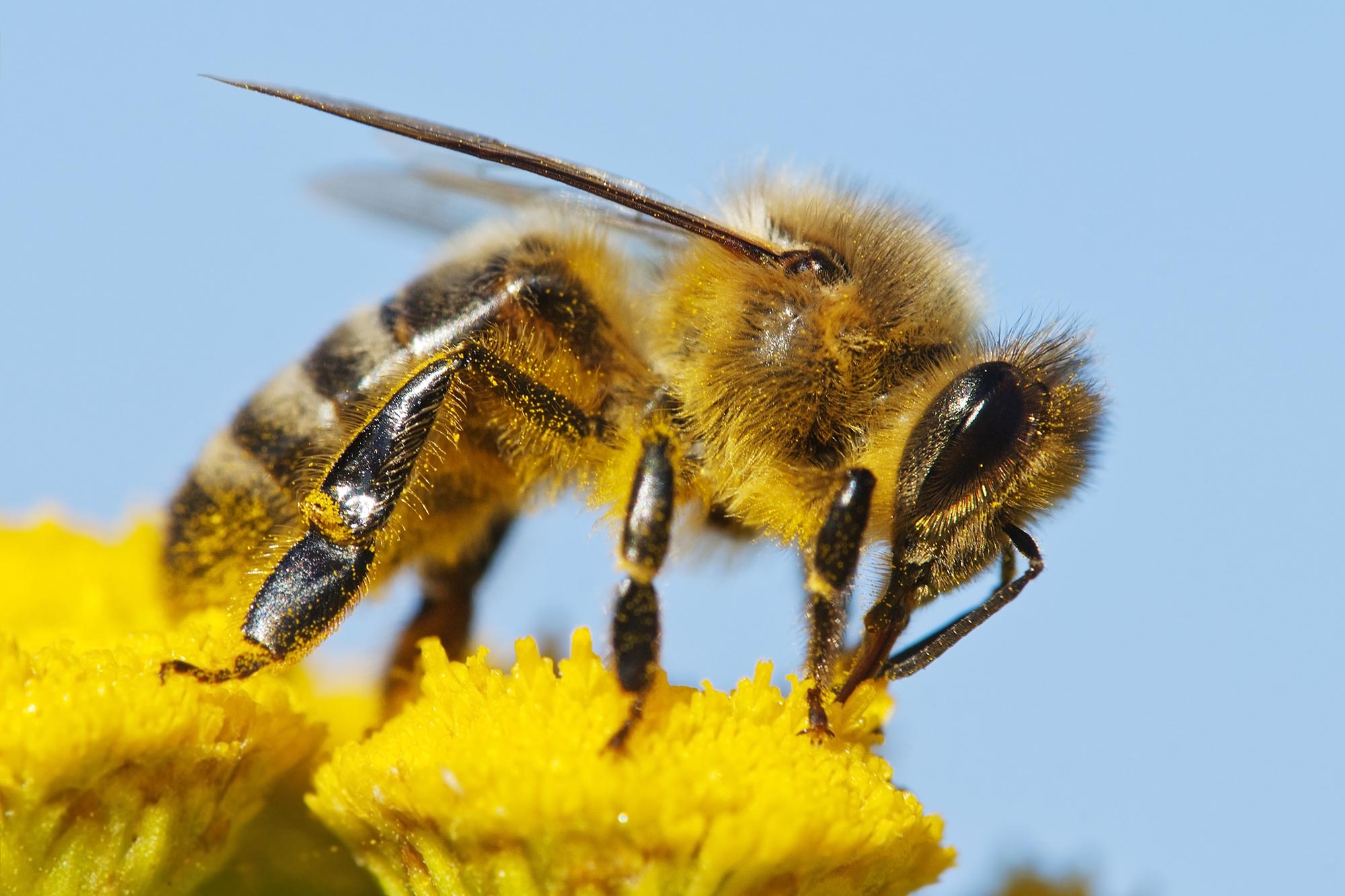
    Honey Bee Pollinated Yellow Flower
    Researchers tracked honey bees in a natural agricultural landscape using a high-speed drone-based system, revealing remarkably precise and individualized flight paths between hive and food source. The findings suggest that bees rely heavily on visual landmarks to navigate, maintaining consistent routes with minimal deviation even across repeated trips. Credit: Shutterstock

    Honeybees fly consistent, landmark-guided routes with remarkable precision, revealing better navigation than their waggle dance suggests.

    A research team at the University of Freiburg, led by neurobiologist and behavioral biologist Prof. Dr. Andrew Straw, investigated how honey bees fly between their hive and a nearby food source. Using a drone, the scientists tracked bees traveling through an agricultural landscape over a distance of about 120 meters (394 feet).

    To follow each bee’s route, the team used the “Fast Lock-On (FLO) Tracking” method developed in Straw’s lab. This technique involves placing a tiny reflective marker on the insect. A computer mounted on the drone then analyzes reflected light to detect the bee within milliseconds and continuously monitor its position.
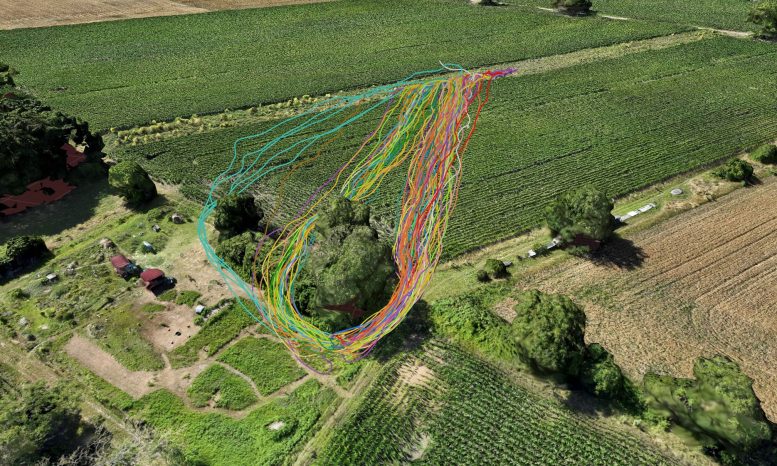
    Colored Flight Paths of Bees
    Colored flight paths show the individual routes taken by honeybees in an agricultural landscape: The insects orient themselves using landmarks such as groups of trees and fly to familiar destinations with great precision. Credit: Andrew Straw

    The findings reveal that every honeybee follows its own distinct path and repeats it with remarkable precision on both outbound and return trips. The bees rely on visual features in the environment to guide their navigation.

    “Our tracking system makes it possible for the first time to record high-resolution 3D flight paths of honey bees in natural landscapes,” explains Straw. “Our recordings show that each bee has its own preferred route and flies it very precisely. You could almost say that each bee has its own personality.”
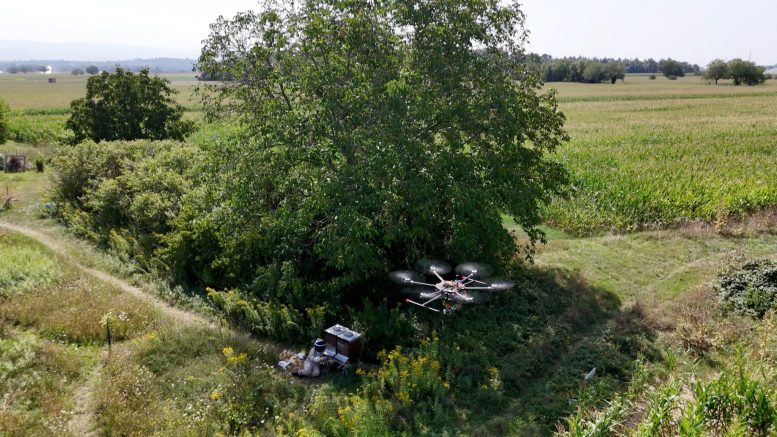
    Drone at University of Freiburg
    A team from the University of Freiburg shows that honeybees fly individually chosen routes with high precision. Credit: Andrew Straw

    Precision Navigation and the Role of Landmarks

    The researchers analyzed 255 flight paths near the Kaiserstuhl region in Germany. This agricultural area includes hedges, a cornfield, and a tree that blocks the direct line between the hive and the food source. “We found a high degree of precision in the flight paths. Individual bees repeated their individual flight paths nearly exactly on several flights. They often fly just a few centimeters away from their previous paths,” Straw emphasizes.
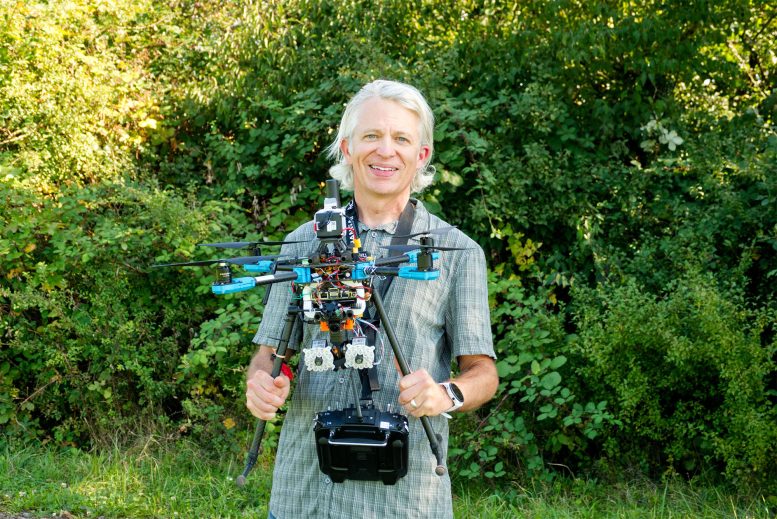
    Andrew Straw
    Prof. Dr. Andrew Straw. Credit: University of Freiburg

    The smallest deviations occurred near prominent features such as the tree. In contrast, the greatest variation appeared over the cornfield, where the scenery is visually uniform.

    “Our results suggest that visual landmarks aid the bees’ navigation and increase the precision of their flight paths,” explains Straw. In contrast, the bees’ uncertainty increases in visually monotonous environments.

    The study also sheds new light on the waggle dance, the behavior bees use to communicate the location of food sources. “It was previously known that the directional information in the waggle dance is not entirely accurate,” explains Straw. For food sources approximately 100 metres away, the directional information in the waggle dance can deviate by around 30 degrees.
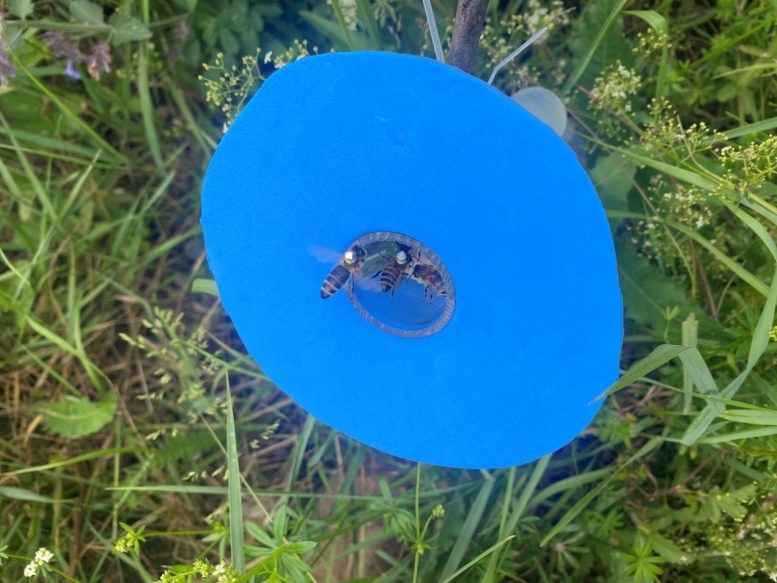
    Honeybees Equipped With Small Reflector Markers
    Honeybees equipped with small reflector markers enable precise tracking of their flight paths—the results show that individual bees navigate to known destinations much more accurately than the directional information provided by the waggle dance would suggest. Credit: Andrew Straw

    Rethinking the Accuracy of the Waggle Dance

    “Our research has shown that individual bees navigate much more accurately to destinations they are familiar with. Even where their flight paths vary most, they deviate from their individual route by only a few degrees,” says Straw.

    “Our results allow us to conclude that the inaccuracy of the waggle dance is not due to the bees’ limited navigational abilities. Rather, individual animals are spatially much more accurately oriented than their dance communication would suggest,” he concludes.

    Reference: “Precise, individualized foraging flights in honeybees revealed by multicopter drone-based tracking” by Rachael Stentiford, Michael J.M. Harrap, Victor V. Titov, Stephan Lochner and Andrew D. Straw, 16 February 2026, Current Biology.
    DOI: 10.1016/j.cub.2026.01.045

    Never miss a breakthrough: Join the SciTechDaily newsletter.
    Follow us on Google and Google News.

    Animals Bees Entomology Insect University of Freiburg
    Share. Facebook Twitter Pinterest LinkedIn Email Reddit

    Related Articles

    These Bumblebees Learned to Read “Dots” and “Dashes” Like Morse Code

    New Pollen-Replacing Food Could Save Bee Colonies Worldwide

    Buzzing Discovery: European Scientists Uncover New Bee Species in an Unexpected Place

    Giant Hornet Attacks Cause Honeybee Alarm Buzz in Hives – “I Literally Could Not Believe What I Was Hearing”

    Katydid Ears Have Structures Similar to Mammalian Ones

    Common Pesticides Are Severely Affecting Bees

    Honeybees Switch Roles within the Hive

    Imidacloprid, A Major Factor in Colony Collapse Disorder

    Haemaphysalis Flava Hardy Enough to Survive Vacuum and Electron Beam

    Leave A Reply Cancel Reply

    • Facebook
    • Twitter
    • Pinterest
    • YouTube

    Don't Miss a Discovery

    Subscribe for the Latest in Science & Tech!

    Trending News

    The Universe Is Expanding Too Fast and Scientists Can’t Explain Why

    “Like Liquid Metal”: Scientists Create Strange Shape-Shifting Material

    Early Warning Signals of Esophageal Cancer May Be Hiding in Plain Sight

    Common Blood Pressure Drug Shows Surprising Power Against Deadly Antibiotic-Resistant Superbug

    Scientists Uncover Dangerous Connection Between Serotonin and Heart Valve Disease

    Scientists Discover a “Protector” Protein That Could Help Reverse Hair Loss

    Bone-Strengthening Discovery Could Reverse Osteoporosis

    Scientists Uncover Hidden Trigger Behind Stem Cell Aging

    Follow SciTechDaily
    • Facebook
    • Twitter
    • YouTube
    • Pinterest
    • Newsletter
    • RSS
    SciTech News
    • Biology News
    • Chemistry News
    • Earth News
    • Health News
    • Physics News
    • Science News
    • Space News
    • Technology News
    Recent Posts
    • Scientists Overcome Major Quantum Bottleneck, Potentially Transforming Teleportation and Computing
    • Quantum Physics’ Strangest Problem May Hold the Key to Time Itself
    • Scientists Create “Liquid Gears” That Spin Without Touching
    • The Simple Habit That Could Help Prevent Cancer
    • Forgotten Medicinal Plant Shows Promise in Fighting Dangerous Superbugs
    Copyright © 1998 - 2026 SciTechDaily. All Rights Reserved.
    • Science News
    • About
    • Contact
    • Editorial Board
    • Privacy Policy
    • Terms of Use

    Type above and press Enter to search. Press Esc to cancel.