
Close Menu
    Facebook X (Twitter) Instagram
    SciTechDaily
    • Biology
    • Chemistry
    • Earth
    • Health
    • Physics
    • Science
    • Space
    • Technology
    Facebook X (Twitter) Pinterest YouTube RSS
    SciTechDaily
    Home»Biology»These Bumblebees Learned to Read “Dots” and “Dashes” Like Morse Code
    Biology

    These Bumblebees Learned to Read “Dots” and “Dashes” Like Morse Code

    By Queen Mary University of LondonNovember 17, 20251 Comment5 Mins Read
    Facebook Twitter Pinterest Telegram LinkedIn WhatsApp Email Reddit
    Share
    Facebook Twitter LinkedIn Pinterest Telegram Email Reddit
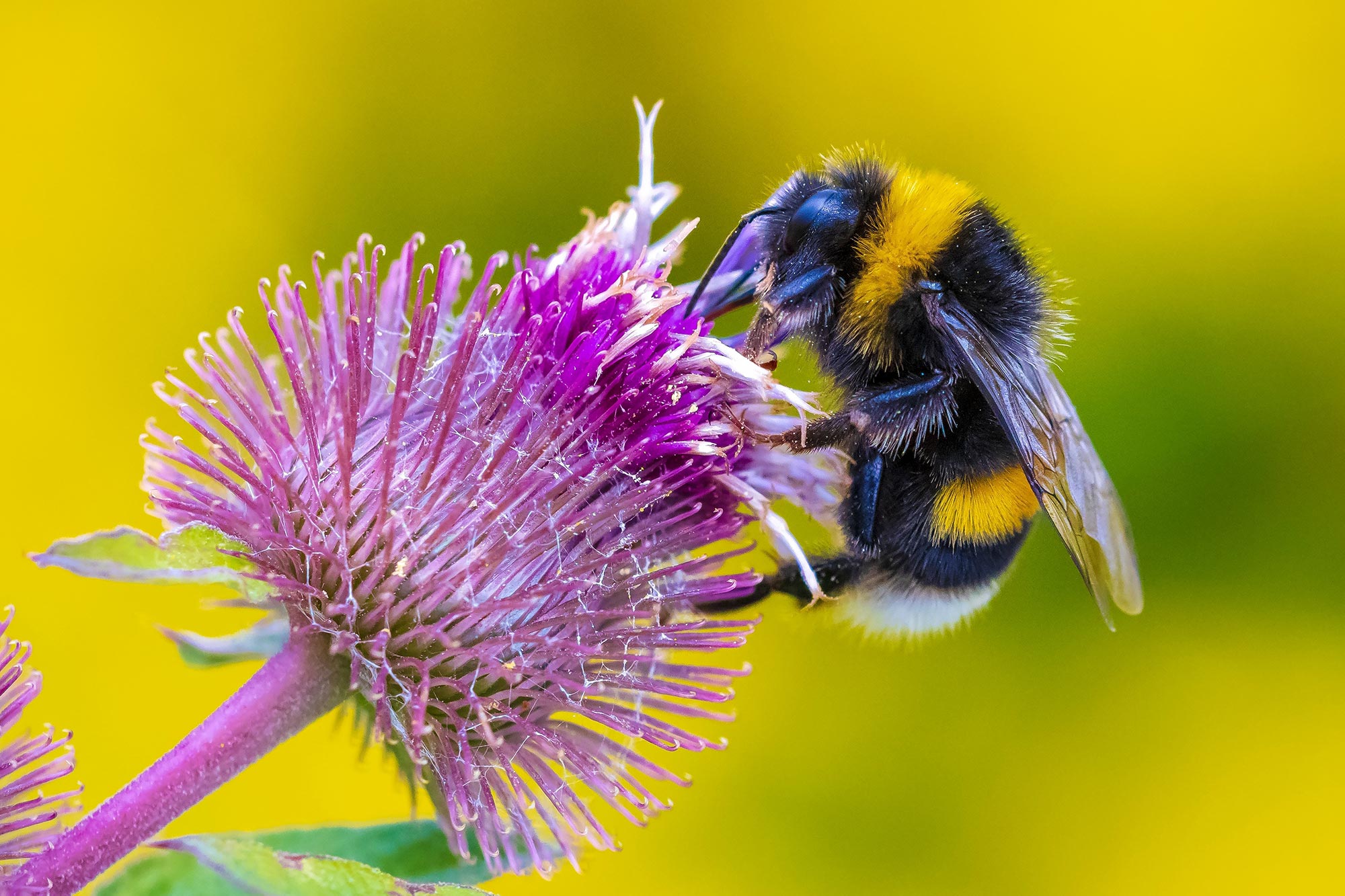
    Bumblebee (Bombus terrestris) Feeding Nectar Pink Flowers
    A new study shows that bumblebees can distinguish between long and short flashes of light, a skill previously seen only in humans and certain vertebrates. Credit: Shutterstock

    A study shows that bumblebees can be trained to tell the difference between long and short light flashes.

    Researchers at Queen Mary University of London have discovered, for the first time, that an insect can choose where to search for food by evaluating how long a light cue lasts. The study focused on the bumblebee Bombus terrestris, revealing that these insects can make foraging decisions based on the duration of a visual signal.

    In Morse code, a brief flash or ‘dot’ represents the letter ‘E’, while a longer flash, or ‘dash’, represents the letter ‘T’. The ability to tell these two signals apart had previously been documented only in humans and a few vertebrate species, including macaques and pigeons.

    Their findings were recently published in the journal Biology Letters.

    PhD student Alex Davidson and his supervisor, Dr Elisabetta Versace, Senior Lecturer in Psychology at Queen Mary, directed the project exploring this capacity in bees. The team created a custom maze where each bee learned to locate a sugar reward at one of two circles that emitted either long or short flashes. In training sessions, a short flash or ‘dot’ signaled sugar, while the long flash or ‘dash’ indicated a bitter solution that bees naturally avoid.
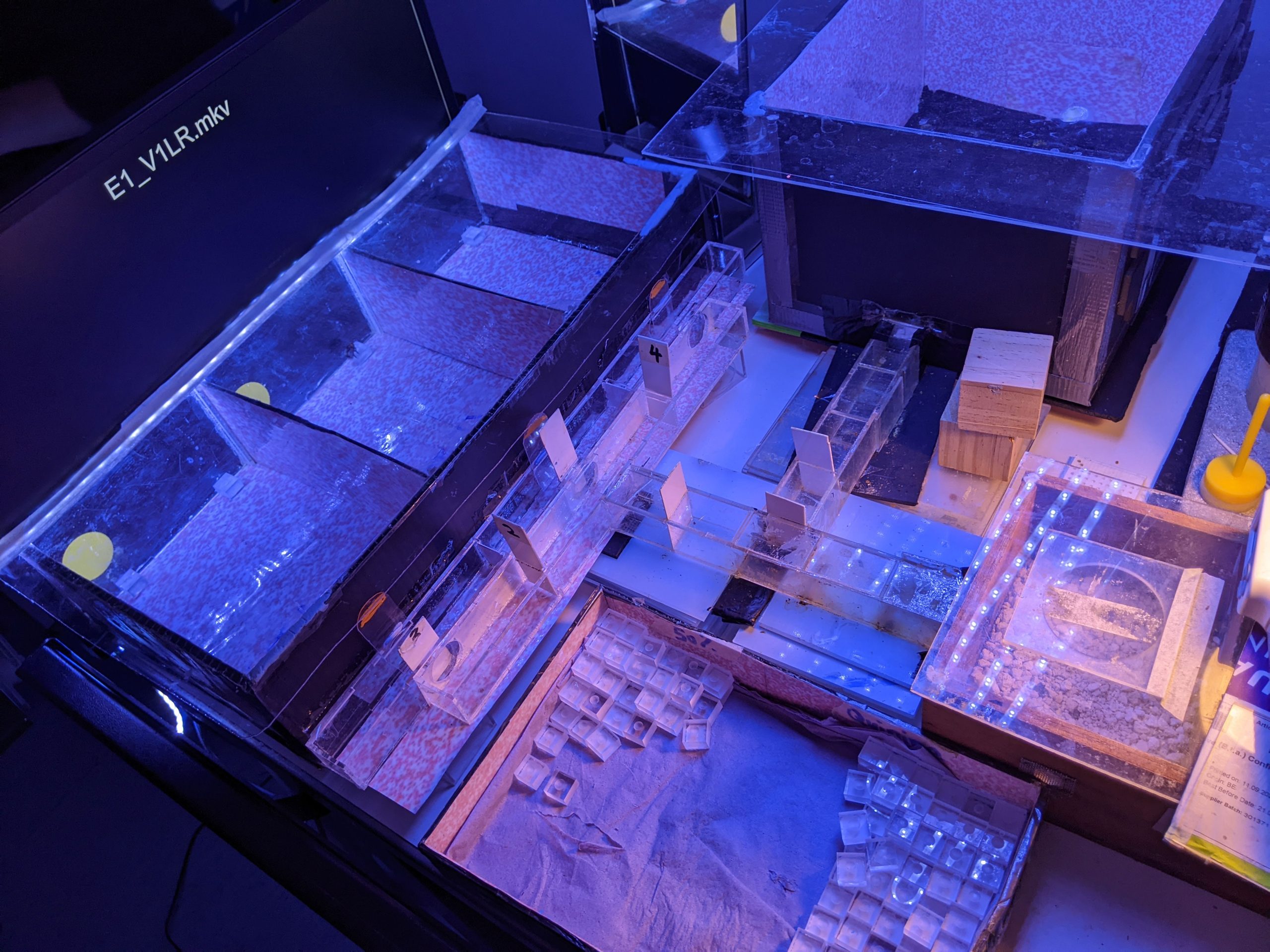
    Experimental Apparatus Morse Code Bees
    Experimental Apparatus. On the right is the wooden nest box where bees live. It is connected by acrylic tunnels to the observation chamber at the top of the picture and the three experimental compartments on the left. Bees feed in the observation chamber and those bees that were motivated to feed (active foragers) were chosen for experiments. The experimental compartments are where the bees were presented with the stimuli and solutions (sugar or bitter quinine during training and water during test). Credit: Alex Davidson, Queen Mary University of London

    Controlling for Position and Other Cues

    In every section of the maze, the researchers shifted the locations of the ‘dot’ and ‘dash’ signals. This prevented the bees from using simple positioning to guide their decisions. Once the bees consistently headed toward the flashing circle linked to sugar, the team introduced a new test. The lights continued to flash, but no sugar was available. This allowed the researchers to determine whether the bees were choosing based on the light itself rather than any scent or visual trace left by the reward.

    The results showed that the bees had indeed learned to identify the lights by how long they flashed. Most bees moved directly to the flashing duration that had previously indicated sugar, even when its position in the maze changed.
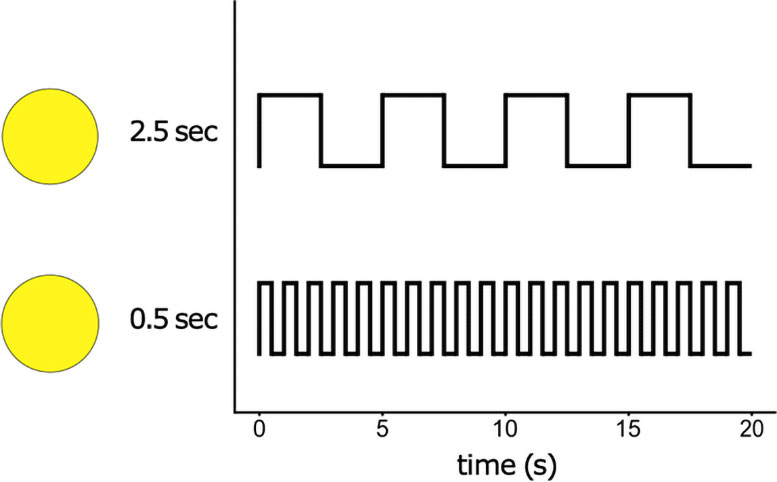
    Stimuli Infographic Morse Code Bees
    Stimuli. The stimuli are yellow circles, as shown on the left of the picture, that flash on and off for different durations. A schematic of the on (peaks) and off (troughs) states for both stimuli are shown. This representation is taken from the second experiment in which the total amount of light was equal over a five second cycle (2.5 seconds in the on state for each stimulus). Credit: Alex Davidson, Queen Mary University of London

    Alex Davidson said: “We wanted to find out if bumblebees could learn to the difference between these different durations, and it was so exciting to see them do it.”

    “Since bees don’t encounter flashing stimuli in their natural environment, it’s remarkable that they could succeed at this task. The fact that they could track the duration of visual stimuli might suggest an extension of a time processing capacity that has evolved for different purposes, such as keeping track of movement in space or communication.”

    “Alternatively, this surprising ability to encode and process time duration might be a fundamental component of the nervous system that is intrinsic in the properties of neurons. Only further research will be able to address this issue.”

    Understanding How Insects Track Time

    The neural mechanisms involved in the ability to keep track of time for these durations remain mostly unknown, as the mechanisms discovered for entraining with the daylight cycle (circadian rhythms) and seasonal changes are too slow to explain the ability to differentiate between a ‘dash’ and a ‘dot’ with different durations.
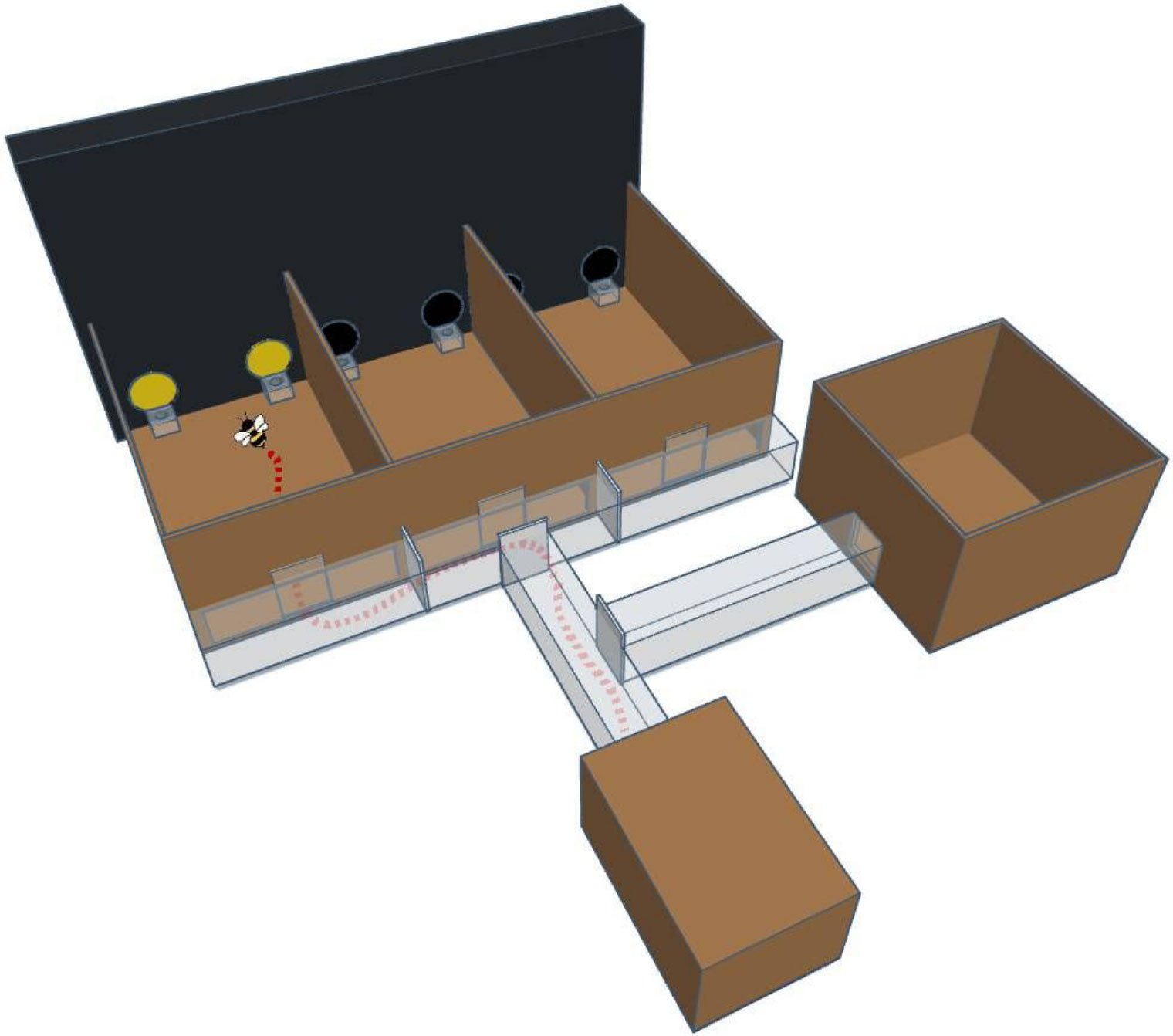
    3D Model of the Experimental Apparatus Morse Code Bees
    3D model of experimental apparatus. A bee is doing an experimental trial. Its route from the nest box is traced in red through removable plastic doors. In the first experimental compartment the stimuli are displayed on the monitor and plastic chips hold the associated solution (sugar or bitter quinine during training and water during test). The first attempt at feeding from one of the chips is recorded as a choice of stimulus. The bee will continue to the next two compartments for the next trials so that each foraging bout includes three trials. Credit: Alex Davidson, Queen Mary University of London

    Various theories have been put forward, suggesting the presence of a single or multiple internal clocks. Now that the ability to differentiate between durations of flashing lights has been discovered in insects, researchers will be able to test different models in these ‘miniature brains’ smaller than one cubic millimeter.

    Elisabetta Versace continued: “Many complex animal behaviors, such as navigation and communication, depend on time processing abilities. It will be important to use a broad comparative approach across different species, including insects, to shed light on the evolution of those abilities. Processing durations in insects is evidence of a complex task solution using minimal neural substrate. This has implications for complex cognitive-like traits in artificial neural networks, which should seek to be as efficient as possible to be scalable, taking inspiration from biological intelligence.”

    Reference: “Duration discrimination in the bumblebee Bombus terrestris” by Alexander Davidson, Ishani Nanda, Anita Ong, Lars Chittka and Elisabetta Versace, 31 October 2025, Biology Letters.
    DOI: 10.1098/rsbl.2025.0440

    Never miss a breakthrough: Join the SciTechDaily newsletter.
    Follow us on Google and Google News.

    Bees Entomology Insect Queen Mary University of London
    Share. Facebook Twitter Pinterest LinkedIn Email Reddit

    Related Articles

    Scientists Track Bees in 3D and Discover Remarkable Secret Navigation Skills

    New Pollen-Replacing Food Could Save Bee Colonies Worldwide

    Buzzing Discovery: European Scientists Uncover New Bee Species in an Unexpected Place

    Scientists Discover Gut Bacteria in Bees That Can Improve Memory

    Giant Hornet Attacks Cause Honeybee Alarm Buzz in Hives – “I Literally Could Not Believe What I Was Hearing”

    Common Pesticides Are Severely Affecting Bees

    Honeybees Switch Roles within the Hive

    Imidacloprid, A Major Factor in Colony Collapse Disorder

    Haemaphysalis Flava Hardy Enough to Survive Vacuum and Electron Beam

    1 Comment

    1. Jennifer on November 17, 2025 12:38 pm

      I think the researchers are overthinking things. I don’t think the bees have any sense of time. They just go from past experiences (in the study) of dealing with something that flashes a lot vs. something that flashes less. That’s even how I would think of it in that situation. I would think, wow, look how much that one is flashing and I got sugar from it before, let’s try it again. I get sugar. I see one that is not flashing as much and I get bitter stuff from it. Going to stay away from the lights that are not flashing very much. Time doesn’t enter into the thinking. I’ve simply learned to avoid the light that isn’t flashing a lot, and go to the one that is flashing a lot.

      Reply
    Leave A Reply Cancel Reply

    • Facebook
    • Twitter
    • Pinterest
    • YouTube

    Don't Miss a Discovery

    Subscribe for the Latest in Science & Tech!

    Trending News

    One of the Universe’s Largest Stars May Be Getting Ready To Explode

    Scientists Discover Enzyme That Could Supercharge Ozempic-Like Weight Loss Drugs

    Popular Sweetener Linked to DNA Damage – “It’s Something You Should Not Be Eating”

    Ancient “Rock” Microbes May Reveal How Complex Life Began

    Researchers Capture Quantum Interference in One of Nature’s Rarest Atoms

    “A Plague Is Upon Us”: The Mass Death That Changed an Ancient City Forever

    Scientists Discover Game-Changing New Way To Treat High Cholesterol

    This Small Change to Your Exercise Routine Could Be the Secret to Living Longer

    Follow SciTechDaily
    • Facebook
    • Twitter
    • YouTube
    • Pinterest
    • Newsletter
    • RSS
    SciTech News
    • Biology News
    • Chemistry News
    • Earth News
    • Health News
    • Physics News
    • Science News
    • Space News
    • Technology News
    Recent Posts
    • New Study Challenges 40-Year Puzzle About Childhood Body Fat
    • 20-Year Study Finds Daily Multivitamins Don’t Extend Lifespan
    • Landmark Study Links Never Marrying to Significantly Higher Cancer Risk
    • Revolutionary Imaging Technique Unlocks Secrets of Matter at Extreme Speeds
    • Where Does Mass Come From? Scientists Find Evidence of a New Exotic Nuclear State
    Copyright © 1998 - 2026 SciTechDaily. All Rights Reserved.
    • Science News
    • About
    • Contact
    • Editorial Board
    • Privacy Policy
    • Terms of Use

    Type above and press Enter to search. Press Esc to cancel.