
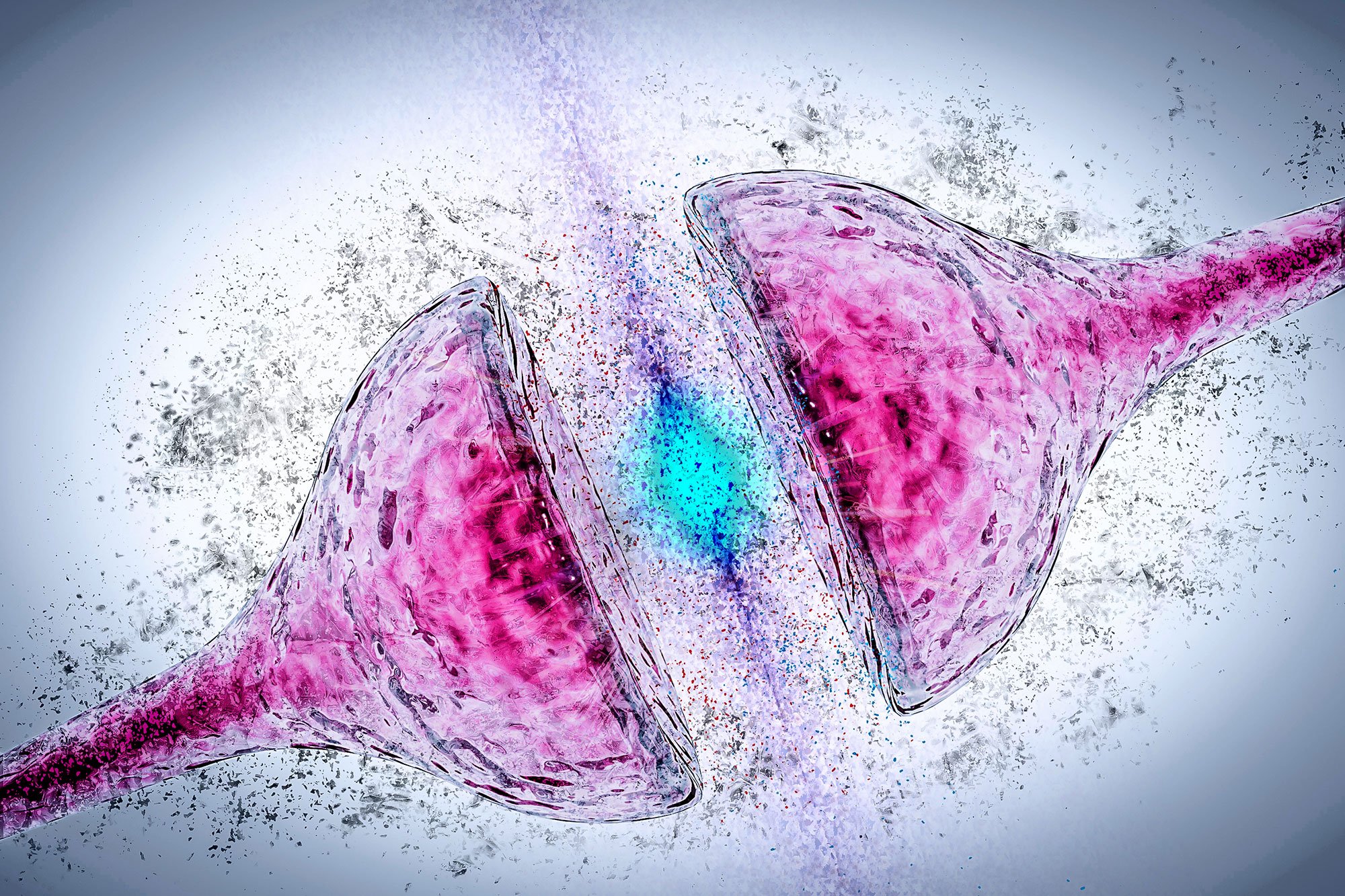
Researchers have discovered a defect in how cells produce exosomes, a problem linked to a mutation found in patients with dementia.
They may be incredibly small, but their impact on human health could be enormous. Scientists at Aarhus University have discovered a flaw in how cells produce tiny particles known as exosomes, linked to a genetic mutation found in people with dementia. The finding could offer new insight into how Alzheimer’s develops and point the way toward potential treatments.
Exosomes are so minute that millions could fit on the tip of a grain of rice, yet their influence inside the body may be far from insignificant. According to new research from the Department of Biomedicine at Aarhus University, these particles appear to play a significant role in Alzheimer’s disease. Assistant Professor Kristian Juul-Madsen, one of the study’s authors, shared the results recently published in the scientific journal Alzheimer’s & Dementia: The Journal of the Alzheimer’s Association.
“Exosomes are used to communicate with and activate surrounding cells, and we have now identified a defect in both the production and the quality of exosomes in cells that we know are predisposed to Alzheimer’s.”
A Genetic Link: The SORL1 Gene
So far, researchers have identified four major genes connected to inherited forms of Alzheimer’s. To understand the new findings, it helps to look more closely at one of these genes, known as Sorl1. This gene produces a protein called SORLA, which appears to play a crucial role in maintaining healthy brain cell function.

And when the SORLA-protein mutates, there is a risk of developing Alzheimer’s. What Kristian Juul-Madsen and his research colleagues have now discovered is that if the SORLA-protein is defective, the brain cells become significantly worse at producing exosomes.
“We found that cells with this mutation produced 30% fewer exosomes, and those that were produced were significantly worse at stimulating the growth and maturation of surrounding cells – in fact, up to 50% less effective than in cells where the SORLA-protein is not mutated.”
Toward Future Treatments
And this could be crucial for future Alzheimer’s research, he says.
“It tells us that exosomes produced particularly by the brain’s immune cells play an important role in maintaining brain health – and that mutations leading to fewer and poorer quality exosomes are associated with increased risk of Alzheimer’s.”
Kristian Juul-Madsen hopes that the research findings may eventually lead to improved treatment of Alzheimer’s.
“The potential is very clear. We now have the opportunity to investigate new treatments for Alzheimer’s – either by stimulating the function of SORLA so that the cells produce more and better exosomes, or by targeting other known receptors that can enhance exosome production.”
Alzheimer’s is the most common form of age-related dementia in Denmark. It is estimated that around 55,000 Danes are affected, and there is currently no treatment for the disease.
Reference: “Familial Alzheimer’s disease mutation identifies novel role of SORLA in release of neurotrophic exosomes” by Kristian Juul-Madsen, Ina-Maria Rudolph, Jemila P. Gomes, Katrina Meyer, Peter L. Ovesen, Malgorzata Gorniak-Walas, Marianna Kokoli, Narasimha S. Telugu, Malthe von Tangen Sivertsen, Fabia Febbraro, Duncan S. Sutherland, Johan Palmfeldt, Sebastian Diecke, Olav M. Andersen, Matthias Selbach and Thomas E. Willnow, 10 September 2025, Alzheimer’s & Dementia.
DOI: 10.1002/alz.70591
The study was primarily supported by an LF postdoctoral grant from the Lundbeck Foundation (R380-2021-1326) awarded to Kristian Juul-Madsen, and by a Laureate grant from the Novo Nordisk Foundation (NNF18OC0033928) and a research grant from the Alzheimer Forschung Initiative (18003) awarded to Prof. Thomas Willnow.
Never miss a breakthrough: Join the SciTechDaily newsletter.
Follow us on Google and Google News.