
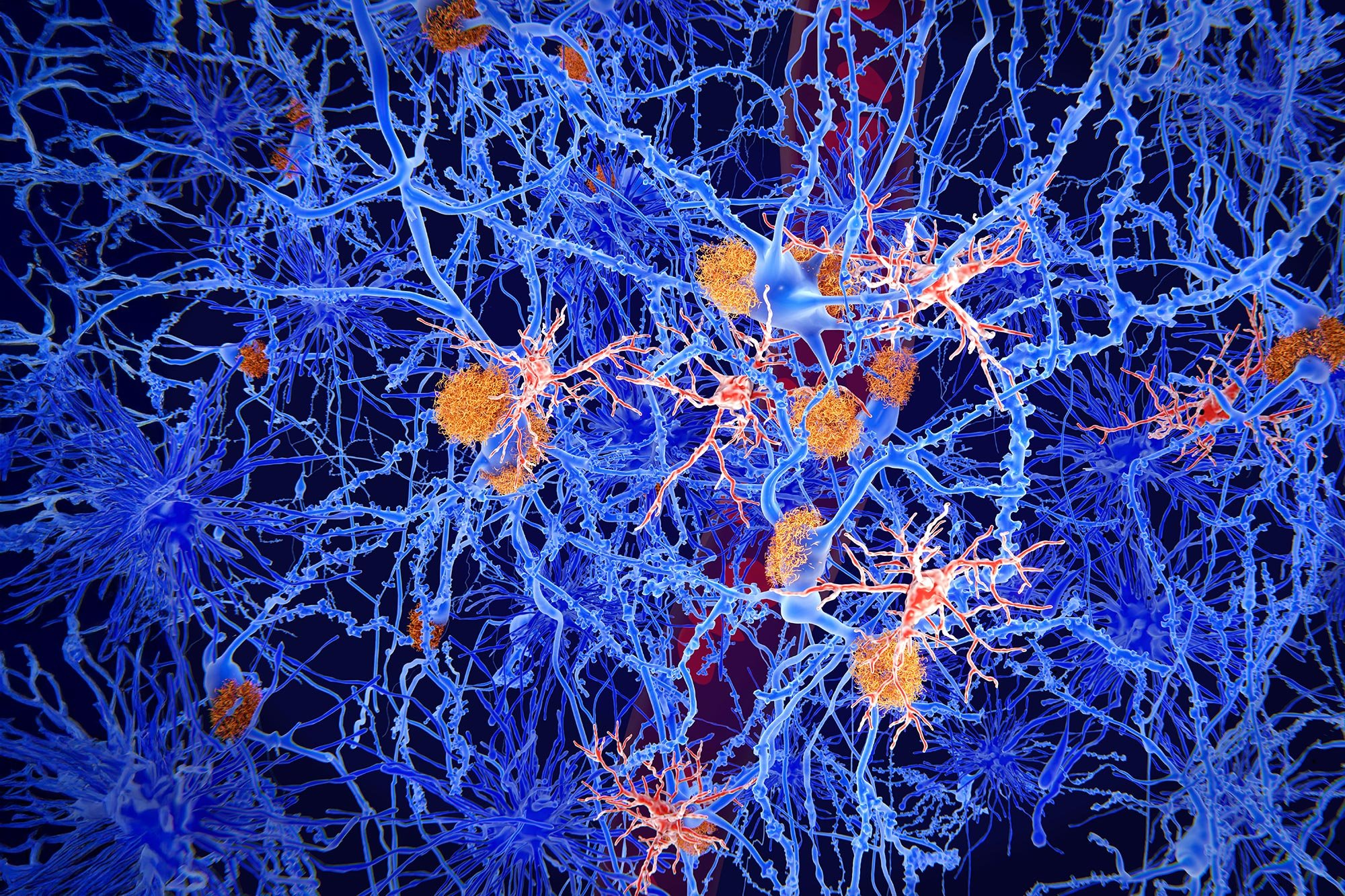
Stopping Alzheimer’s may begin with dissolving tiny tau protein clusters before damage takes hold.
Scientists at Tokyo Metropolitan University have turned to polymer physics to better understand one of the defining features of Alzheimer’s disease: the formation of tau protein fibrils. Their research shows that these fibrils do not form directly. Instead, tau proteins first gather into large clusters, similar to how polymers begin to crystallize. When researchers disrupted these early clusters, fibrils failed to develop in solution.
This finding points to a major shift in how future treatments for neurodegenerative diseases might be designed.
Why Alzheimer’s Remains So Difficult to Treat
Alzheimer’s disease (AD) remains one of the most complex and challenging disorders facing researchers today. Understanding how it progresses and finding effective treatments have proven difficult, especially as aging populations worldwide increase the number of people affected.
While much of the research has focused on pharmacology and traditional medical approaches, the intricate nature of AD has pushed scientists to draw on ideas from outside disciplines to uncover new perspectives and solutions.
Using Polymer Crystallization to Understand Tau Fibrils
A research group led by Professor Rei Kurita applied principles from polymer physics to study how tau protein fibrils form in AD. Polymers, which are long chain-like molecules, often organize themselves into crystals through a multi-step process. Rather than growing crystal structures one strand at a time, polymers frequently pass through intermediate stages known as “precursor” structures before settling into an ordered form.
Using this framework, the team investigated tau proteins in solution and confirmed that fibril formation (or fibrillization) follows a similar pattern. Before fibrils appear, tau proteins assemble into loose clusters measuring tens of nanometers. These precursor structures were detected using multiple independent methods, including small angle X-ray scattering and fluorescence-based techniques.
Disrupting Tau Clusters Stops Fibril Formation
The researchers found that these precursor clusters are not rigid solids but flexible, short-lived assemblies. By adjusting sodium chloride levels in the presence of heparin, a naturally occurring anticoagulant in the human body, the team was able to dissolve these clusters. When the clusters were removed or prevented from forming, fibrils were almost entirely absent.
The researchers suggested that higher concentrations of charged ions weaken the interaction between tau proteins and heparin, making cluster formation more difficult. This occurs because charged molecules such as tau and heparin become less able to interact due to electrostatic “screening,” which effectively masks their charges from one another.
A New Direction for Treating Neurodegenerative Disease
These results point toward a different strategy for developing therapies. Rather than attempting to break apart fully formed tau fibrils, future treatments could focus on blocking the reversible precursor stage before irreversible damage takes place. This approach could have implications beyond Alzheimer’s disease, potentially influencing research into other neurodegenerative disorders, including Parkinson’s disease.
Reference: “Hindering tau fibrillization by disrupting transient precursor clusters” by Tomomi Takahashi, Takashi Nonaka, Reiko Ohtani, Masato Hasegawa, Yukiko Hori, Taisuke Tomita and Rei Kurita, 1 October 2025, Neuroscience Research.
DOI: 10.1016/j.neures.2025.104968
This work was supported by JST SPRING Program Grant Number JPMJSP2156, JSPS KAKENHI Grant Numbers 22K07362, 25K21773, 24H00624, 22H05036, 23K21357, 25K02405, 23H00394, 23KK0133, and 20H01874, JST Moonshot R&D Program Grant Number JPMJMS2024, and AMED Grant Number 24wm0625303 and 25dk0207073.
Never miss a breakthrough: Join the SciTechDaily newsletter.
Follow us on Google and Google News.
2 Comments
Do people taking heparin for other problems long term have a lower rate of AD?
When can I get more info for me and my doctor and start this drug? My mom and her sisters had Alzheimers. I’m beginning to forget suff
Please allow to be a guinea pig and try tihis new drug