
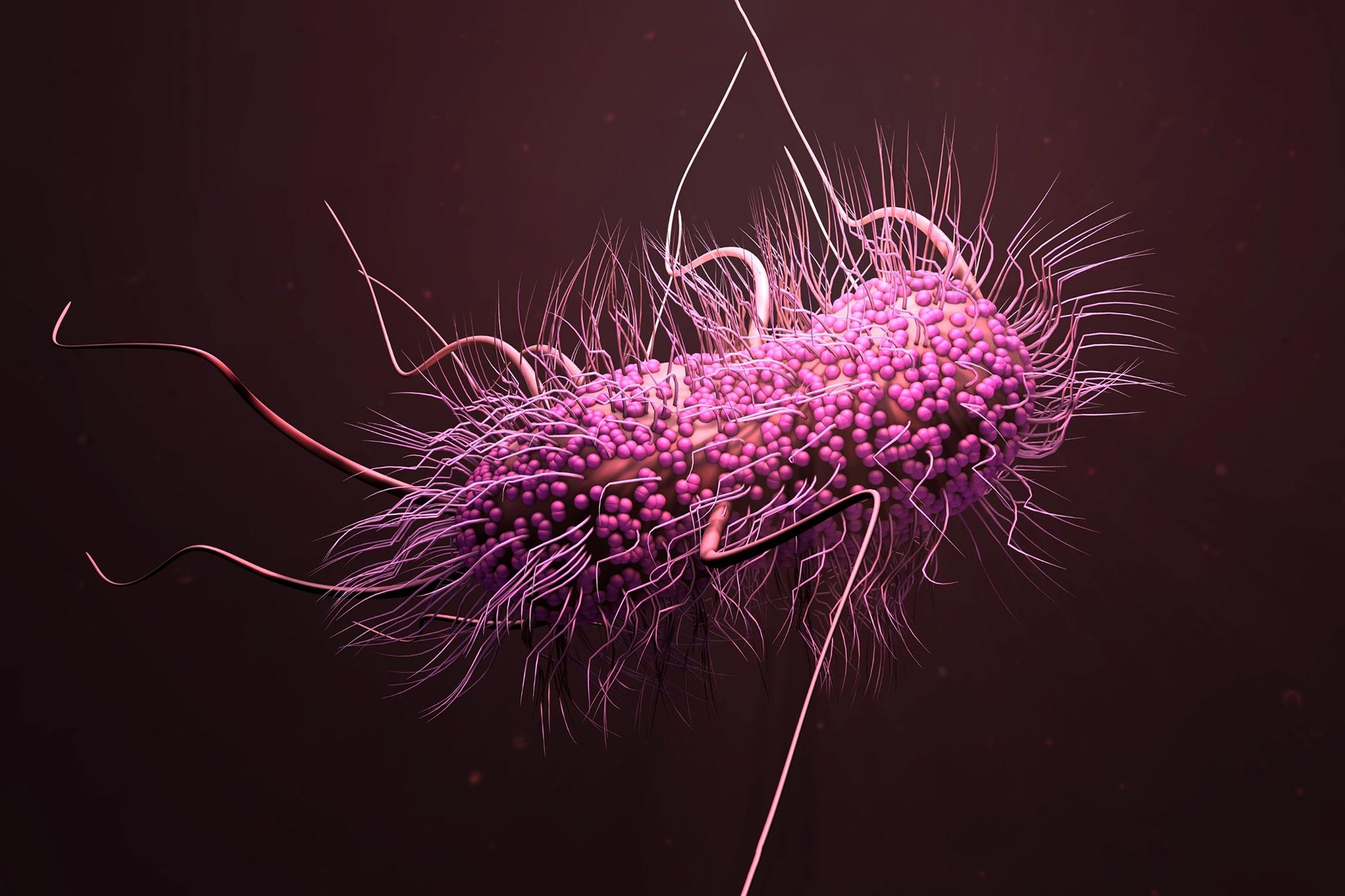
The largest epidemiological study to date on multidrug-resistant Klebsiella pneumoniae in Saudi hospitals highlights the need for a tailored health strategy specific to Saudi Arabia.
A new multi-institutional study led by King Abdullah University of Science and Technology (KAUST) in collaboration with the Saudi Ministry of Health (MOH) presents the most comprehensive epidemiological analysis to date of Klebsiella pneumoniae in Saudi Arabia.
This multidrug-resistant bacterium is a leading cause of hospital-acquired infections globally and is recognized by the World Health Organization as a major public health threat. The study reveals that the bacterial strains in Saudi Arabia are genetically distinct from those in other regions, highlighting the need for tailored health policies to address this unique microbial diversity.
Although Klebsiella pneumoniae infections in healthy individuals typically cause mild symptoms, the bacterium poses a severe risk to sick or immunocompromised patients, potentially leading to life-threatening conditions such as pneumonia and meningitis. Antibiotics are the primary treatment for these infections, but the global rise of multidrug-resistant strains—driven by the overuse of antibiotics in healthcare and industries like agriculture—has made treatment increasingly difficult in recent decades.
“Klebsiella pneumoniae has a dynamic genome allowing for the emergence of pathogenic strains from non-pathogenic ones. Understanding the epidemiology for emerging pathogenic strains will strengthen preventive measures,” explained KAUST Assistant Professor Danesh Moradigaravand, one of the lead authors of the study.
Genetic Adaptation and Growing Threats
A single bacteria species evolves by cloning and exchanging genetic information with one another through processes like gene recombination and horizontal gene transfer. A dynamic genome allows for antibiotic resistance genes to rapidly mix between strains. Already, antibiotic resistant bacteria are the sixth leading cause of death in the Kingdom, killing more people than several respiratory illnesses and neurological disorders. However, the number of patients is growing, and any one clone developing strong resistance and virulence could cause catastrophic havoc due to the inability to contain and treat.
Indeed, concern about the emergence of drug-resistant strains has led the Saudi Public Health Authority to propose an action plan for the execution and evaluation of interventions, with Klebsiella pneumoniae being one of the priority bacteria targeted. Last year, KAUST and the MOH began its collaboration to support this initiative by combining the advanced capabilities of genomics and data science at KAUST with the unique biobanks of multidrug-resistant bacteria at the MOH.
For the study, the researchers collected samples from 34 hospitals across 15 cities in Saudi Arabia on which they conducted a comprehensive genomic analysis.
Moradigaravand, KAUST Professor Arnab Pain and their colleagues found the most prevalent strains of Klebsiella pneumoniae genetically resemble strains from the Middle East and South Asia, revealing an exchange and spread in this region. More important from a health perspective, they also found that the molecular factors bestowing the bacteria drug resistance and virulence were converging, thus giving concern that the emergence of drug resistance is being accompanied by a severity of symptoms.
“The unique epidemiology observed in Saudi Arabia underscores the necessity for tailored surveillance programs specific to each country. Furthermore, our work emphasizes the need to develop new antimicrobial agents, as current global treatments may not adequately address the local threat,” said Moradigaravand.
Reference: “The dissemination of multidrug-resistant and hypervirulent Klebsiella pneumoniae clones across the Kingdom of Saudi Arabia” by Jiayi Huang, Ahmed Yousef Alhejaili, Usamah Hussein Alkherd, Mathew Milner, Ge Zhou, Deema Alzahrani, Manuel Banzhaf, Albandari A. Alzaidi, Ahmad A. Rajeh, Maram Abdulmohsen Al-Otaiby, Sarah S. Alabbad, Doua Bukhari, Abdullah N. Aljurayan, Alanoud T. Aljasham, Zeyad A. Alzeyadi, Sulaiman M. Alajel, Pei-Ying Hong, Majed Alghoribi, Mashal M. Almutairi, Arnab Pain, Waleed Al Salem and Danesh Moradigaravand, 21 November 2024, Emerging Microbes & Infections.
DOI: 10.1080/22221751.2024.2427793
The study was supported by the KAUST Center of Excellence for Smart Health.
Never miss a breakthrough: Join the SciTechDaily newsletter.
Follow us on Google and Google News.
5 Comments
Everyone’s way to dependent on antibiotics there are natural remedies against many forms of bacteria virus that don’t rely on antibiotics.
One a strong immune system made stronger by limited exposure to lesser things. Of similar natures example if exposed to cowpox people didn’t get that sick from small pox
Aqueduct silver. Kills many bacteria and viruses and it’s not a medicine it’s a metal byproduct
Anti microbials like hydrogen peroxide. Food grade.
Or vitamins and minerals and nutrients and fasting. A clean gut with probiotics added flushed absorbs more immune boosting things than a person with impacted gecal mater in intestinal or stomach lining
Herbs to enhance organs. To increase production or to fight off immunological attacks.
Herbs to treat bad symthoms aloe Vera juice used to calm inflammation responses to inflamed lungs or other organs.
Natural immune boosters echinacea garlic honey sugar alkaline water
Protein in diets Iron vitamin suplimentscto help red blood cells carry oxygen
Brandy alcohol with lemon green tea and honey and salt
Natural citrus fruits
Turmeric. Onions vinegar with mother apple cider type
Cheyanne pepper. Black pepper. My list goes on.
And use of poisons medicinally. Or chemicals if used medicinally
Example chlorine bleach fumes used lightly. Limited volume and time exposure. Kills topical bacteria. On cell surfaces.
CS gas tear gas used by the military. Speaking from experience. In navy boot camp we had this chronic upper resperatory. Illness that lasted for months in everyone it was called the crud. In San Diego California
Crap was like having chronic bronchitis everyone had it up till two days after the gas mask class test. The capisun exposure in the sinuses and lungs and chest had people leaving the gas’s chamber with tears and they coughed up lungers and had goobers snot running down outta there nose to there knees. After being chronically sick for months. The day or two after the gas’s chamber exposure everyone cleared up in time for graduation cerimonies So year gass to me kills any form of Topical bacteria on cells. If I’m ever dying of pneumonia in some hospital please test gas’s me lol That crap kills everything lol
Typo aqueous silver
I’m not a doctor. So before trying anything. Alternative seek a professional doctor better any of the above is used please. Thanks.
Typo aqueous silver
I’m not a doctor. So before trying anything. Alternative seek a professional doctor before any of the above is used please. Thanks.
Nobody listen to Daniel.
My husband had cancer near his spine which caused his spine to start to collapse. They put in a rod which eventually broke. He had to have another rod inserted. Unfortunately, due to his ill health, the long scar from this second surgery (approximately 12″) never closed up. The home nurses taught me to clean and pack the long wound . I had to do it every day. It involved inserting this sterile silver tape into the open cavity. I was always fascinated by the tape.
Here is an excerpt from the internet:
Antimicrobial silver dressings contain different concentrations of silver atoms that are released at various rates as positively charged silver cations into the wound bed. The silver ions bind to bacterial cell walls and enzymes, disrupting the wall and preventing cell replication, resulting in bacterial death.