

Late-stage breast cancer diagnoses have risen sharply in the U.S. since 2004, with younger and minority women disproportionately affected, highlighting the urgent need for improved screening and access to care.
The number of U.S. women diagnosed with late-stage, invasive breast cancer significantly increased across all age groups and ethnicities between 2004 and 2021, according to a study published in Radiology, a journal of the Radiological Society of North America (RSNA).
Researchers conducted the study using the most recent data from the Surveillance, Epidemiology, and End Results (SEER) program, which compiles cancer statistics from 22 registries covering approximately 48% of the U.S. population. They analyzed annual breast cancer incidence rates by stage from 2004 to 2021, focusing on trends in metastatic breast cancer cases overall and within specific age and ethnic groups. Metastatic breast cancer refers to cancer that has spread to other parts of the body.
“It’s important to understand that these women presented with distant (metastatic or Stage 4) breast cancer at the time of diagnosis,” said co-author Debra L. Monticciolo, M.D., past president of the American College of Radiology. “Women with this diagnosis have a much lower survival rate and are much harder to treat.”
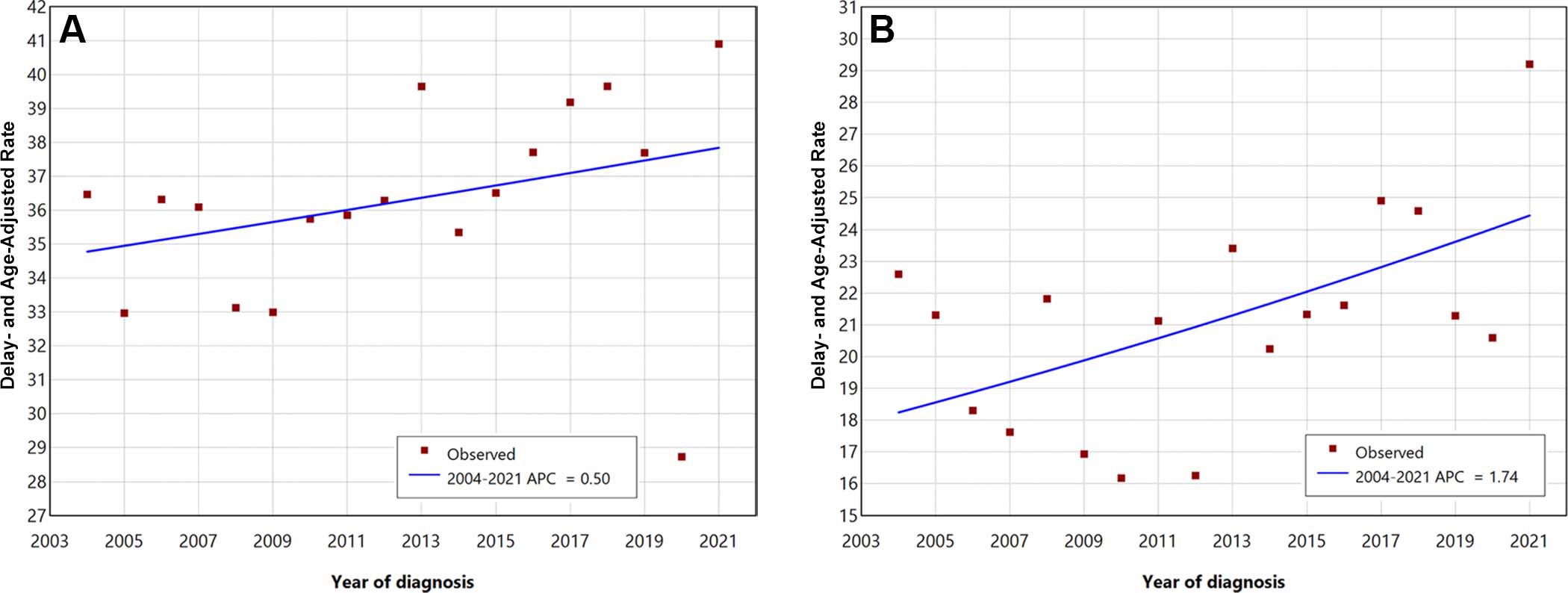
According to the U.S. Centers for Disease Control and Prevention, breast cancer is the second most common cause of cancer death after lung cancer for U.S. women. Five-year survival rates are 31% for metastatic invasive breast cancers, compared to 99% and 86%, respectively for localized and regional invasive breast cancers.
Rising Incidence by Age
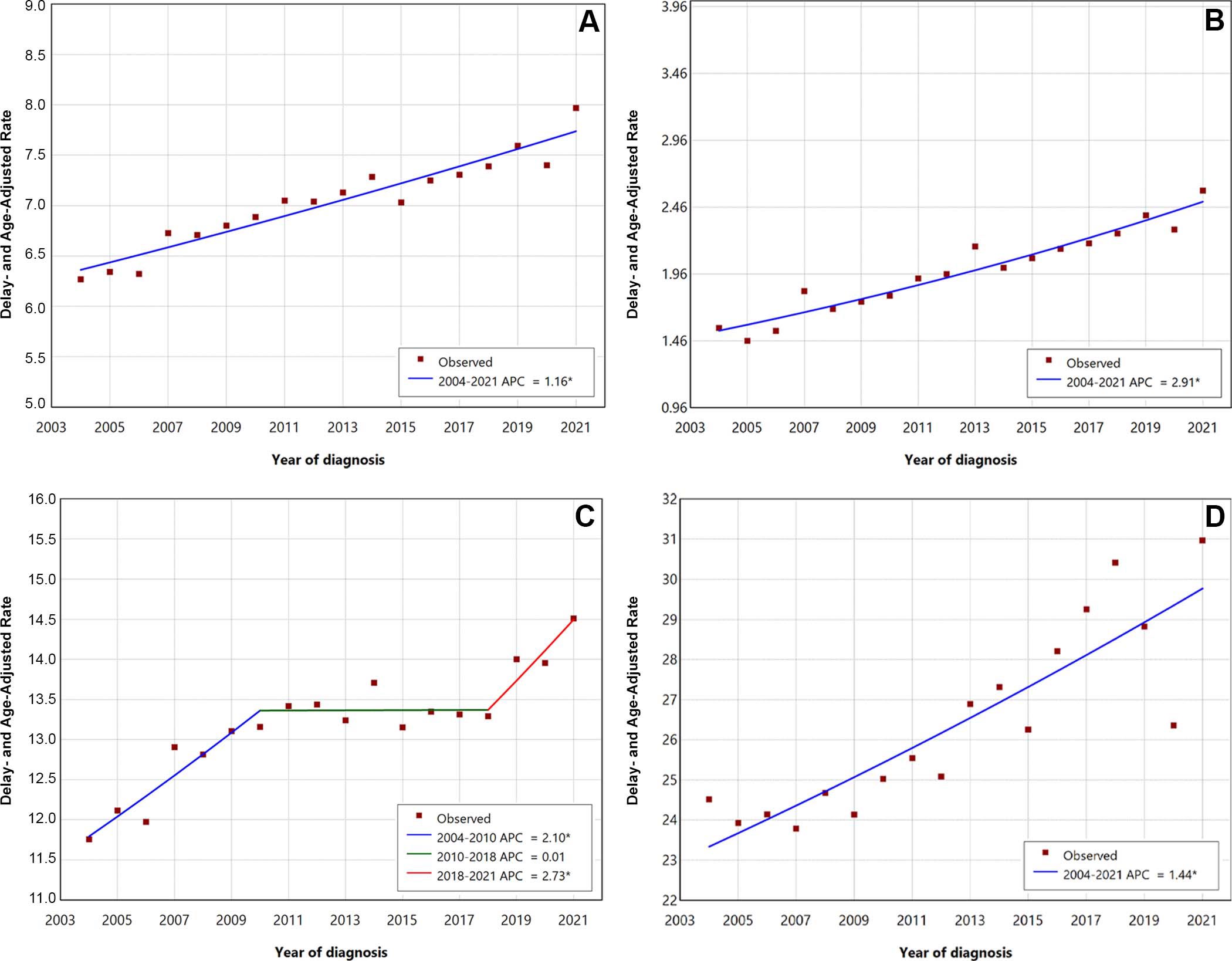
Between 2004 and 2021, the biggest annual percentage increase in the incidence of metastatic breast cancer at diagnosis occurred in women between the ages of 20 and 39 (2.9%). For women aged 40–74 years, the researchers observed annual percentage increases of 2.1% and 2.7%, respectively, during two time periods from 2004–2012 and 2018–2021.
“It’s been previously reported that metastatic breast cancer at initial presentation has increased significantly for women under 40, but until now, no clear trend in older women has been reported,” Dr. Monticciolo said.
For women aged 75 years and older, the incidence rate increased by 1.4% over the study period.
“The significant increase in metastatic disease at diagnosis among all U.S. women and across all age groups is an alarming new finding,” said lead author R. Edward Hendrick, Ph.D., clinical professor, department of radiology at the University of Colorado Anschutz School of Medicine. “This finding is even more remarkable given the likely undercounting of advanced disease in 2020 due to the COVID-19 pandemic.”
During the COVID-19 pandemic, radiology volumes declined sharply, especially for breast imaging. Researchers said the disruption in breast screening and diagnostic examinations raised concerns about downstream effects.
“During the pandemic, we saw steep drops in the number of older, minority women being screened,” Dr. Monticciolo said. “This population tends to get left behind when any stress occurs in the health care system.”
Across ethnicities, Native American women had the largest annual percentage change in the incidence of metastatic breast cancer at diagnosis at 3.9%. The incidence rate also significantly and rapidly increased for Asian women at a rate of 2.9% per year between 2004 and 2021.
The annual percentage change among Black and Hispanic women was .86% and 1.6%, respectively. Among white women, there was an increase of 1.7% from 2004–2012, but no trend after that. Incidence rates of distant-stage breast cancers were 55% higher in Black women compared to white women.
The researchers said several factors may be contributing to the increased incidence of metastatic breast cancer at diagnosis, including the lack of a national, organized screening program and inconsistent screening guidelines, which discourages attendance.
Contributing Factors and Screening Guidelines
“Fewer than 50% of U.S. women participate in annual breast cancer screening,” Dr. Monticciolo said. “That means we don’t have the opportunity to sweep out early-stage breast cancers in huge numbers of women, who will arrive at a later stage for diagnosis.”
U.S. Preventive Services Task Force (USPSTF) guidelines currently recommend that women between 40 and 74 undergo a screening mammogram every two years.
“The USPSTF guidelines leave out women over age 74, despite the clear advantages of early detection,” Dr. Monticciolo said. “And younger women don’t get the chance to be screened, when as a population, they are more likely to be diagnosed with aggressive, fast-growing cancers.”
Other contributing factors to the trends observed in the study include increasing obesity rates, reproductive trends, a lack of access to quality health care, and environmental factors.
The National Comprehensive Cancer Network recommends that women undergo a breast cancer risk assessment by the age of 25 to evaluate their overall risk for the disease.
The researchers said more study is needed, particularly of the Black population, who are more likely to experience advanced breast disease at a younger age.
Reference: “Surveillance, Epidemiology, and End Results Data Show Increasing Rates of Distant-Stage Breast Cancer at Presentation in U.S. Women” by R. Edward Hendrick and Debra L. Monticciolo, 10 December 2024, Radiology.
DOI: 10.1148/radiol.241397
Never miss a breakthrough: Join the SciTechDaily newsletter.
Follow us on Google and Google News.
3 Comments
I am a medical anthropologist breast cancer researcher and author. A big environmental factor unfortunately ignored in breast cancer research in the US is the use of the bra, which is constrictive and interferes with lymphatic function. Young women are more likely to wear tight sports bras as well as tight push-up bras, especially during this period studied. Bra styles change over time, as with the recent popularity of tight sports bras worn all day. This could help explain some of the changes seen in this study. As for the difference between black and white women, see my article, A New Theory for the Cause of Racial Disparity in Breast Cancer Death Rates. https://www.academia.edu/113701974/A_New_Theory_for_the_Cause_of_Racial_Disparity_in_Breast_Cancer_Death_Rates
nothing to do with mrna jabs?
Could well relate to the cost of medical screening in the USA which lacks a decent public health system thanks to idiotic ideas about socialism and of course the assorted microplastic pollution that now graces our bodies.