
Close Menu
    Facebook X (Twitter) Instagram
    SciTechDaily
    • Biology
    • Chemistry
    • Earth
    • Health
    • Physics
    • Science
    • Space
    • Technology
    Facebook X (Twitter) Pinterest YouTube RSS
    SciTechDaily
    Home»Health»AI’s Breast Cancer Blind Spots Exposed by New Study
    Health

    AI’s Breast Cancer Blind Spots Exposed by New Study

    By Radiological Society of North AmericaMay 21, 2024No Comments4 Mins Read
    Facebook Twitter Pinterest Telegram LinkedIn WhatsApp Email Reddit
    Share
    Facebook Twitter LinkedIn Pinterest Telegram Email Reddit
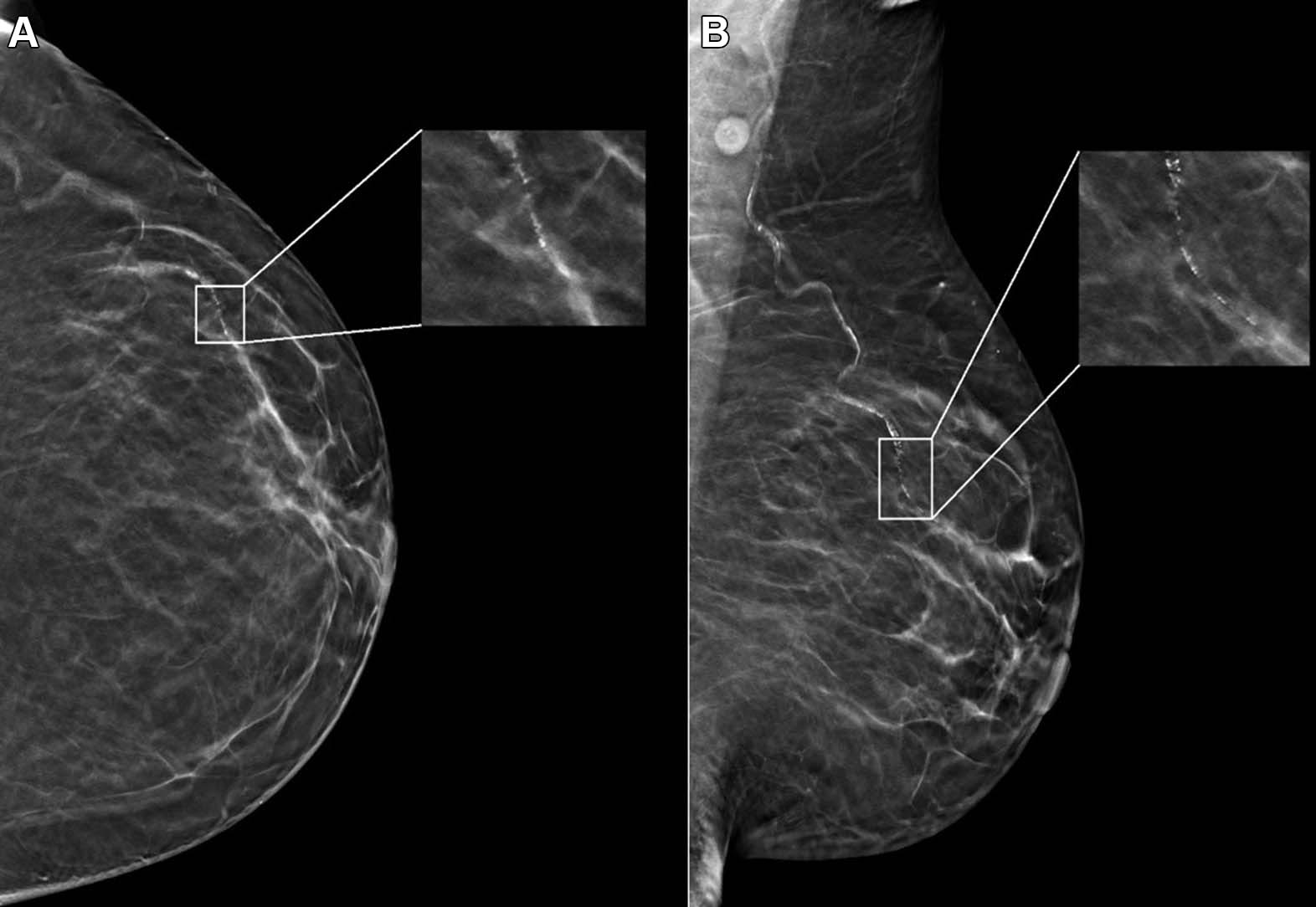
    Example Mammogram Assigned a False-Positive Case Score
    Example mammogram assigned a false-positive case score of 96 in a 59-year-old Black patient with scattered fibroglandular breast density. (A) Left craniocaudal and (B) mediolateral oblique views demonstrate vascular calcifications in the upper outer quadrant at middle depth (box) that were singularly identified by the artificial intelligence algorithm as a suspicious finding and assigned an individual lesion score of 90. This resulted in an overall case score assigned to the mammogram of 96. Credit: Radiological Society of North America (RSNA)

    Research reveals AI in mammography may produce false positives influenced by patient’s age and race, underscoring the importance of diverse training data.

    A recent study, which analyzed nearly 5,000 screening mammograms interpreted by an FDA-approved AI algorithm, found that patient characteristics like race and age impacted the rate of false positives. The findings were published today (May 21) in Radiology, a journal of the Radiological Society of North America (RSNA).

    “AI has become a resource for radiologists to improve their efficiency and accuracy in reading screening mammograms while mitigating reader burnout,” said Derek L. Nguyen, M.D., assistant professor at Duke University in Durham, North Carolina. “However, the impact of patient characteristics on AI performance has not been well studied.”

    Challenges in AI Application

    Dr. Nguyen said while preliminary data suggests that AI algorithms applied to screening mammography exams may improve radiologists’ diagnostic performance for breast cancer detection and reduce interpretation time, there are some aspects of AI to be aware of.

    “There are few demographically diverse databases for AI algorithm training, and the FDA does not require diverse datasets for validation,” he said. “Because of the differences among patient populations, it’s important to investigate whether AI software can accommodate and perform at the same level for different patient ages, races, and ethnicities.”
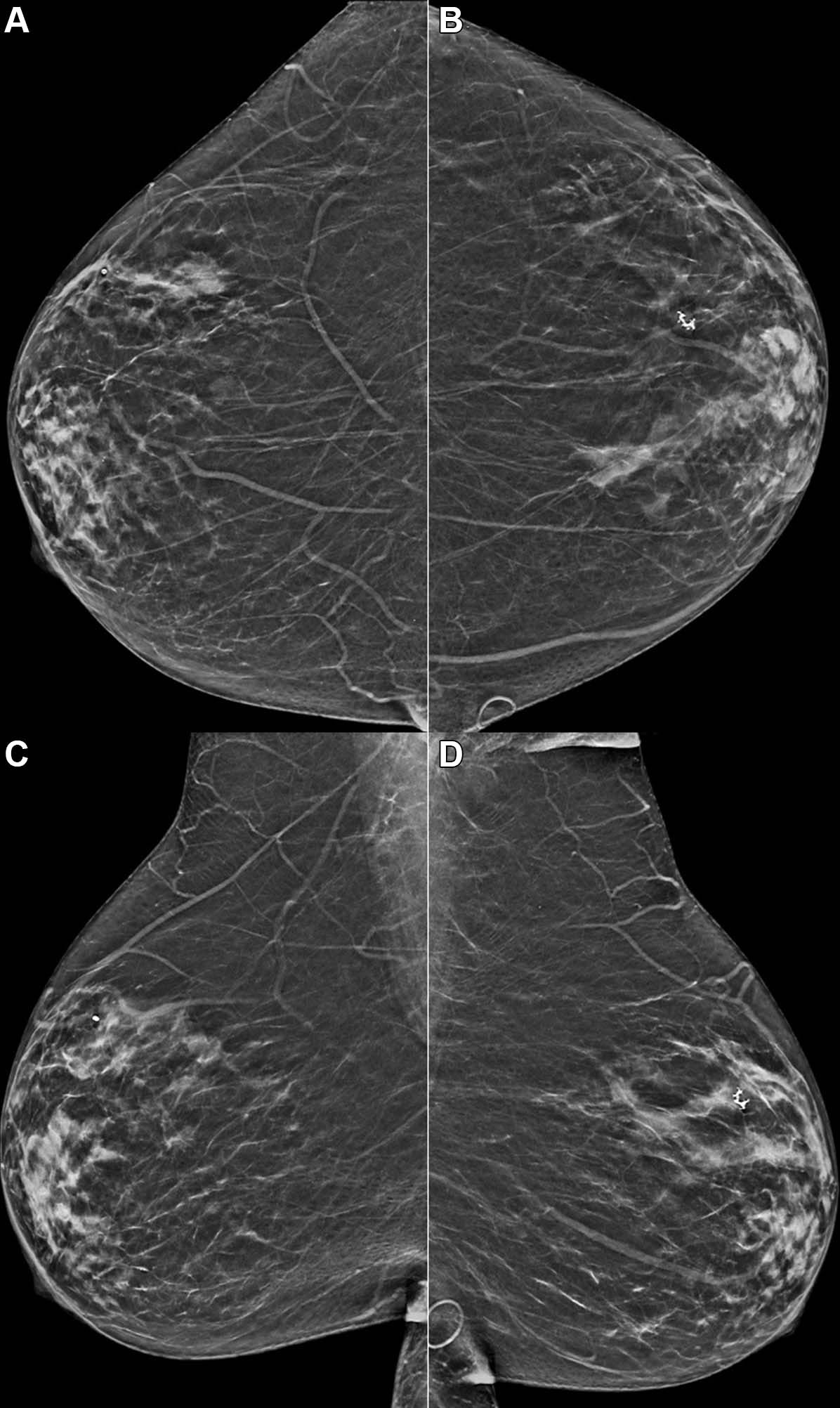
    Example Mammogram Assigned a False-Positive Risk Score
    Example mammogram assigned a false-positive risk score of 1.0 in a 59-year-old Hispanic patient with heterogeneously dense breasts. Bilateral reconstructed two-dimensional (A, B) craniocaudal and (C, D) mediolateral oblique views are shown. The algorithm predicted cancer within 1 year, but this individual did not develop cancer or atypia within 2 years of the mammogram. Credit: Radiological Society of North America (RSNA)

    Study Design and Demographics

    In the retrospective study, researchers identified patients with negative (no evidence of cancer) digital breast tomosynthesis screening examinations performed at Duke University Medical Center between 2016 and 2019. All patients were followed for a two-year period after the screening mammograms, and no patients were diagnosed with a breast malignancy.

    The researchers randomly selected a subset of this group consisting of 4,855 patients (median age 54 years) broadly distributed across four ethnic/racial groups. The subset included 1,316 (27%) white, 1,261 (26%) Black, 1,351 (28%) Asian, and 927 (19%) Hispanic patients.

    A commercially available AI algorithm interpreted each exam in the subset of mammograms, generating both a case score (or certainty of malignancy) and a risk score (or one-year subsequent malignancy risk).

    AI Performance Across Demographics

    “Our goal was to evaluate whether an AI algorithm’s performance was uniform across age, breast density types, and different patient race/ethnicities,” Dr. Nguyen said.

    Given all mammograms in the study were negative for the presence of cancer, anything flagged as suspicious by the algorithm was considered a false positive result. False positive case scores were significantly more likely in Black and older patients (71-80 years) and less likely in Asian patients and younger patients (41-50 years) compared to white patients and women between the ages of 51 and 60.

    “This study is important because it highlights that any AI software purchased by a healthcare institution may not perform equally across all patient ages, races/ethnicities, and breast densities,” Dr. Nguyen said. “Moving forward, I think AI software upgrades should focus on ensuring demographic diversity.”

    Considerations for Healthcare Providers

    Dr. Nguyen said healthcare institutions should understand the patient population they serve before purchasing an AI algorithm for screening mammogram interpretation and ask vendors about their algorithm training.

    “Having a baseline knowledge of your institution’s demographics and asking the vendor about the ethnic and age diversity of their training data will help you understand the limitations you’ll face in clinical practice,” he said.

    Reference: “Patient Characteristics Impact Performance of AI Algorithm in Interpreting Negative Screening Digital Breast Tomosynthesis Studies” by Derek L. Nguyen, Yinhao Ren, Tyler M. Jones, Samantha M. Thomas, Joseph Y. Lo and Lars J. Grimm, 21 May 2024, Radiology.
    DOI: 10.1148/radiol.232286

    Never miss a breakthrough: Join the SciTechDaily newsletter.
    Follow us on Google and Google News.

    Artificial Intelligence Breast Cancer Cancer Mammography Radiological Society of North America
    Share. Facebook Twitter Pinterest LinkedIn Email Reddit

    Related Articles

    A Surprising Number of Younger Women Are Getting Breast Cancer

    Fewer False Positives: AI Transforms Breast Cancer Screenings With Sharper Accuracy

    AI Demonstrates Superior Performance in Predicting Breast Cancer

    Artificial Intelligence Can Quickly and Accurately Rule Out Cancer in Dense Breasts

    Deep Learning Artificial Intelligence Predicts Breast Cancer Risk Better

    Artificial Intelligence Classifies Brain Tumors With Single MRI Scan

    Artificial Intelligence Program Accurately Predicts Lung Cancer Risk

    MIT Mirai: Robust Artificial Intelligence Tools To Predict Future Cancer

    New Artificial Intelligence Tool Improves Breast Cancer Detection on Mammography

    Leave A Reply Cancel Reply

    • Facebook
    • Twitter
    • Pinterest
    • YouTube

    Don't Miss a Discovery

    Subscribe for the Latest in Science & Tech!

    Trending News

    Scientists Discover How Coffee Impacts Memory, Mood, and Gut Health

    Why Did the Neanderthals Disappear? Scientists Reveal Humans Had a Hidden Advantage

    Physicists Propose Strange Experiment Where Time Goes Quantum

    Magnesium Magic: New Drug Melts Fat Even on a High-Fat, High-Sugar Diet

    Weight-Loss Drugs Like Ozempic May Come With an Unexpected Cost

    Mezcal “Worm” in a Bottle Mystery: DNA Testing Reveals a Surprise

    New Research Reveals That Your Morning Coffee Activates an Ancient Longevity Switch

    This Is What Makes You Irresistible to Mosquitoes

    Follow SciTechDaily
    • Facebook
    • Twitter
    • YouTube
    • Pinterest
    • Newsletter
    • RSS
    SciTech News
    • Biology News
    • Chemistry News
    • Earth News
    • Health News
    • Physics News
    • Science News
    • Space News
    • Technology News
    Recent Posts
    • This Popular Supplement May Boost Your Brain, Not Just Your Muscles
    • What Happened in Childhood Could Be Causing Your Gut Issues Today
    • Scientists Say This Simple Supplement May Actually Reverse Heart Disease
    • Scientists Just Captured Killer T Cells in Action Inside Tumors
    • Alaska’s Sky Explodes With Swirling Clouds and a Hidden Polar Storm
    Copyright © 1998 - 2026 SciTechDaily. All Rights Reserved.
    • Science News
    • About
    • Contact
    • Editorial Board
    • Privacy Policy
    • Terms of Use

    Type above and press Enter to search. Press Esc to cancel.