
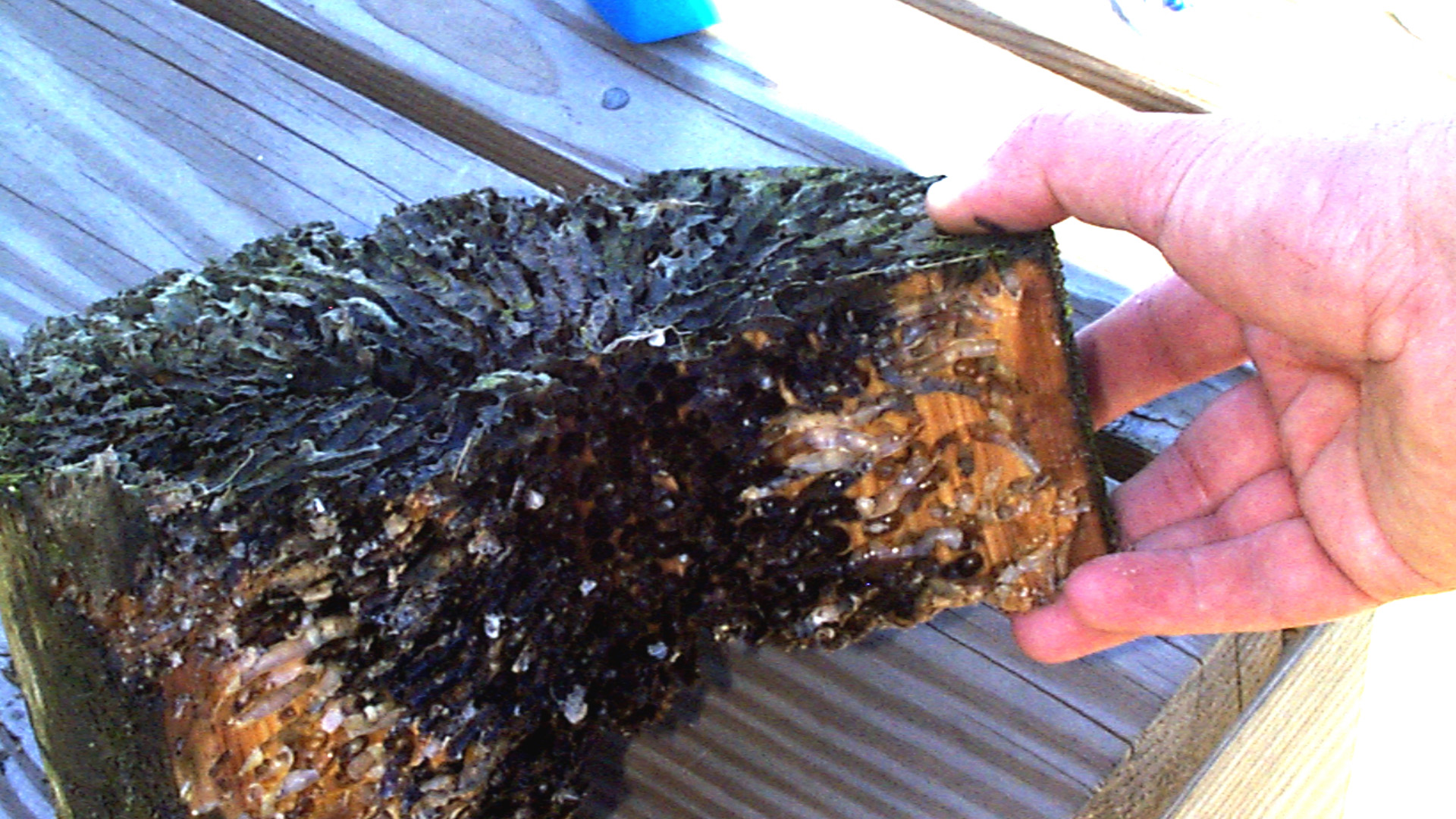
Unlocking the secrets of the world’s most fascinating and destructive mollusk could impact everything from climate change to public health.
They bedeviled ancient Greek navies, helped shipwreck Christopher Columbus, aided in the sinking of the Spanish Armada, and caused the wharves in San Francisco Bay to collapse into the sea, but until now, scientists have been unable to pinpoint exactly how shipworms—a family of mollusks—are able to cause such damage. A team of researchers, jointly led by the University of Massachusetts Amherst and the University of Plymouth, along with collaborators from the University of Maine and UMass Chan Medical School, have discovered that a population of symbiotic microbes, living in an overlooked sub-organ of the gut called the “typhlosole,” have the ability to secrete the enzymes needed to digest lignin—the toughest part of wood.
“Shipworms are such important animals,” says Reuben Shipway, co-corresponding author of the research published recently in International Biodeterioration and Biodegradation and who initiated this work as part of his postdoctoral fellowship at UMass Amherst. “They are found throughout the world’s oceans and not only have they changed history, they are also ecosystem engineers and play a fundamental role in cycling carbon in aquatic environments. It’s incredible that we haven’t had a full understanding of how they do this.”
Wood Digestion by Shipworms
Wood is a miraculous substance: flexible and tough, its stringy but nutritious cellulose can make a great meal—but only for those living things that can digest it and also get through the layer of lignin, a tough, armor-like substance that surrounds the cellulose like “wrap rage”-inducing packaging around your favorite treat. Microbiologists have long known that those animals capable of digesting lignin—like termites—host specialized, symbiotic colonies of microbes in their guts that do the work of breaking the lignin down for them. “But,” says lead author Barry Goodell, recently retired professor of microbiology at UMass Amherst and an emeritus professor at the University of Maine, “the shipworm’s digestive tract has long been thought to be virtually sterile.”
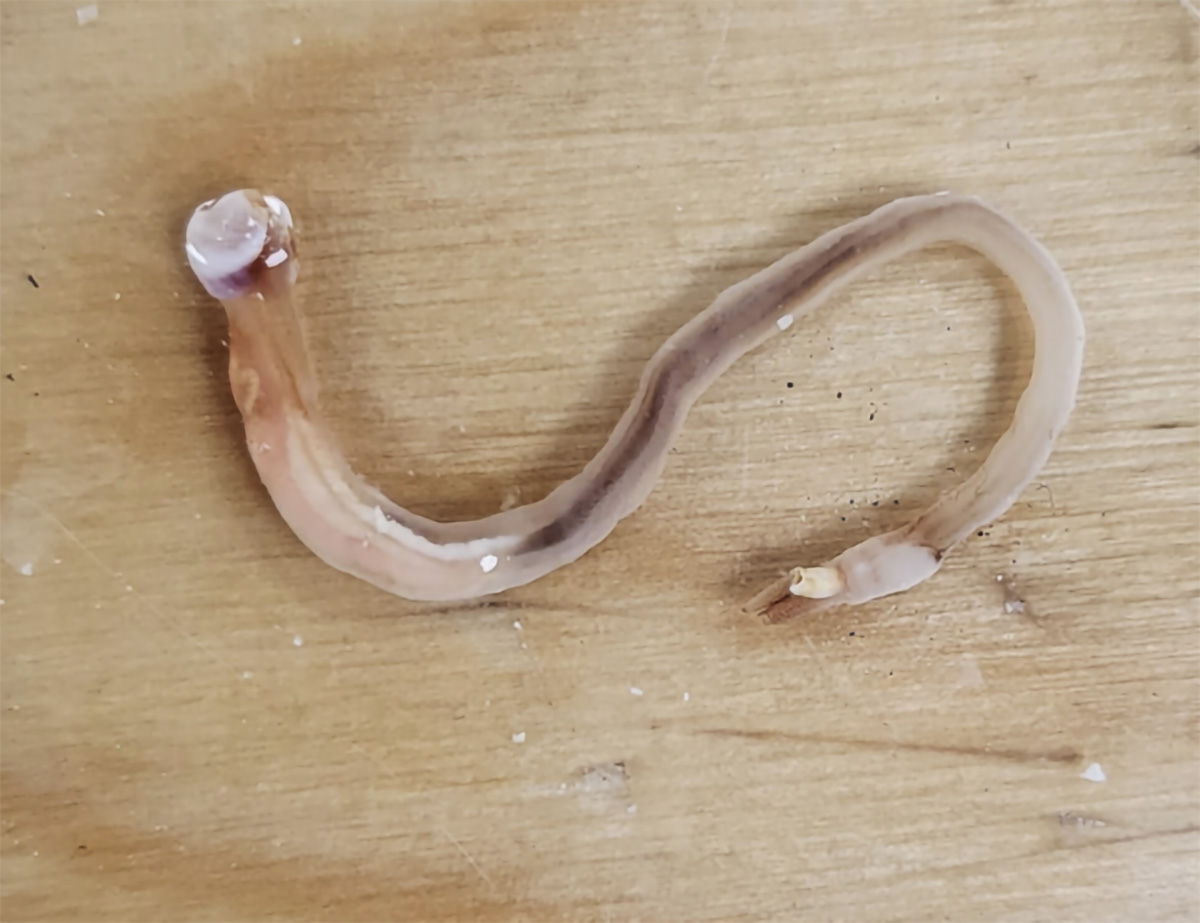
How then do shipworms do what they do?
Goodell and Shipway have spent the better part of the last decade trying to answer this question, testing a variety of innovative hypotheses—none of which gave up the shipworms’ secret.
“We decided to take a very careful look at the shipworm’s gut again,” says Goodell, “on the off chance that the last hundred years’ worth of researchers missed something.”
Indeed, that appears to be the case.
It turns out that shipworms have a curious sub-organ, called a typhlosole—“it looks like Salvador Dali’s mustache upside down,” says Shipway—that is embedded in the mollusk’s digestive tract. Previous researchers had thought that it served as a mixing structure, but, when Goodell and Shipway did some precise culturing work, then enlisted the aid of the Argonne National Lab’s facilities for metagenomic analysis as well as the advanced genetic-probe-microscopy technique at the UMass Amherst Institute for Applied Life Sciences, they found what generations of researchers had overlooked: hidden clusters of bacterial symbionts with the capability to produce lignin-digesting enzymes.
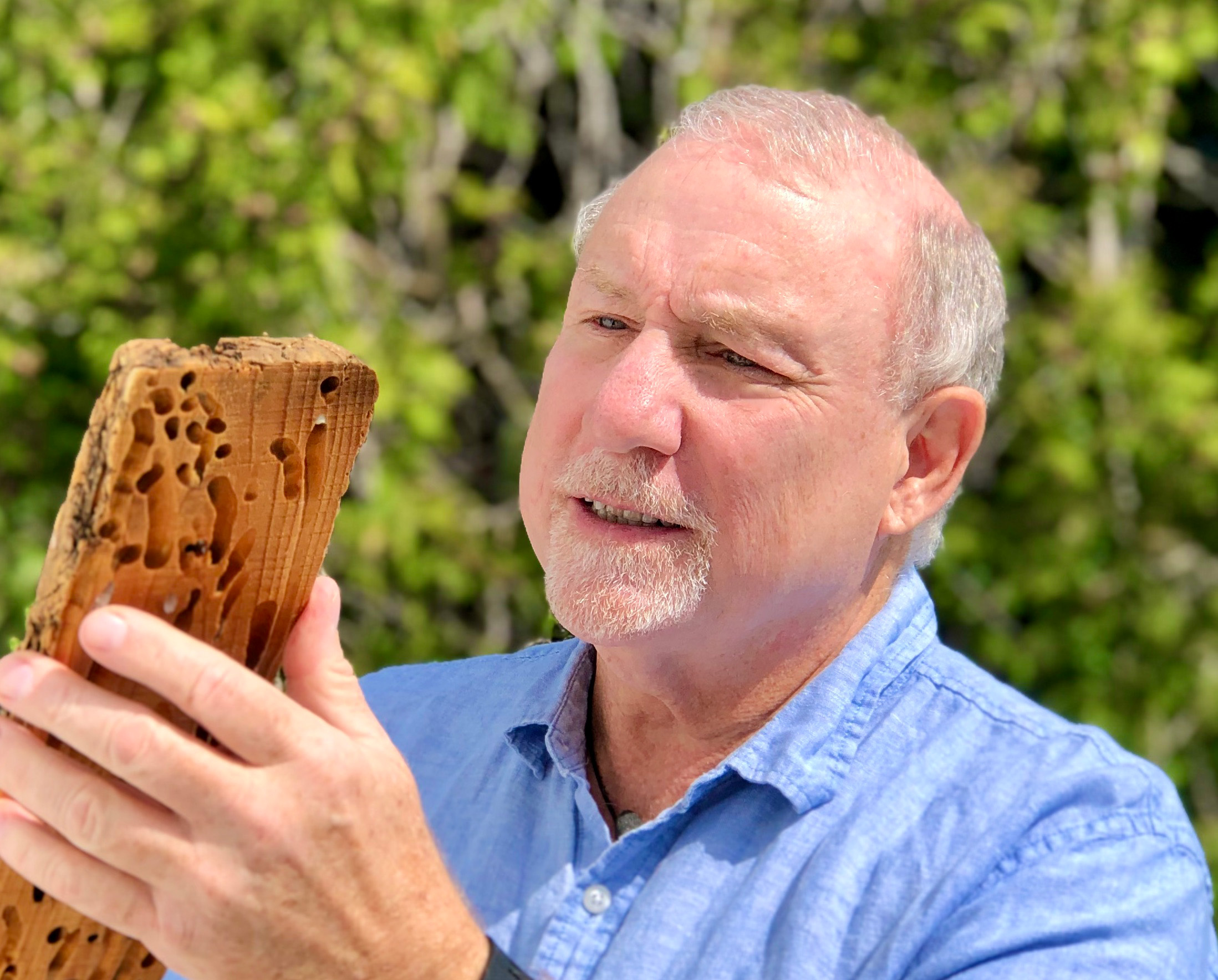
Potential Applications and Environmental Impact
Not only does this research help to solve a longstanding mystery, but the findings may also have important practical applications. Biotech companies are searching for new enzymes that can digest recalcitrant substrates more efficiently than current bio-industrial processes allow, and new sources of enzymes that can open the structure of biomass residues are very important in growing this field. Furthermore, previous shipworm symbionts have proven to be a treasure trove of natural products—such as novel anti-parasitic antibiotics—which may have significant impacts on human health.
On the climate change front, research such as this can help refine models predicting how CO2 and other greenhouse gasses are released into the environment, especially given that large amounts of woody debris on land winds up in the ocean, where much of it passes through the shipworm gut.
Finally, other animal species, including other mollusks, the common earthworm, and even the tadpole stages of frogs, also possess a typhlosole that has not been thoroughly studied before. If symbionts similar to those in shipworms were found in those animals, it could change our understanding of how those animals also make their way in the world. “It’s very satisfying,” says Goodell of the research. “We’ve been trying to crack this mystery for years and we finally discovered the shipworm’s hidden bacterial symbiont secret.”
Reference: “First report of microbial symbionts in the digestive system of shipworms; wood boring mollusks” by Barry Goodell, James Chambers, Doyle V. Ward, Cecelia Murphy, Eileen Black, Lucca Bonjy Kikuti Mancilio, Gabriel Perez- Gonzalez and J. Reuben Shipway, 5 June 2024, International Biodeterioration & Biodegradation.
DOI: 10.1016/j.ibiod.2024.105816
Never miss a breakthrough: Join the SciTechDaily newsletter.
Follow us on Google and Google News.