
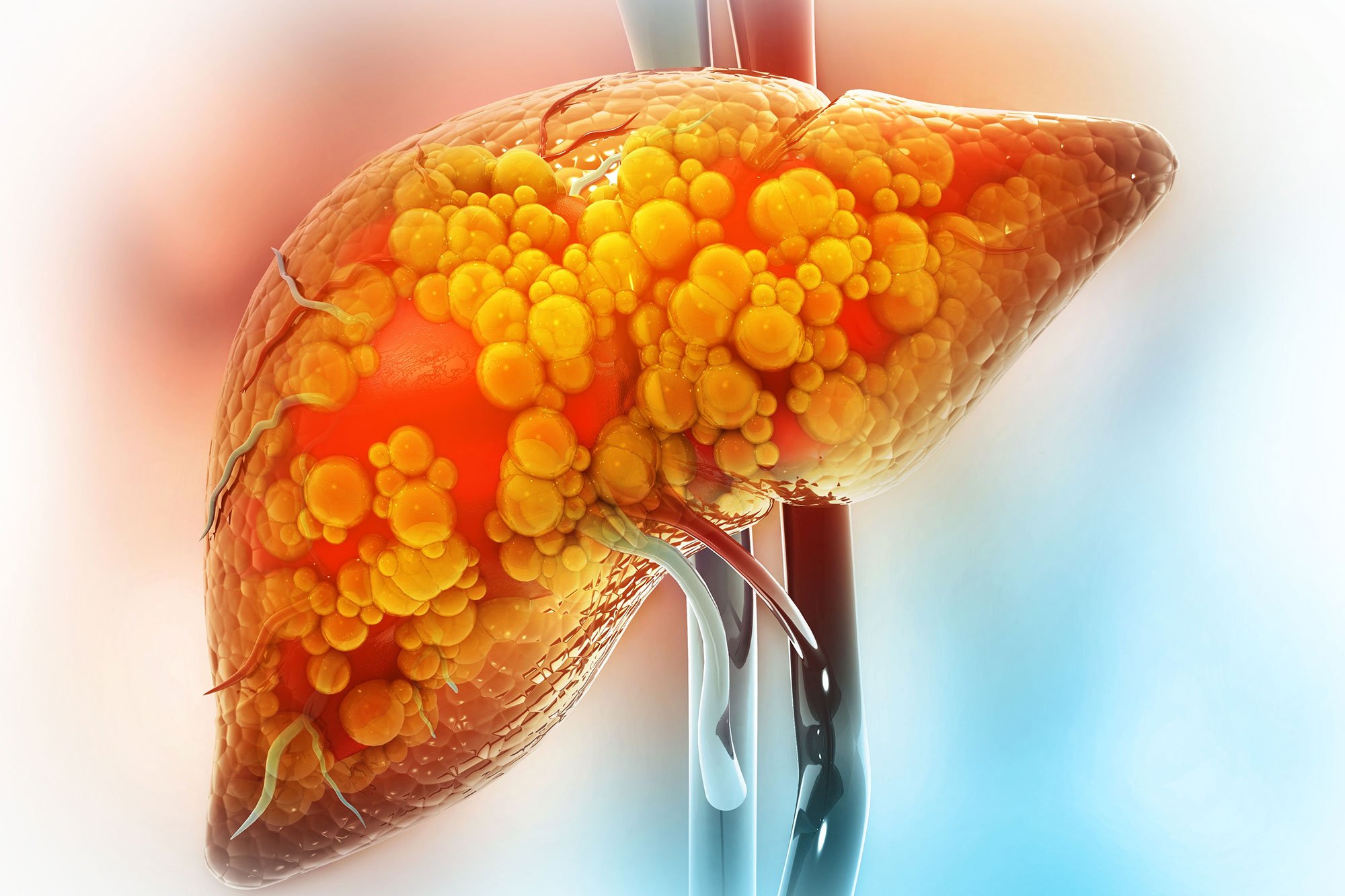
A new investigational treatment targets the root cause of a life-threatening liver condition connected to obesity and diabetes, offering hope for millions of patients.
Scientists at the University of California, San Diego School of Medicine have developed an investigational drug that could provide a new treatment for metabolic dysfunction-associated steatohepatitis (MASH). This severe type of fatty liver disease is associated with obesity and type 2 diabetes and can progress to cirrhosis, liver failure, or even liver cancer.
Published in The Lancet, the study reports that the drug, known as ION224, blocks a liver enzyme called DGAT2. This enzyme is essential for the liver’s process of producing and storing fat. Inhibiting it reduces both fat accumulation and inflammation, the two main contributors to liver damage in MASH.
Blocking fat accumulation and inflammation
“This study marks a pivotal advance in the fight against MASH,” said Rohit Loomba, MD, principal investigator of the study and chief of the Division of Gastroenterology and Hepatology at UC San Diego School of Medicine. “By blocking DGAT2, we’re interrupting the disease process at its root cause, stopping fat accumulation and inflammation right in the liver.”

A Phase IIb clinical trial was carried out at multiple centers across the United States, enrolling 160 adults diagnosed with MASH and showing early to moderate fibrosis. Over the course of a year, participants were given monthly injections of either varying doses of the investigational drug or a placebo. Results revealed that at the highest dose, 60% of patients experienced significant improvements in liver health compared to those who received the placebo. Importantly, these benefits were observed regardless of changes in body weight, indicating that the treatment could be combined effectively with other therapies. The study also reported no serious side effects attributable to the drug.
A widespread and silent condition
MASH, formally known as nonalcoholic steatohepatitis (NASH), affects people with metabolic conditions like obesity and type 2 diabetes. It is often called a “silent” disease because it can progress for years without symptoms.
More than 100 million people have some form of fatty liver disease in the U.S., and as many as 1 in 4 adults worldwide may be affected, according to the Centers for Disease Control and Prevention. If left untreated, MASH can progress to liver failure and often may require a transplant.
Looking ahead to future therapies
“This is the first drug of its kind to show real biological impact in MASH,” Loomba said. “If these findings are confirmed in Phase III trials, we may finally be able to offer patients a targeted therapy that halts and potentially reverses liver damage before it progresses to life-threatening stages.”
Loomba, who is also director of the metabolic-dysfunction-associated steatotic liver disease (MASLD) research center at UC San Diego School of Medicine, and a gastroenterologist and hepatologist at UC San Diego Health, adds that for patients and families affected by this serious condition, these results bring new hope for better care and outcomes. He emphasizes that early intervention and targeted therapies may also help reduce the burden on health care systems by preventing costly and complex liver disease down the line.
Next steps include a larger clinical trial to move closer to making this treatment widely available.
Reference: “Antisense oligonucleotide DGAT-2 inhibitor, ION224, for metabolic dysfunction-associated steatohepatitis (ION224-CS2): results of a 51-week, multicentre, randomised, double-blind, placebo-controlled, phase 2 trial” by Rohit Loomba, Erin Morgan, Keyvan Yousefi, Dan Li, Richard Geary, Sanjay Bhanot and Naim Alkhouri, 23 August 2025, The Lancet.
DOI: 10.1016/S0140-6736(25)00979-1
Funding for this research came from Ionis Pharmaceuticals (ION224-CS2).
Never miss a breakthrough: Join the SciTechDaily newsletter.
Follow us on Google and Google News.