
Breakthrough in Obesity-Related Disease Treatment
Research published in the scientific journal Clinical and Experimental Immunology on March 9 shows that a peptide (small protein) called PEPITEM could provide a revolutionary approach to reducing the risk of type 2 diabetes and other obesity-related diseases such as hepatic steatosis (fatty liver).
The researchers used an animal model of obesity to investigate whether PEPITEM, delivered by a slow-release pump, could prevent or reverse the effects that a high-fat diet has on the pancreas. Excitingly, the results showed that administration of PEPITEM significantly reduced the enlargement of insulin-producing cells in the pancreas and also significantly reduced immune cell migration into various tissues.
The research team was led by Dr. Helen MCGettrick and Dr. Asif Iqbal from the University of Birmingham’s Institute of Inflammation and Ageing and Institute of Cardiovascular Sciences. Dr. McGettrick said: “We have found a new therapeutic approach that could provide new drugs to tackle the root cause of obesity-related conditions by preventing the damage caused by systemic inflammation.
Insights from the Adiponectin-PEPITEM Pathway
PEPITEM was first identified in 2015 by Birmingham researchers who described its role in the adiponectin-PEPITEM pathway, which is involved in controlling the onset and severity of auto-immune and chronic inflammatory diseases.
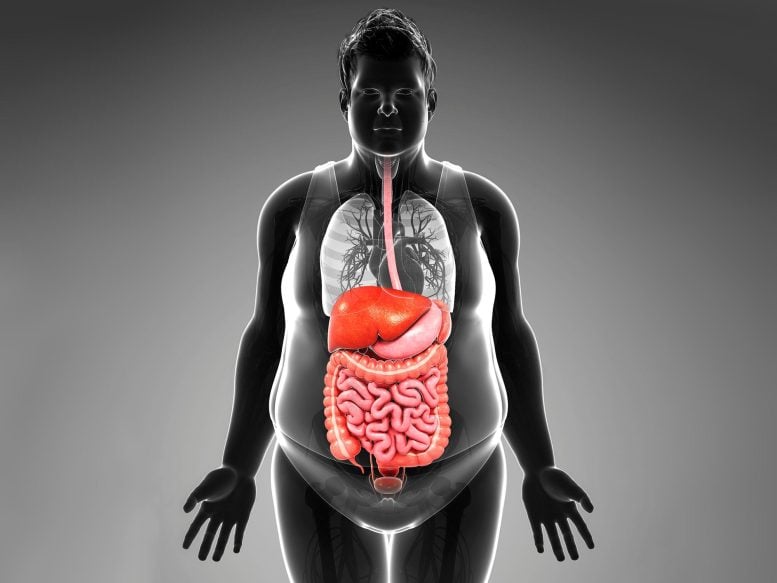
Obesity causes complex and dramatic changes in metabolism in adipose (fat) tissue, damage to the pancreas, reduced insulin sensitivity, and eventually the hyperglycemia that underpins type 2 diabetes. It also causes a low-level inflammatory response across the boyd, encouraging white blood cells to enter into many tissues including the visceral adipose tissue (fat stored deep inside the body wrapped around the organs, including the liver and gut) and peritoneal cavity (a thin membrane that encompasses the gut).
The latest research, published in Clinical and Experimental Immunology, shows that the adiponectin-PEPITEM pathway also connects obesity, the low-level inflammatory response that is driven by it, and changes in the pancreas that precede diabetes.
The results showed that dosing with PEPITEM while the mice were on a high fat diet significantly reduced the enlargement of insulin-producing beta cells in the pancreas and the number of white blood cells in the visceral adipose tissue and peritoneal cavity, compared to controls.
Potential for Reversing Obesity-Induced Damage
The researchers also looked at the potential of PEPITEM to reverse the changes brought on by obesity, by feeding the animals a high-fat diet prior to treating with PEPITEM. Excitingly, they saw similar results. Dr. Asif Iqbal commented: “Until now we have understood very little about how the inflammation that accompanies obesity drives pathology. These results show us that PEPITEM can both prevent and reverse the impact that obesity has on metabolism. The next stage is to translate these exciting results into therapeutics that can be used in humans.”
Professor Ed Rainger from Birmingham’s Institute of Cardiovascular Sciences led the team that first identified PEPITEM. He commented: “We are all very excited about these latest results. PEPITEM is a naturally occurring peptide. We have already shown it has effects on several organs and now for the first time, we have shown that PEPITEM is effective in a model of a disease process that is not driven by the immune system alone.”
Reference: “PEPITEM modulates leukocyte trafficking to reduce obesity-induced inflammation” by Laleh Pezhman, Sophie J Hopkin, Jenefa Begum, Silke Heising, Daniela Nasteska, Mussarat Wahid, G Ed Rainger, David J Hodson, Asif J Iqbal, Myriam Chimen and Helen M McGettrick, 9 March 2023, Clinical and Experimental Immunology.
DOI: 10.1093/cei/uxad022
University of Birmingham Enterprise had already filed patent applications covering PEPITEM compositions and therapeutic uses, and has now filed a further application covering its use in the use in the prophylaxis or treatment of obesity-associated inflammatory conditions including chronic low-grade systemic inflammation and pancreatic beta-cell damage.
Never miss a breakthrough: Join the SciTechDaily newsletter.
Follow us on Google and Google News.
4 Comments
This isnt helping with the “root cause”. It does help with the adverse effects of choosing an obese lifestyle.
Root cause of the majority of obesity in the world is poor diet and sedentary lifestyles.
There is disagreement on that. Obesogens like plasticizers, microbiomes on antibiotics, even concerns about air conditioning may be root or contributing causes.
But even if you’re right, the problem remains. Tackling that root cause would require the return of Richard Simmons.
I didn’t read the article, at least after “It also causes a low-level inflammatory response across the boyd.”, but congratulations to the University of Diaphragm on this work anyway.
Carbohydrates combined with Poly-Unsaturated fats (PUFA / VARNISH -> soybean/safflower/sunflower/corn/seasame/canola/flaxseed/cottonseed/linseed) directly cause cancer, diabetes, heart disease, liver disease, obesity and dementia.
when you eat too much, you get fat, that is the root cause in almost all cases of obesity, and we all know exactly what food not to eat and drink.