
Close Menu
    Facebook X (Twitter) Instagram
    SciTechDaily
    • Biology
    • Chemistry
    • Earth
    • Health
    • Physics
    • Science
    • Space
    • Technology
    Facebook X (Twitter) Pinterest YouTube RSS
    SciTechDaily
    Home»Technology»Revolutionary Twin-Bioengine Nanorobots for Gastrointestinal Inflammation Therapy
    Technology

    Revolutionary Twin-Bioengine Nanorobots for Gastrointestinal Inflammation Therapy

    By Chinese Academy of SciencesMarch 10, 20231 Comment3 Mins Read
    Facebook Twitter Pinterest Telegram LinkedIn WhatsApp Email Reddit
    Share
    Facebook Twitter LinkedIn Pinterest Telegram Email Reddit
    Yeast Robots Twin Engine
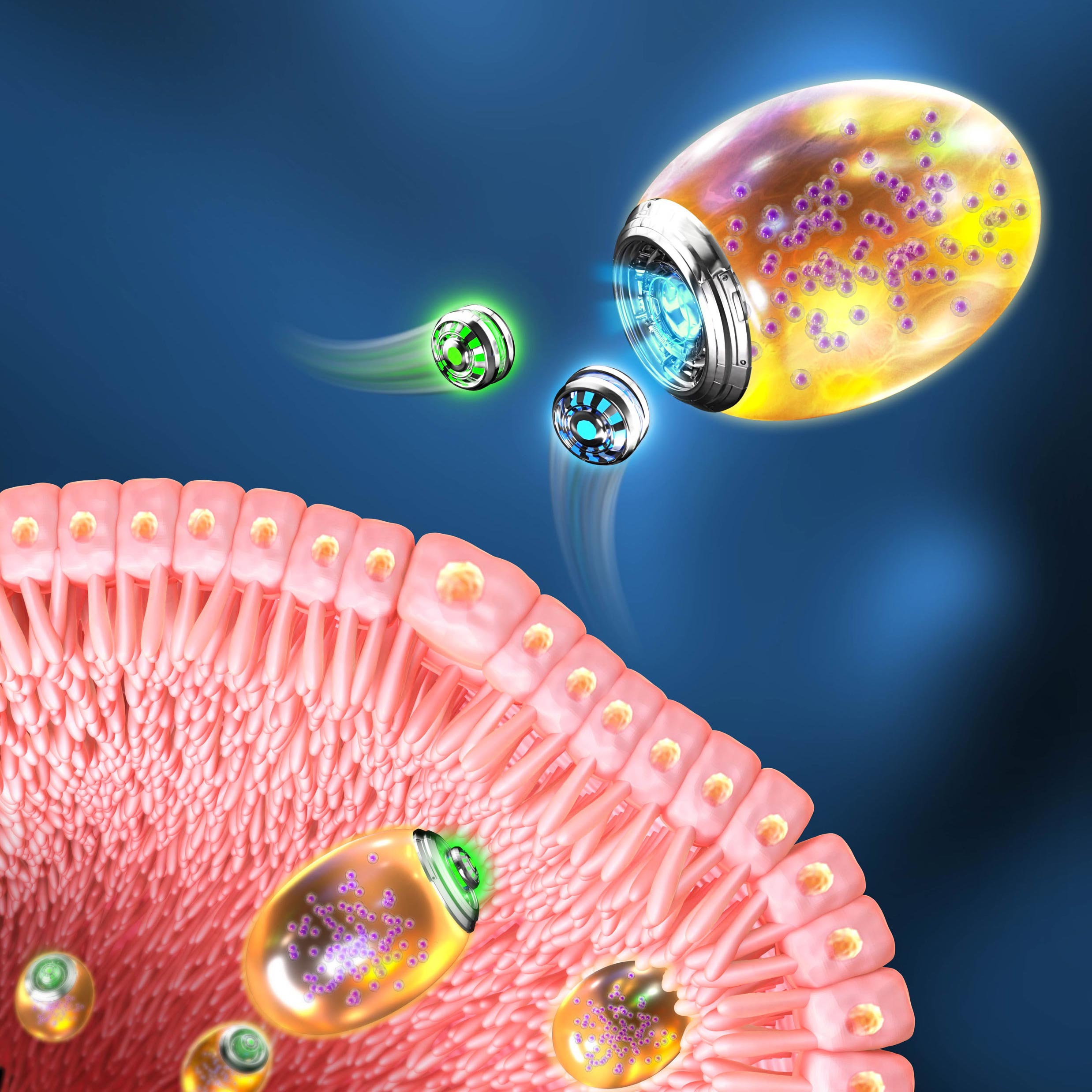
    Yeast micro/nanorobots utilize twin-engine to self-propel in gastrointestinal intraluminal and extraluminal environments. Credit: SIAT

    TBY-robots, powered by enzyme-macrophage switching, autonomously navigate through gastrointestinal barriers to deliver drugs precisely to inflamed tissues.

    Micro/nanorobots with self-propelling and -navigating capabilities have attracted extensive attention in drug delivery and therapy owing to their controllable locomotion in hard-to-reach body tissues.

    However, developing self-adaptive micro/nanorobots that can adjust their driving mechanisms across multiple biological barriers to reach distant lesions is still a challenge.

    Recently, a research team led by Prof. Lintao Cai from the Shenzhen Institute of Advanced Technology (SIAT) of the Chinese Academy of Sciences has developed a twin-bioengine yeast micro/nanorobot (TBY-robot) with self-propelling and self-adaptive capabilities that can autonomously navigate to inflamed sites to provide gastrointestinal inflammation therapy via enzyme-macrophage switching (EMS).

    This study was published on February 22 in the journal Science Advances.
    EMS Delivery of TBY-Robots
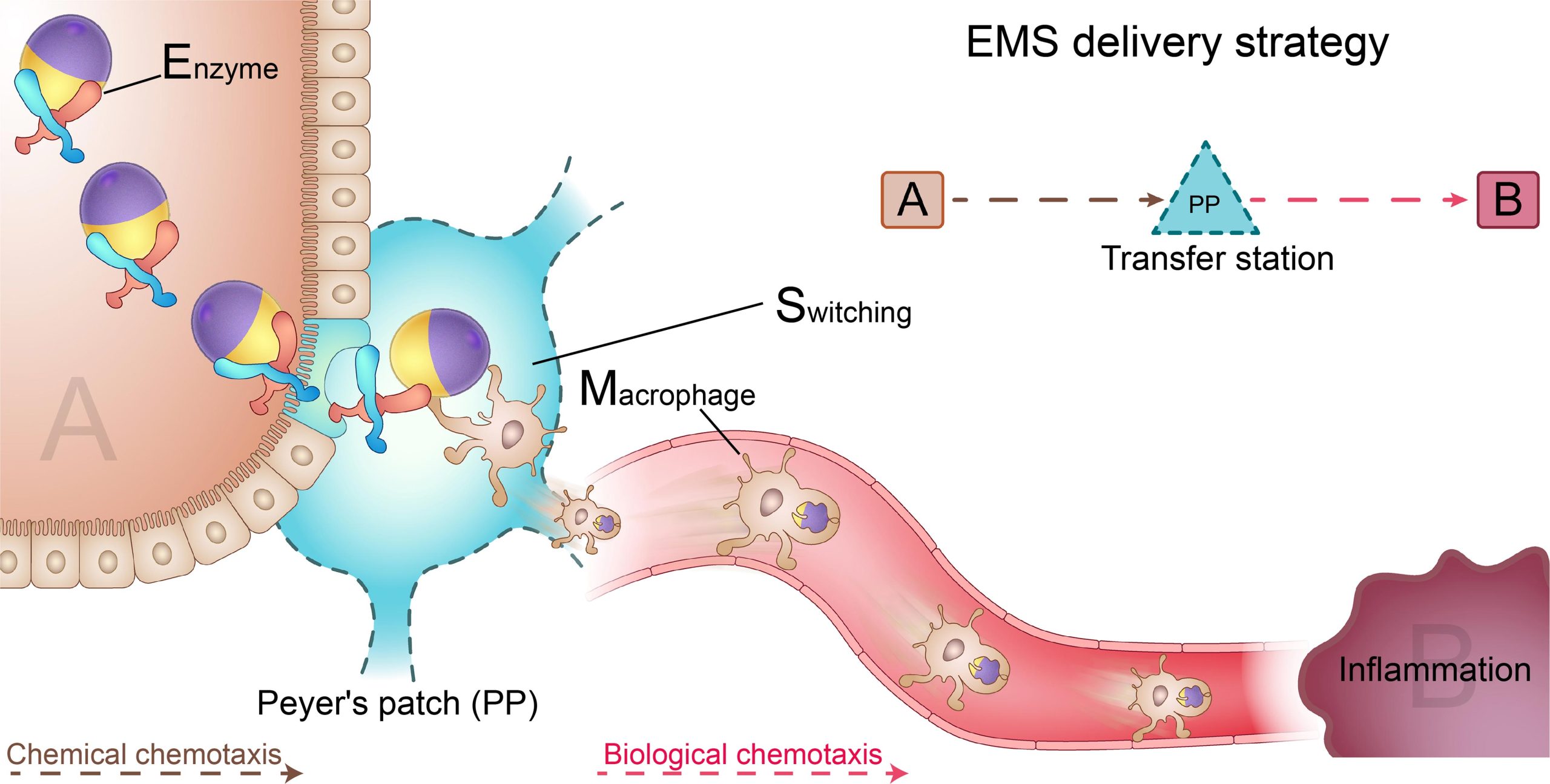
    EMS delivery of TBY-robots for long-distance transport across multiple biological barriers. Credit: SIAT

    The researchers constructed the TBY-robot by asymmetrically immobilizing glucose oxidase and catalase onto the surface of anti-inflammatory nanoparticle-packaged yeast microcapsules. At a homogeneous glucose concentration, the Janus distribution of enzymes can catalyze the decomposition of glucose to generate a local glucose gradient that induces TBY-robot self-propelling motion.

    In the presence of an enteral glucose gradient, the oral TBY-robots move toward the glucose gradient to penetrate the intestinal mucus barrier and then cross the intestinal epithelial barrier by microfold cell transcytosis. “We found that TBY-robots effectively penetrated the mucus barrier and notably enhanced their intestinal retention using a dual enzyme-driven engine moving toward the enteral glucose gradient,” said Prof. CAI.

    Targeted Delivery and Enhanced Therapeutic Efficacy

    After in situ switching to the macrophage bioengine in Peyer’s patches, the TBY-robots autonomously migrate to inflamed sites of the gastrointestinal tract through chemokine-guided macrophage relay delivery. “Encouragingly, TBY-robots increased drug accumulation at the diseased site by approximately 1000-fold, markedly attenuating inflammation and ameliorating disease pathology in mouse models of colitis and gastric ulcers,” said Prof. CAI.

    This twin-bioengine delivery strategy is a sequence-driven process using EMS, with Peyer’s patches as transfer stations. This process can precisely transport therapeutics across multiple biological barriers to distant, deep-seated disease sites.

    “The transport route is similar to that of the Express Mail Service, which precisely delivers parcels to a distant destination using different transportation facilities,” said Prof. CAI. These self-adaptive TBY-robots represent a safe and promising strategy for the precision treatment of gastrointestinal inflammation and other inflammatory diseases.

    Reference: “Twin-bioengine self-adaptive micro/nanorobots using enzyme actuation and macrophage relay for gastrointestinal inflammation therapy” by Baozhen Zhang, Hong Pan, Ze Chen, Ting Yin, Mingbin Zheng and Lintao Cai, 22 February 2023, Science Advances.
    DOI: 10.1126/sciadv.adc8978

    Never miss a breakthrough: Join the SciTechDaily newsletter.
    Follow us on Google and Google News.

    Chinese Academy of Sciences Nanotechnology Robotics
    Share. Facebook Twitter Pinterest LinkedIn Email Reddit

    Related Articles

    Army Research Into Artificial Muscle Nanomotors for More Effective Robots on the Future Battlefield

    “Particle Robots” Form Large Groups to Complete Tasks

    Scientists Create Smallest Robots Yet That Can Sense Their Environment

    NASA Explores Visionary Ideas That Could Transform the Future

    This Four Millimeter Long Millirobot Can Walk, Crawl and Roll Through Difficult Terrain

    Scientists Develop Electric Propulsion Technology for Nanorobots

    Scientists Direct the Growth of Hydrogel to Mimic Plant and Animal Tissue Structure

    Ultra-Strong Artificial Muscles Made From Carbon Nanotubes

    Cancer-Fighting DNA Nanorobots Could Target Specific Cells for Repair

    1 Comment

    1. Audrey on March 12, 2023 10:57 pm

      Very help full

      Reply
    Leave A Reply Cancel Reply

    • Facebook
    • Twitter
    • Pinterest
    • YouTube

    Don't Miss a Discovery

    Subscribe for the Latest in Science & Tech!

    Trending News

    Popular Vitamin B3 Supplements May Help Cancer Cells Survive, Scientists Warn

    Scientists Discover Strange Property of Rice and Turn It Into a Smart Material

    NASA Artemis II Skips Burn As Astronaut Captures Stunning View of Earth

    NASA’s Artemis II: Humans Just Left Earth Orbit for the First Time Since 1972

    What Causes Chronic Pain? Scientists Identify Key Culprit in the Brain

    Semaglutide Shows Surprising Mental Health Benefits in Massive 100,000-Person Study

    This Liquid Snapped Instead of Flowing and Scientists Were Shocked

    Breakthrough Alzheimer’s Drug Rewires the Brain Instead of Just Clearing Plaques

    Follow SciTechDaily
    • Facebook
    • Twitter
    • YouTube
    • Pinterest
    • Newsletter
    • RSS
    SciTech News
    • Biology News
    • Chemistry News
    • Earth News
    • Health News
    • Physics News
    • Science News
    • Space News
    • Technology News
    Recent Posts
    • Scientists Uncover the Secret “Glue” That Helps Soil Hold Water
    • Climate Change Is Altering a Key Greenhouse Gas in a Way Scientists Didn’t Expect
    • Why Antarctic Sea Ice Suddenly Collapsed After Decades of Growth
    • Astronomers Discover the Most Pristine Star Ever Found
    • New Study Suggests Gravitational Waves May Have Created Dark Matter
    Copyright © 1998 - 2026 SciTechDaily. All Rights Reserved.
    • Science News
    • About
    • Contact
    • Editorial Board
    • Privacy Policy
    • Terms of Use

    Type above and press Enter to search. Press Esc to cancel.