
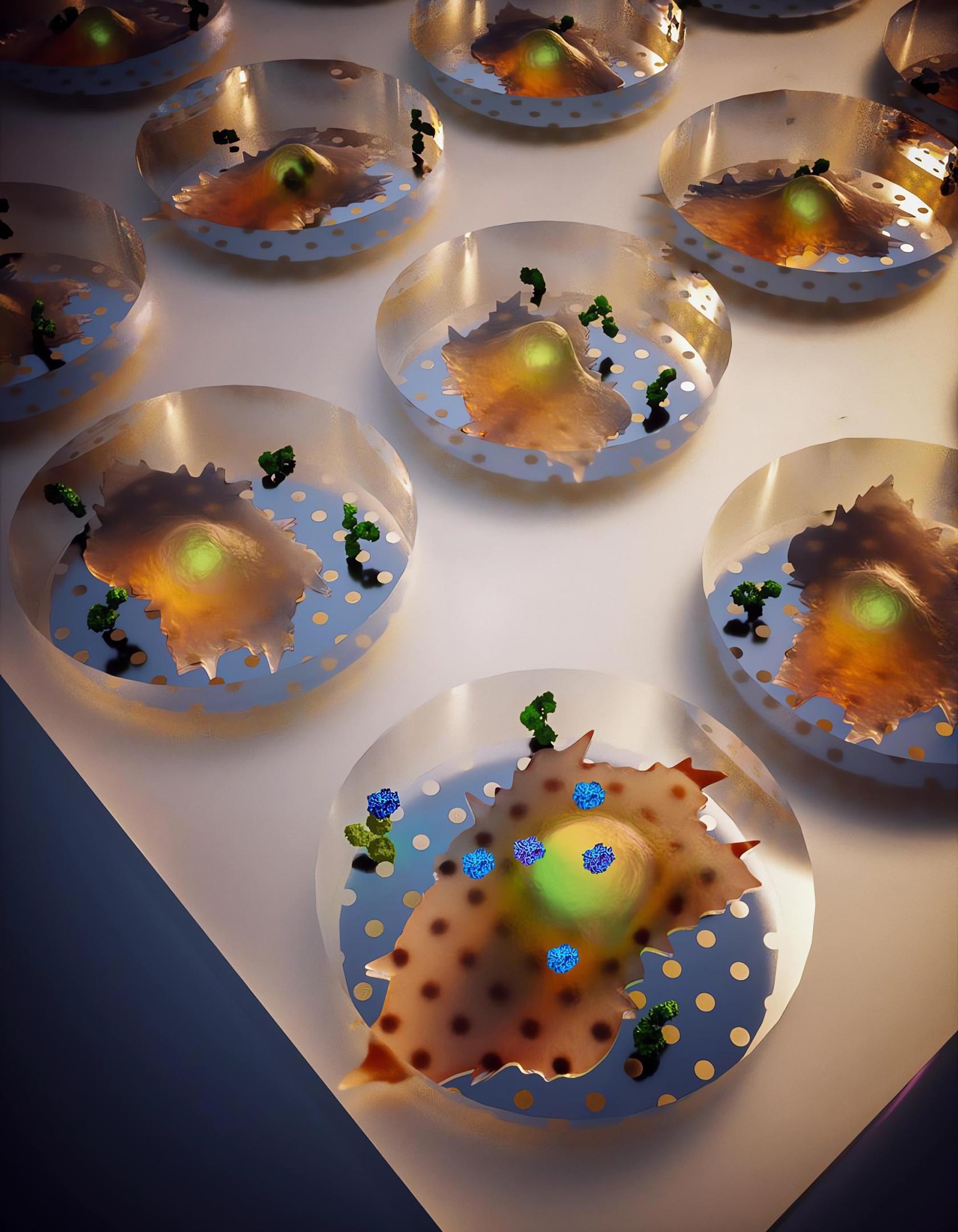
Researchers have used a nanoplasmonics approach to observe the real-time production of cell secretions, including proteins and antibodies; an advancement that could aid in the development of cancer treatments, vaccines, and other therapies.
A new optical imaging method from researchers at the University of Geneva and the BIOnanophotonic Systems Laboratory offers a 4D view of cell secretions, providing unprecedented detail on cell function and communication. The technique has significant potential for pharmaceutical development and fundamental research, as well as individual cell screening.
Cell secretions like proteins, antibodies, and neurotransmitters play an essential role in immune response, metabolism, and communication between cells. Understanding cell secretions is key for developing disease treatments, but current methods are only able to report the quantity of secretions, without any detail as to when and where they are produced.
Now, researchers in the BIOnanophotonic Systems Laboratory (BIOS) in the School of Engineering and at the University of Geneva have developed a novel optical imaging approach that gives a four-dimensional view of cell secretions in both space and time. By placing individual cells into microscopic wells in a nanostructured gold-plated chip, and then inducing a phenomenon called plasmonic resonance on the chip’s surface, they are able to map secretions as they are being produced, while observing cell shape and movement.
As it provides an unprecedentedly detailed view of how cells function and communicate, the scientists believe their method, published on April 3 in the journal Nature Biomedical Engineering, has “tremendous” potential for pharmaceutical development as well as fundamental research.
“A key aspect of our work is that it allows us to screen cells individually in a high-throughput fashion. Collective measurements of the average response of many cells do not reflect their heterogeneity…and in biology, everything is heterogeneous, from immune responses to cancer cells. This is why cancer is so hard to treat,” says BIOS head Hatice Altug.
A Million Sensing Elements
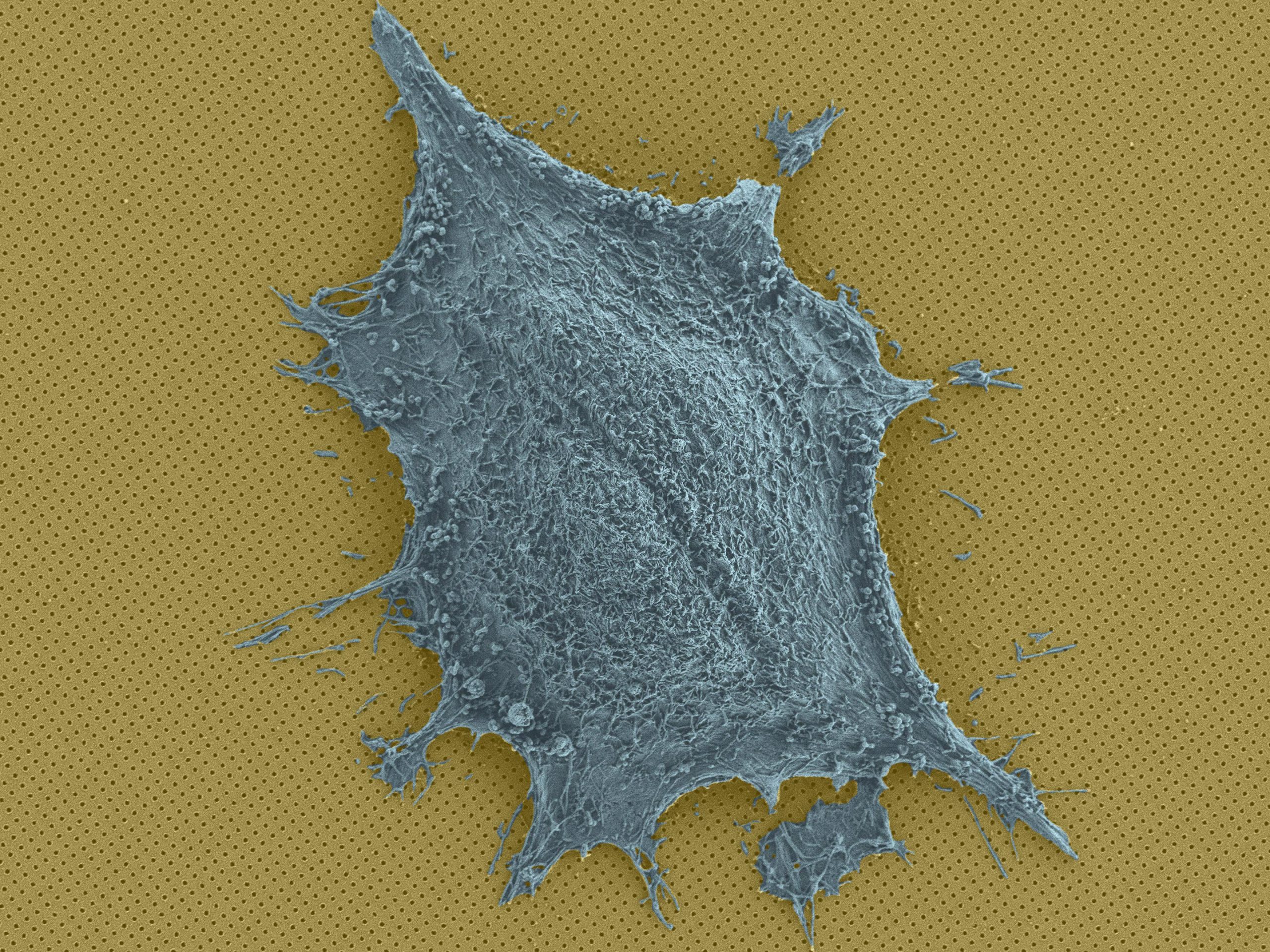
At the heart of the scientists’ method is a 1 cm2 nanoplasmonic chip composed of millions of tiny holes, and hundreds of chambers for individual cells. The chip is made of a nanostructured gold substrate covered with a thin polymer mesh. Each chamber is filled with a cell medium to keep the cells alive and healthy during imaging.
“Cell secretions are like the words of the cell: they spread out dynamically in time and space to connect with other cells. Our technology captures key heterogeneity in terms of where and how far these ‘words’ travel,” says BIOS PhD student and first author Saeid Ansaryan.
The nanoplasmonics part comes in thanks to a light beam, which causes the gold electrons to oscillate. The nanostructure is engineered so that only certain wavelengths can penetrate it. When something – like protein secretion – occurs on the chip’s surface to alter the light passing through, the spectrum shifts. A CMOS (Complementary Metal Oxide Semiconductor) image sensor and an LED translate this shift into intensity variations on the CMOS pixels.
“The beauty of our apparatus is that the nanoholes distributed across the entire surface transform every spot into a sensing element. This allows us to observe the spatial patterns of released proteins irrespective of cell position,” says Ansaryan.
The method has allowed the scientists to get a glimpse of two essential cellular processes – cell division and cell death – and to study delicate antibody-secreting human donor B-cells.
“We saw the cell content released during two forms of cell death, apoptosis and necroptosis. In the latter, the content is released in an asymmetric burst, resulting in an image signature or fingerprint. This has never before been shown at the single-cell level,” Altug says.
Screening for Cell Fitness
Because the method bathes the cells in a nutritious cell medium, and does not require the toxic fluorescent labels used by other imaging technologies, the cells under study can easily be recovered. This gives the method great potential for use in developing pharmaceutical drugs, vaccines, and other treatments; for example, to help researchers understand how cells respond to different therapies at the individual level.
“As the amount and pattern of secretions produced by a cell are a proxy for determining their overall effectiveness, we could also imagine immunotherapy applications where you screen patient immune cells to identify those that are most effective, and then create a colony of those cells,” says Ansaryan.
Reference: “High-throughput spatiotemporal monitoring of single-cell secretions via plasmonic microwell arrays” by Saeid Ansaryan, Yen-Cheng Liu, Xiaokang Li, Augoustina Maria Economou, Christiane Sigrid Eberhardt, Camilla Jandus and Hatice Altug, 3 April 2023, Nature Biomedical Engineering.
DOI: 10.1038/s41551-023-01017-1
Never miss a breakthrough: Join the SciTechDaily newsletter.
Follow us on Google and Google News.